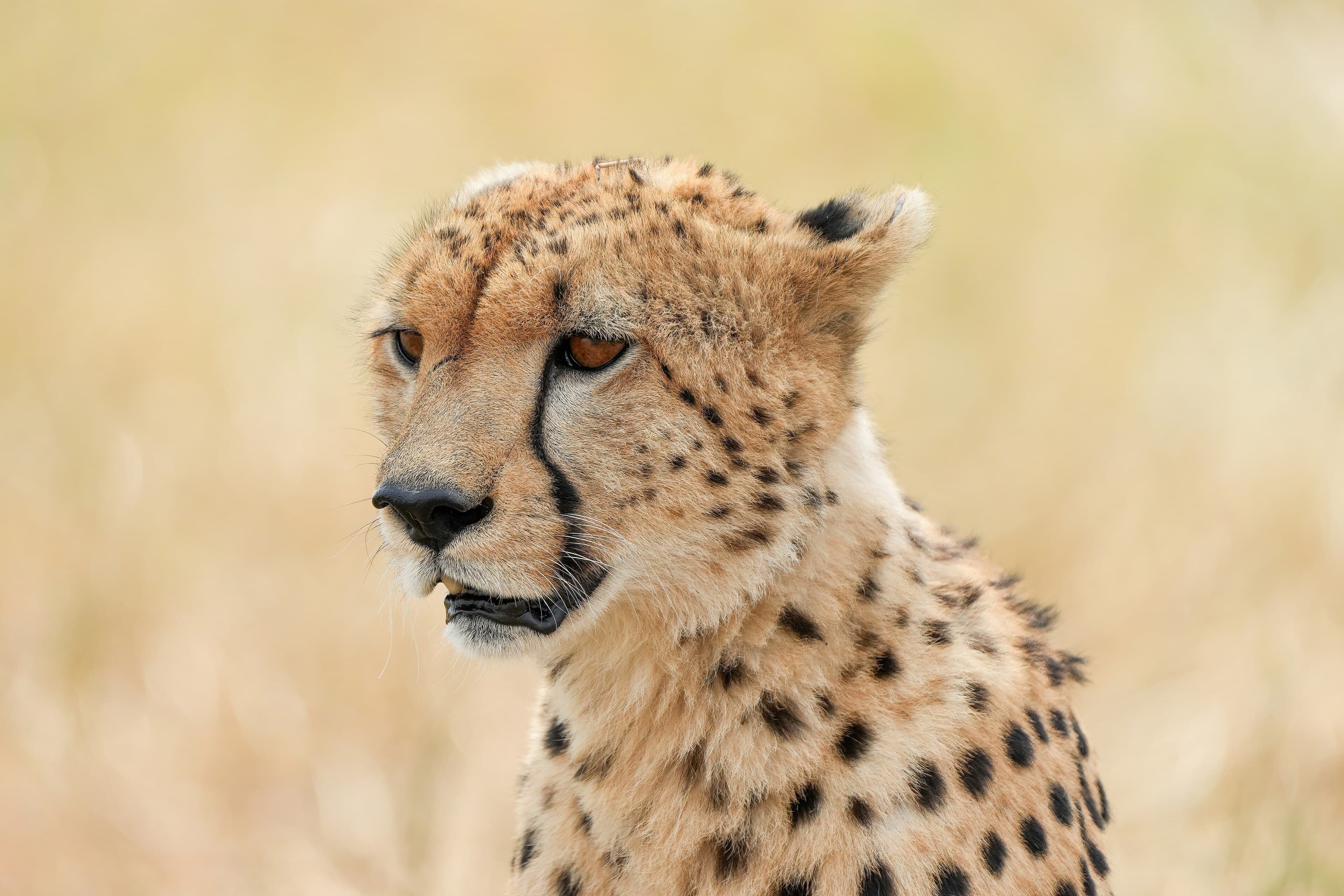
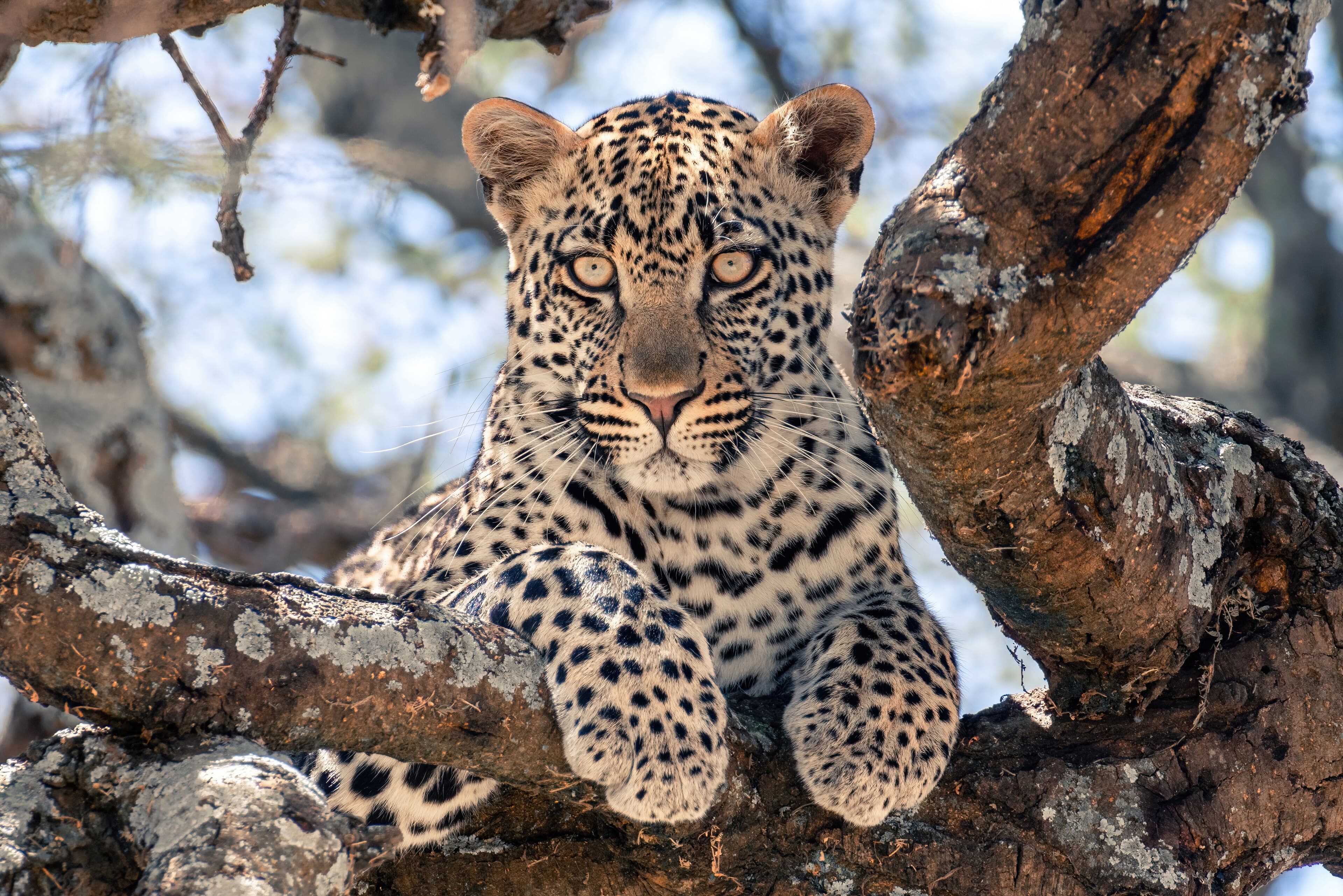
Photographed at Serengeti National Park, Tanzania
Camera data: Sony α1600 mmf/6.31/2000 sISO 640Serengeti National Park, Tanzania
Best telephoto lenses for wildlife photography: how to choose
There is no single best lens, but there is a right way to decide. A framework built on focal length, aperture, weight, teleconverters and the used market.
By WLIFE Gear Desk8 min read
Every week someone asks us which telephoto lens they should buy for wildlife, and every week the honest answer is a question back: what do you photograph, where, and how do you get there? The lens that is perfect for a hide on a Scottish estuary is the wrong lens for a walking safari in Zambia, and the lens that suits a photographer who drives to every location is a burden for one who flies with hand luggage. This guide does not tell you what to buy. It gives you the five questions that lead to the answer, and then shows how the current generation of long zooms fits into them.
1. Focal length: how far away is your subject, really?
Focal length is the first decision and the one people most often get wrong, in both directions. The rule of thumb is simple: small or shy subjects need more reach; large or habituated subjects need less. Songbirds, waders and raptors at natural distances will use every millimetre of 600 mm and still leave you cropping. Lions in the Serengeti, bears at a feeding site or mountain gorillas at the regulated viewing distance are often closer than 400 mm can comfortably handle, and a lens that only starts at 400 mm will leave you unable to fit the animal in the frame.
This is why zooms have displaced primes for most wildlife photographers. A 100–500 mm or 200–600 mm lens covers both the distant bird and the close mammal without a lens change, which on a dusty vehicle or a rocking boat is a real advantage. If you shoot one kind of subject at one kind of distance, a prime remains a superb choice. If you shoot many, the zoom wins on flexibility.
2. Aperture: how much light do you work in?
A wide maximum aperture, f/2.8 or f/4 on a long lens, buys three things: more light for dawn and dusk, faster and more decisive autofocus in low contrast, and a softer background behind the subject. It also costs three things: size, weight and money. Variable-aperture zooms at f/5.6 to f/6.3 give up one to two stops of light. Whether that matters depends entirely on when you shoot. A photographer working in bright savanna light at midday will almost never notice. A photographer working in a forest at first light, or on a winter afternoon in northern Europe, will notice on every frame.
Ask yourself honestly how often you are out in marginal light. If the answer is most of the time, the aperture is worth paying for in weight and cost. If the answer is occasionally, modern high-ISO performance will cover the gap more cheaply than glass will.
3. Weight: will you actually carry it?
The best lens is the one that is on the camera when the animal appears. A lens that lives in the bag because it is too heavy to carry for a day is worth nothing, and a lens that forces you onto a tripod removes the mobility that most wildlife encounters demand. Before buying, think through your typical day: how far you walk, whether you work from a vehicle, a hide or on foot, and whether you fly on small aircraft with strict cabin limits. The difference between a lens you can handhold for an hour and one you cannot is the difference between getting the shot and watching it.
4. Teleconverters: reach at a price
A teleconverter is a small optical unit fitted between camera and lens that multiplies focal length, typically by 1.4x or 2x. The multiplication applies to the aperture too: a 1.4x converter costs one stop of light and a 2x converter costs two. A 600 mm f/6.3 lens becomes an 840 mm f/9 with a 1.4x converter, which is a focal length most cameras can still focus but in noticeably less light. Image quality always degrades slightly, more with a 2x than a 1.4x, and the degradation is more visible on a zoom than on a professional prime designed with converters in mind.
- Check that your lens is compatible with a converter at all; many zooms are only compatible across part of their range, or not at all.
- Check your camera's autofocus limit; some bodies will not focus reliably at apertures smaller than f/8 or f/11.
- A 1.4x converter on a sharp lens is usually a worthwhile tool; a 2x converter is a specialist one.
- A converter is the cheapest reach you will ever buy. It is also the easiest way to turn a sharp lens into a soft one if you use it in poor light.
5. The used market: the smartest money in wildlife photography
Telephoto lenses change slowly. A good long lens from several years ago is still a good long lens, and because they are expensive new, they circulate second-hand through reputable dealers in large numbers. Buying used from a dealer with a warranty and a return period is, for most photographers, the best value in the entire field. Previous-generation DSLR lenses can often be adapted to current mirrorless bodies, and lenses that were professional flagships a decade ago sell for a fraction of their launch cost.
Check the glass for scratches and fungus, the rings for smoothness, and test the lens on your own camera before the return window closes. Renting before committing is far cheaper than buying the wrong lens.
The current long zooms, in context
The lenses below are the manufacturer and third-party long zooms that appear most often in the work we publish and in the camera data of the Featured Pictures on this site. They are listed as examples of the category, not as a ranking; the framework above is what should decide between them.
| Your typical subject | Starting point | Why |
|---|---|---|
| Small birds, waders, raptors at distance | Zoom reaching 600 mm, or a prime with a 1.4x converter | Reach matters more than aperture in daylight |
| Large mammals from a vehicle | Zoom starting at or below 150 mm | Animals come close; you need to zoom out |
| Forest, dawn and dusk work | Brightest aperture you can carry | Light, not reach, is the limiting factor |
| Walking and travel | Lightest zoom covering your range | The lens you carry beats the lens you leave behind |
Decide what you photograph, in what light, and how you get there, and the right lens will usually identify itself. For the settings once it is on the camera, see our field settings guide.
About the author
WLIFE Gear Desk
Field-tested equipment guidance. Specifications are checked against manufacturer documentation; prices are never quoted from memory.
Credits
- Words
- WLIFE Gear Desk
- Photograph
- Giles Laurent · Serengeti National Park, Tanzania · CC BY-SA 4.0
- Photograph
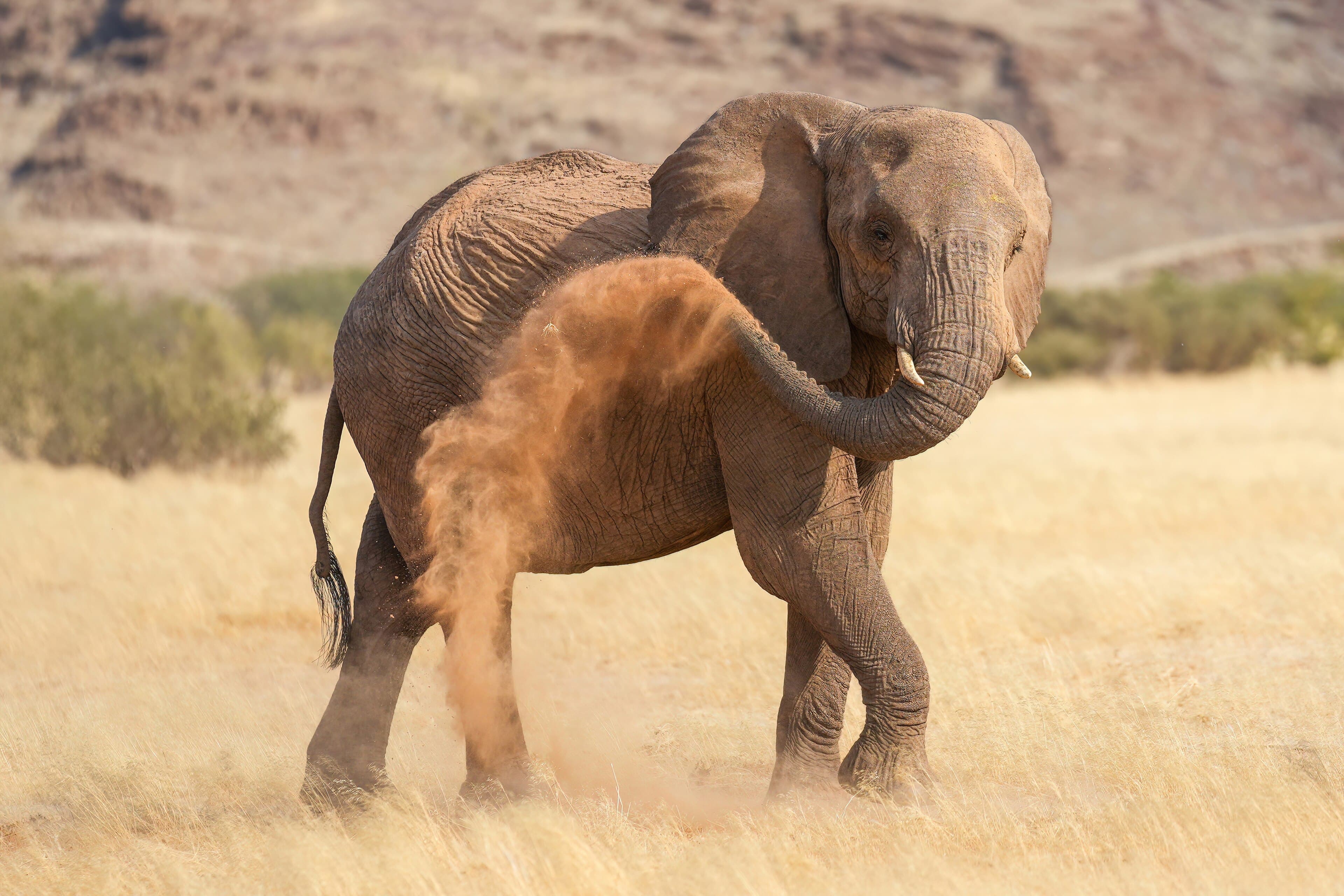
- Giles Laurent · Damaraland, Namibia · CC BY-SA 4.0
- Fact-check
- Not yet checked
Fact-check notes · Sample article — verify all facts before editorial publication. No prices or detailed specifications are stated. Teleconverter light-loss figures (1 stop for 1.4x, 2 stops for 2x) are standard optics. EXIF reference for the elephant image read from its Commons page. Product ids in the gear block must match src/content/products.ts.
Read next
Gear & Fieldcraft
Sample contentWildlife photography camera settings: a field-proven starting point
Shutter speeds for birds and mammals, auto ISO, autofocus modes, back-button focus, burst and RAW: the settings to dial in before the animal appears, and why.
· 8 min
News
Sample contentThe telephoto zoom generation: why 150–600 mm lenses changed who can photograph wildlife
A decade ago, 600 mm was a focal length reserved for professionals with a car-sized budget. A wave of affordable super-telephoto zooms quietly rewrote the rules of entry.
· 6 min
News
Sample contentWildlife Photographer of the Year: how the competition works and what the winning images teach
The Natural History Museum's annual competition is the closest thing wildlife photography has to a world championship. Here is how it is judged, what it rewards and what every entrant can learn from it.
· 6 min
The WLIFE Dispatch · weekly
The week’s best wildlife photography, in one email.
New images, photographer stories, gear tested in the field and expedition openings. Free, unsubscribe any time.