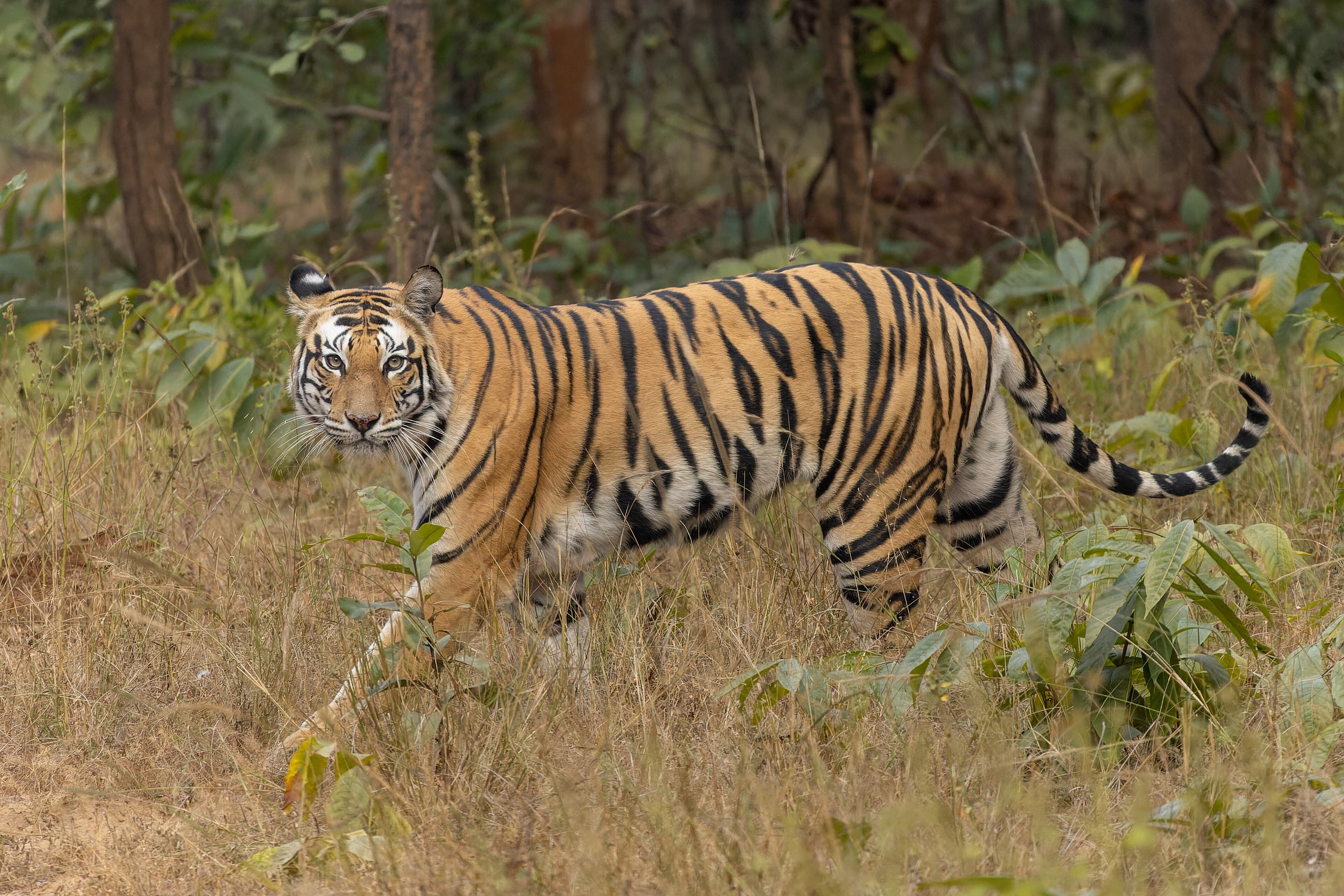
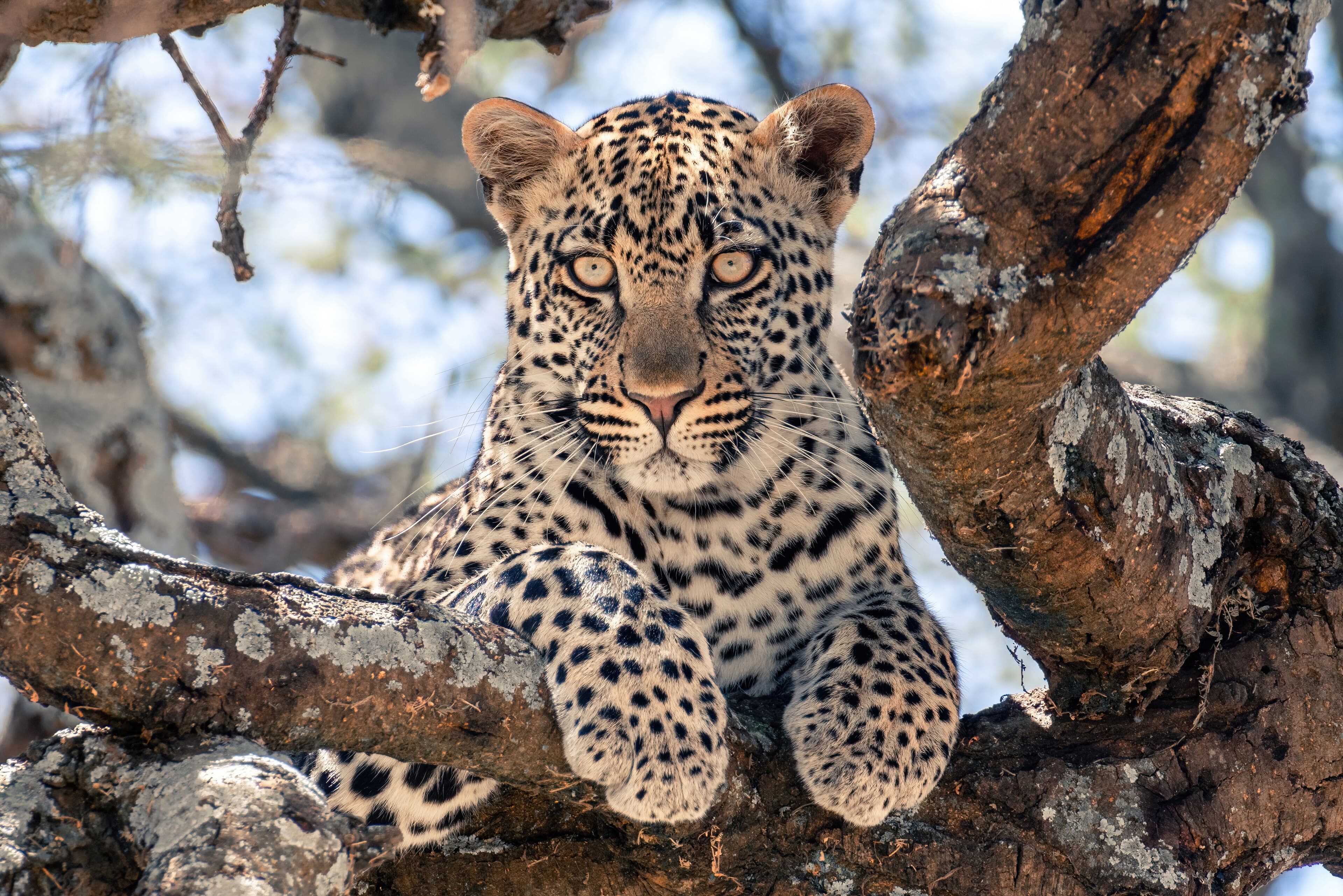
Photographed at Sanjay-Dubri Tiger Reserve, India
Camera data: Canon EOS R8400 mmf/81/1000 sISO 5000Sanjay-Dubri Tiger Reserve, India
Best time to photograph tigers in India
India's tiger reserves run on a seasonal clock: closed core zones in the monsoon, lush and difficult in winter, hot and productive in spring. Here is how to choose your window.
By WLIFE Expeditions Desk7 min read
There is no bad time to see a wild tiger, but there are months when you cannot, and months when the odds are stacked heavily in your favour. The difference is seasonal, and it is the same across most of the country's major reserves, from Ranthambore in Rajasthan to Bandhavgarh, Kanha and Pench in Madhya Pradesh and Tadoba in Maharashtra. This guide sets out the calendar as it is generally applied, explains why the hot months are the productive ones, and describes how a safari day is structured so that you can plan the light as well as the dates.
The monsoon closure: roughly July to September
The most important fact for planning is that the core zones of most Indian tiger reserves are closed to tourism during the monsoon. In Madhya Pradesh, which holds several of the best-known reserves, the forest department has closed core areas from 1 July to 30 September, reopening on 1 October; officials have cited the breeding season, the risk to visitors in the monsoon forest and the need to repair infrastructure. Tadoba-Andhari in Maharashtra follows a similar pattern, with core gates announced as closed from 1 July into early October. Ranthambore and Sariska in Rajasthan have likewise reopened on 1 October after the monsoon break.
Closure does not always mean no safaris at all. In several states the buffer zones, the managed forest around the core, remain open in a restricted way during the monsoon, and tigers do use them. Buffer safaris in the rains can be rewarding for landscape and atmosphere, but they are not the reliable tiger-sighting product that the core zones offer in the dry season, and the vegetation is at its densest.
October to February: green, cool and beautiful
When the gates reopen in October the forest is at its most lush. Water is everywhere, grass is high and the light is soft and clear. For photographers this is the most attractive season for habitat and for the colour of the forest, and the cool mornings are pleasant to work in. It is also the hardest season for finding tigers. With water available throughout the reserve, animals have no need to come to the few remaining pools, and the tall grass hides them. Sightings happen, and some are spectacular, but the frequency is lower than later in the season.
March to June: hot, dry and the best odds
As the dry season advances the forest changes character. Leaves fall from the deciduous trees, the grass dries and is cut back or burned in places, and the pools shrink to a handful of permanent waterholes. Tigers, which need to drink and to cool down, come to that water and stay near it through the heat of the day. From March onwards sightings become steadily more frequent, and April and May are widely considered the peak months for seeing tigers, with the trade-off that daytime temperatures are severe, often well above 40°C by May. June is hotter still and ends with the first monsoon rain and the closure of the core.
For photography the dry season brings open sightlines, dusty golden light and the chance of behaviour at water: tigers drinking, bathing and walking in the open. It also brings harsh midday light and heat haze that softens long-lens images after mid-morning. The productive hours are the first and last of each drive, which is why the structure of the safari day matters.
| Period | Core zones | Forest | Tiger sighting odds | Photography notes |
|---|---|---|---|---|
| July – September | Generally closed | Monsoon, dense | Low (buffer only) | Landscape and atmosphere; limited access |
| October – November | Open | Lush, tall grass | Lower | Green habitat, soft light, hard to find tigers |
| December – February | Open | Drying, cool mornings | Moderate | Mist, pleasant conditions, improving visibility |
| March – April | Open | Dry, leaves falling | High | Open sightlines, activity at water, rising heat |
| May – June | Open until monsoon | Dry, very hot | Highest | Best odds, harsh heat and haze after early morning |
How a safari day is structured
Reserves run safaris in two sessions, a morning drive and an afternoon drive, with the park closed to vehicles in the middle of the day. The morning session typically begins around dawn and runs for a few hours; the afternoon session begins in mid-afternoon and ends around sunset. Exact times shift with the season and are set by each reserve. Most reserves are divided into zones, with vehicles allocated to a specific zone for each drive, and permits are limited in number and booked in advance through the state's online system or a lodge or operator.
For a photographer, the structure means that the two best light windows of the day coincide with the two drives, which is fortunate, and that the midday hours are for resting, editing and charging batteries. It also means that the number of drives you book is the number of chances you have. Three or four days in a single reserve, with six to eight drives, gives a reasonable chance of a good sighting in the dry season; one or two drives is a lottery in any season.
What it costs, roughly
Choosing your window
- Highest sighting odds: April to mid-June, if you can work in extreme heat and accept harsh midday light.
- Best balance: February to March, when the forest has opened up, mornings are comfortable and sightings are improving.
- Most beautiful forest: late October to December, with the lowest sighting rate and the best habitat images.
- Avoid for tigers: July to September, when the core zones are closed.
Sources
- The Hitavada — Tiger reserves closed till Sep 30, buffer area to remain open (Madhya Pradesh, July 2021)
- The Hitavada — Tiger reserves set to reopen from Oct 1 (Madhya Pradesh, September 2023)
- The Week / PTI — Core areas of Tadoba reserve to shut for visitors from July 1 (June 2025)
- Outlook Traveller — Your favourite national parks are reopening this October (Ranthambore, Sariska, Kanha, Bandhavgarh, Pench, Tadoba reopening dates)
- Wikimedia Commons — Bengal tiger in Sanjay Dubri Tiger Reserve, December 2024, by Tisha Mukherjee
About the author
WLIFE Expeditions Desk
Destination research for wildlife photographers: seasons, species, access, conditions and realistic budgets.
Credits
- Words
- WLIFE Expeditions Desk
- Photograph
- Tisha Mukherjee · Sanjay-Dubri Tiger Reserve, India · CC BY-SA 4.0
- Photograph
- Derek and Julie Ramsey · Pittsburgh Zoo, USA · Captive · Public domain
- Fact-check
- In progress
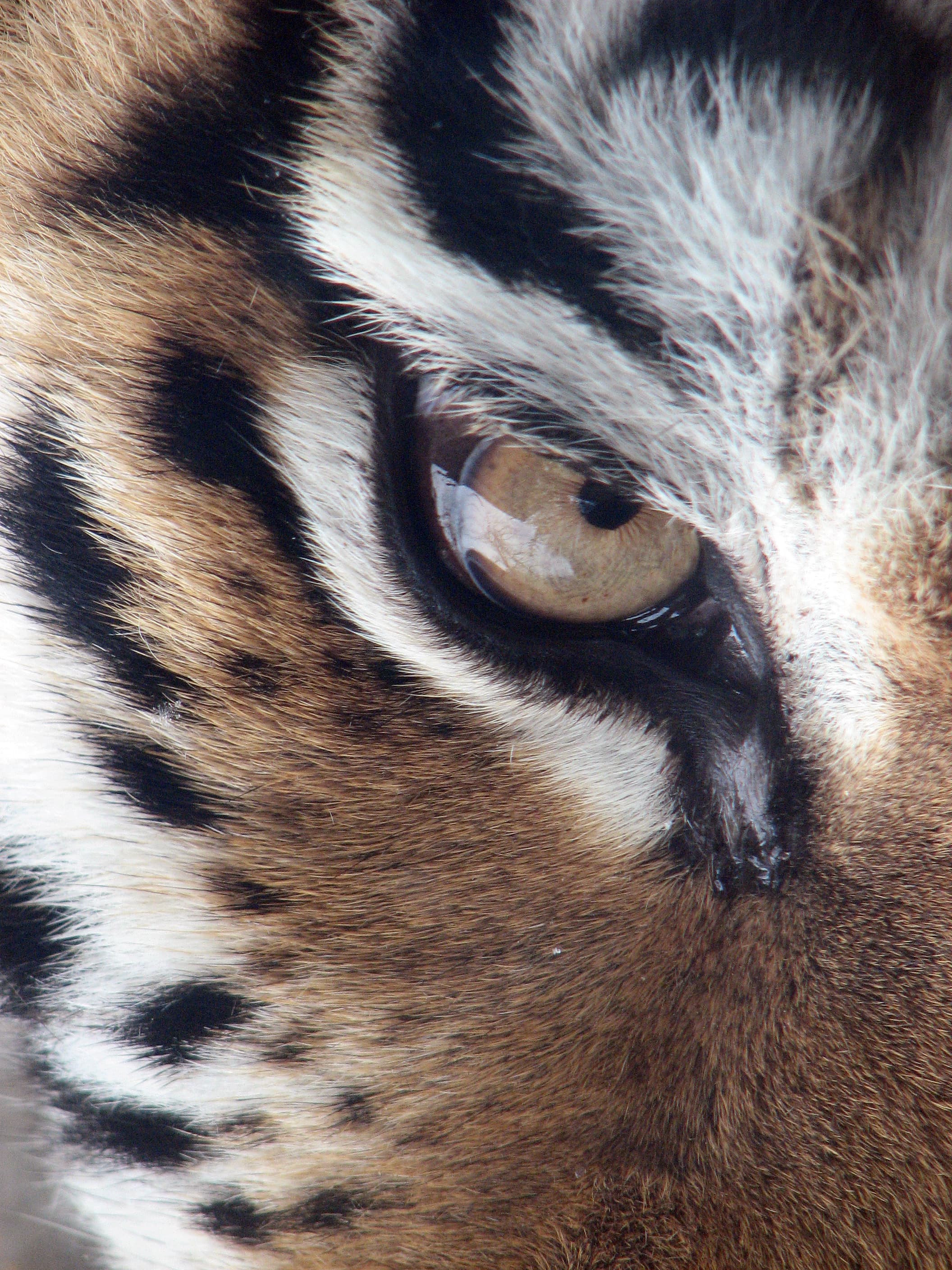
Fact-check notes · Sample article — verify all facts before editorial publication. Verified via press reports (sources block): Madhya Pradesh core zones closed 1 July–30 September and reopening 1 October, buffer zones open in restricted manner, reasons cited by officials (The Hitavada 2021, 2023); Tadoba core gates closed from 1 July to 2 October 2025 with buffer zones open (PTI/The Week); Ranthambore and Sariska reopening 1 October (Outlook Traveller). Sighting-odds statements by season are general guidance from operator and travel literature, not measured data. Temperatures ('well above 40°C by May') are general climate knowledge for central India; no permit prices or budget figures are stated. No official NTCA or state forest department page was retrieved; obtain the current year's notice before publication. The Amur tiger image is explicitly captioned as not an Indian tiger.
Read next
Gear & Fieldcraft
Sample contentBest telephoto lenses for wildlife photography: how to choose
There is no single best lens, but there is a right way to decide. A framework built on focal length, aperture, weight, teleconverters and the used market.
· 8 min
Gear & Fieldcraft
Sample contentWildlife photography camera settings: a field-proven starting point
Shutter speeds for birds and mammals, auto ISO, autofocus modes, back-button focus, burst and RAW: the settings to dial in before the animal appears, and why.
· 8 min
News
Sample contentWildlife Photographer of the Year: how the competition works and what the winning images teach
The Natural History Museum's annual competition is the closest thing wildlife photography has to a world championship. Here is how it is judged, what it rewards and what every entrant can learn from it.
· 6 min
The WLIFE Dispatch · weekly
The week’s best wildlife photography, in one email.
New images, photographer stories, gear tested in the field and expedition openings. Free, unsubscribe any time.