
Photographed at Ranthambore National Park, India
Camera data: Nikon D500500 mmf/5.61/400 sISO 500Ranthambore National Park, India
India · Moderate
Sample contentRanthambore National Park
Ranthambore is India's most photographed tiger reserve, where Bengal tigers walk through dry deciduous forest, past lakes and beneath the walls of a tenth-century hill fort.
- Best season
- March–June · October–February
- Difficulty
- Moderate (2/5)
- Key species
- Bengal tiger, Indian leopard, Sloth bear, Sambar deer
- Budget
- USD 150–500 per person per day (estimate)
India
The place
Ranthambore National Park sits in south-eastern Rajasthan near the town of Sawai Madhopur, at the meeting point of the Aravalli and Vindhya hill ranges. The reserve was once the hunting ground of the Maharajas of Jaipur and became one of the original Project Tiger reserves in 1973. Ranthambore Fort, which gives the park its name, stands on a plateau above the forest and is part of the Hill Forts of Rajasthan World Heritage listing. Ruined pavilions, chhatris and temple walls inside the park give tiger photographs a setting found nowhere else.
The habitat is dry deciduous forest dominated by dhok trees, with open grassland, rocky ridges and a chain of lakes, notably Padam Talao, Rajbagh Talao and Malik Talao. In the hot months the forest loses its leaves, visibility improves, and tigers come to the lakes and remaining waterholes during the day. This is why the uncomfortable pre-monsoon period from March to June is also the most productive for sightings.
Safaris are organised in numbered zones. Visitors book morning or afternoon slots through the Rajasthan forest department's permit system and enter in shared open canters or smaller six-seat open 4x4s commonly called gypsies, each with a forest guide and driver. Vehicles are allocated to a zone and must stay on its tracks; walking is not permitted. The core zones close during the monsoon, typically from July to the end of September, and the park reopens at the start of October.
For photographers the character of Ranthambore is strong, contrasty light, dusty golden tracks and the chance of a tiger in a landscape rather than in deep forest. Shooting is from an open vehicle with no roof, so a bean bag over the side rail and a cover for dust are essential. Tigers here can be remarkably tolerant of vehicles, which rewards working on composition and background rather than reach alone.
Species and photographic opportunities
The animals
- Bengal tiger
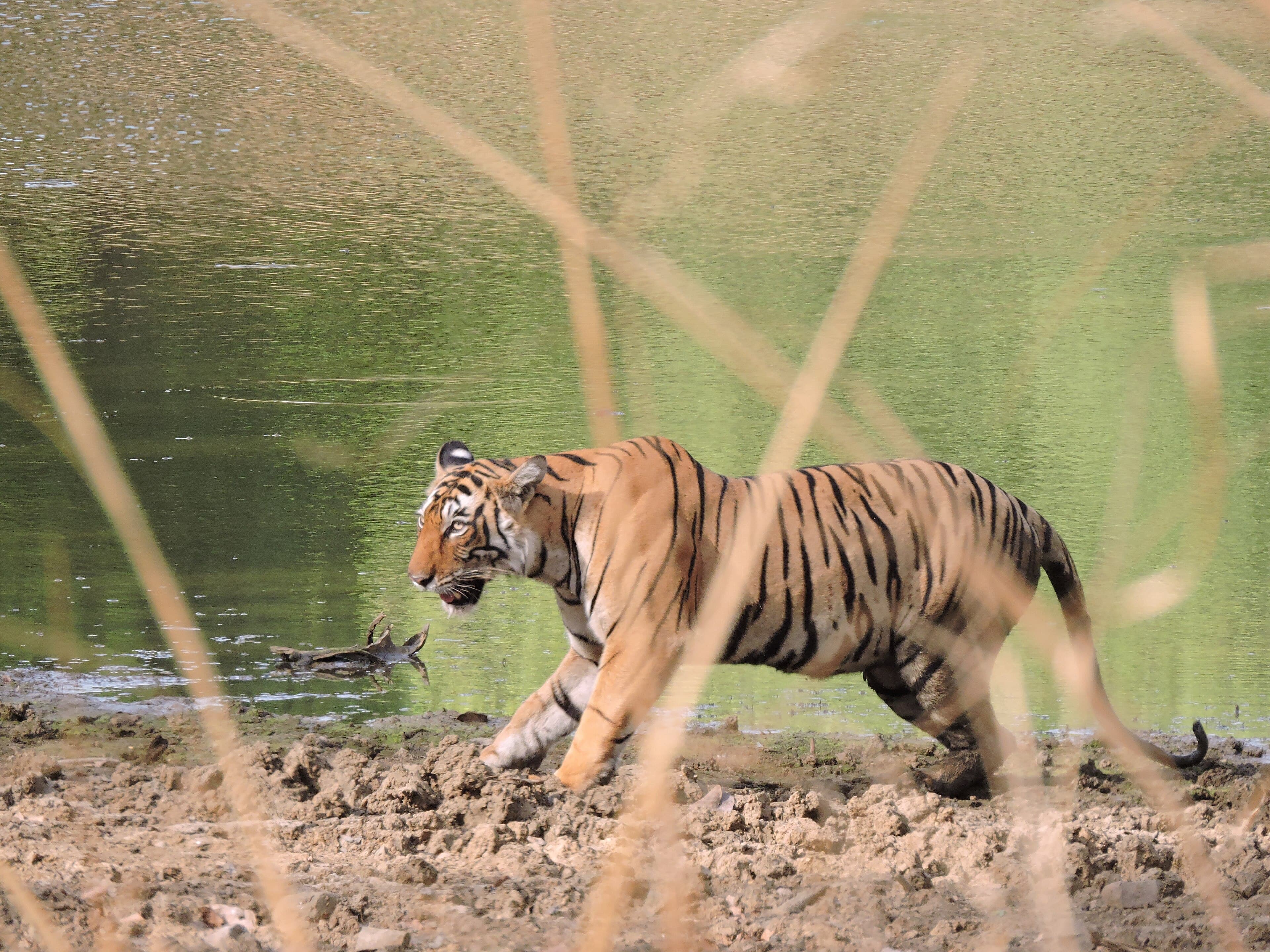
- The subject of nearly every visit; the hero and gallery tigers were photographed in Ranthambore
- Indian leopard
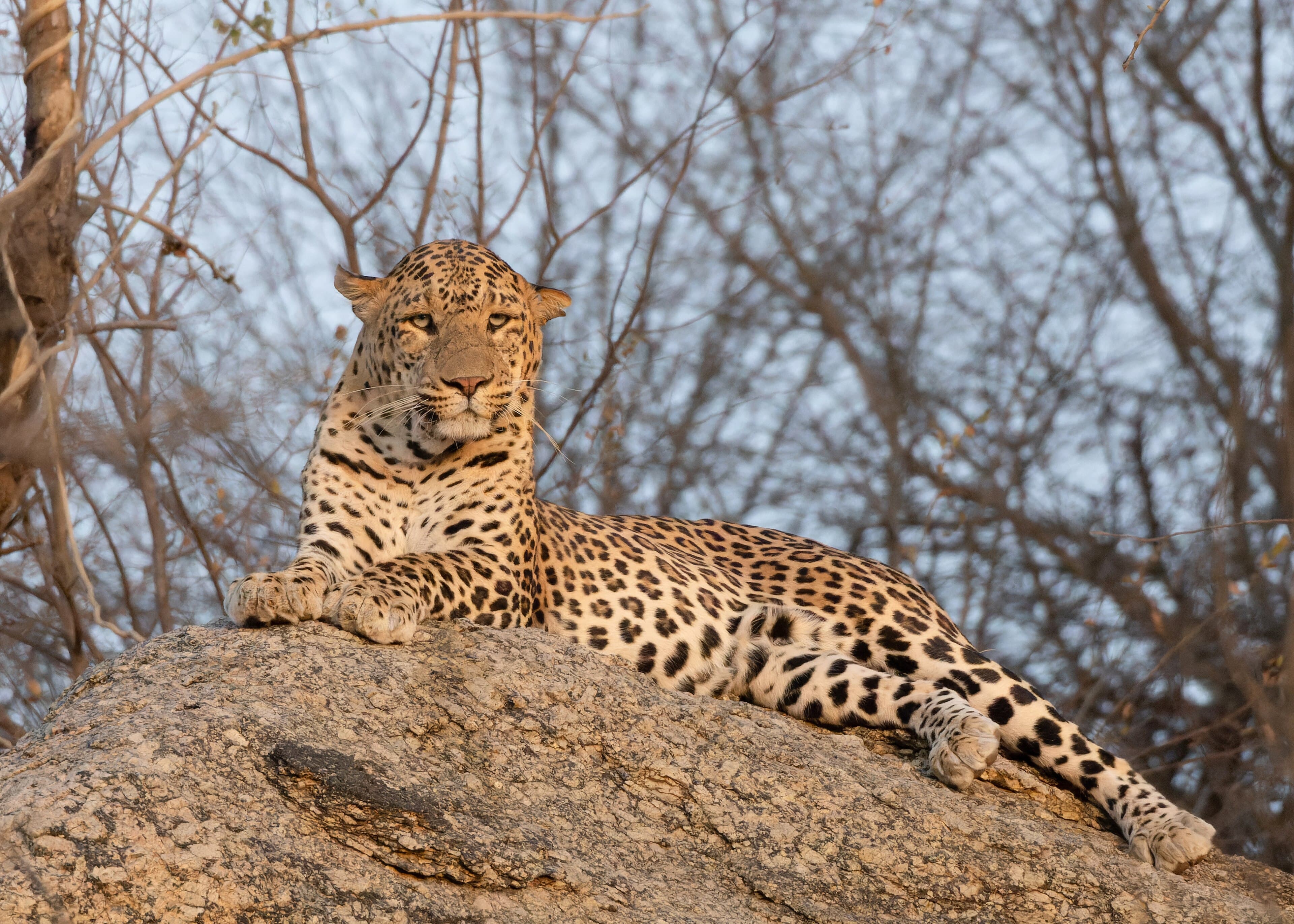
- Rocky hillsides; the gallery image is from Jawai in Rajasthan
- Sloth bear
- Occasional sightings, more often in the cooler months
- Sambar deer
- Large deer common at the lakes; principal tiger prey
- Chital (spotted deer)
- Herds in open forest and grassland
- Mugger crocodile
- Basking on lake margins
- Indian peafowl
- Abundant; alarm calls signal predators
- Nilgai
- Large antelope of the open areas
- Crested serpent eagle and other raptors
- Perched in the dry forest canopy
- Tigers at the lakes and waterholes in the hot season
- Tigers walking the dusty tracks towards the vehicle in low light
- Environmental portraits with fort walls, pavilions and chhatris in the frame
- Sambar and chital in morning mist on the lake margins
- Leopards on rocky ridges in the cooler months
In pictures · 2 frames
01
02
Ranthambore National Park in pictures
- 01An Indian leopard on granite boulders at Jawai, RajasthanJawai Bandh, Rajasthan, India · Tisha Mukherjee · CC BY-SA 4.0
- 02Arrowhead tiger walking through the lake.Ranthambore National Park, India · Vivekbajaj3003 · CC BY-SA 4.0
When to go
The season
| Months | Why |
|---|---|
| March–June | Hot and dry; leafless forest and scarce water make tiger sightings most reliable, at the cost of harsh midday light and heat. |
| October–February | Pleasant temperatures and greener forest after the monsoon; sightings are harder but light and backgrounds are kinder. |
Light, access and conditions
The ground
- Open vehicles with no roof: strong sun, dust and, in winter mornings, cold
- Pre-monsoon temperatures regularly exceed 40 °C from April to June
- Zone allocation and permit availability are outside the photographer's control; book well ahead
- Core zones close for the monsoon, typically July to September
- Vehicles must stay on tracks and keep to safari time windows
- Lightweight cover for dust and a bean bag for the side rail are essential
Trip difficulty: Moderate. Physically easy vehicle-based photography. The difficulty lies in heat, dust, crowds at sightings and in the uncertainty of zone allocation.
Editorial estimate
The cost
USD 150–500 per person per day (USD)
Basis: Mid-range lodge near the park, shared or private safari vehicle with permits; excludes flights and train travel
Editorial estimate only, not a quote. Ranges are broad and exclude international flights. Verify current rates, park fees and seasonal surcharges with operators before planning. Last reviewed 2026-10-20.
Questions
How do zone bookings work?
Safari permits are issued per vehicle, per slot and per zone through the Rajasthan forest department's system. Some zones have better recent sighting records than others, but allocations are not guaranteed, so photographers typically book several drives across the week.
When is the park closed?
The core zones close for the monsoon, usually from July until the end of September, and reopen at the start of October. Check official notices each year, as dates and buffer-zone arrangements change.
Is a 600 mm lens necessary?
A 100–500 or 200–600 zoom is the most useful tool because tigers can appear anywhere from a few metres away on the track to several hundred metres across a lake. A second body with a 70–200 helps for close encounters and scenes with the fort.
Credits
- Photograph
- Drvidyashankar74 · Ranthambore National Park, India · CC BY-SA 4.0
- Photograph
- Tisha Mukherjee · Jawai Bandh, Rajasthan, India · CC BY-SA 4.0
- Photograph
- Vivekbajaj3003 · Ranthambore National Park, India · CC BY-SA 4.0
Expeditions in Ranthambore National Park
All expeditions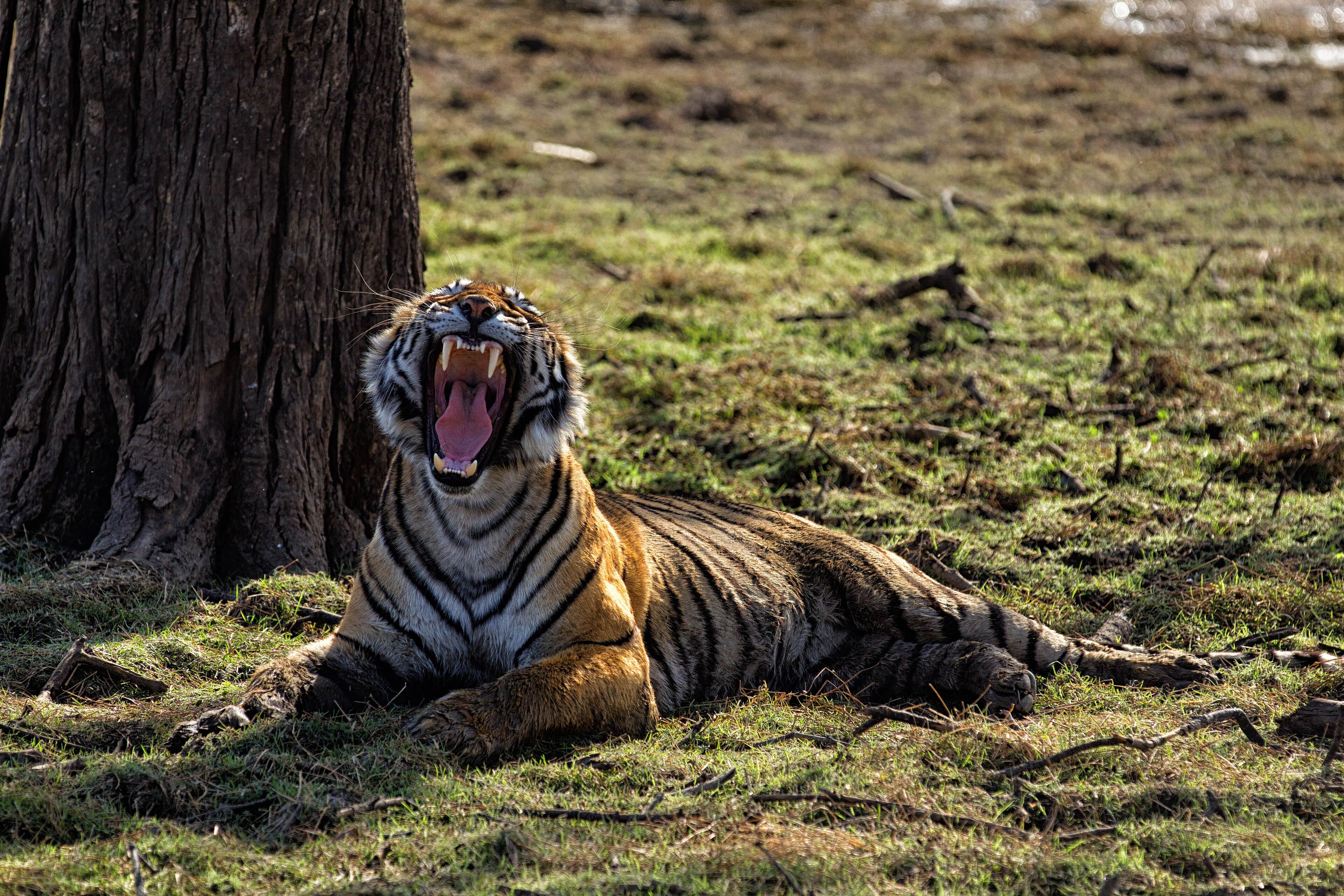 ConceptRanthambore tiger photography workshop8 days · max 6 photographers
March to mid-June, when water is scarce and tiger sightings at lakes and waterholes are most reliableSample content