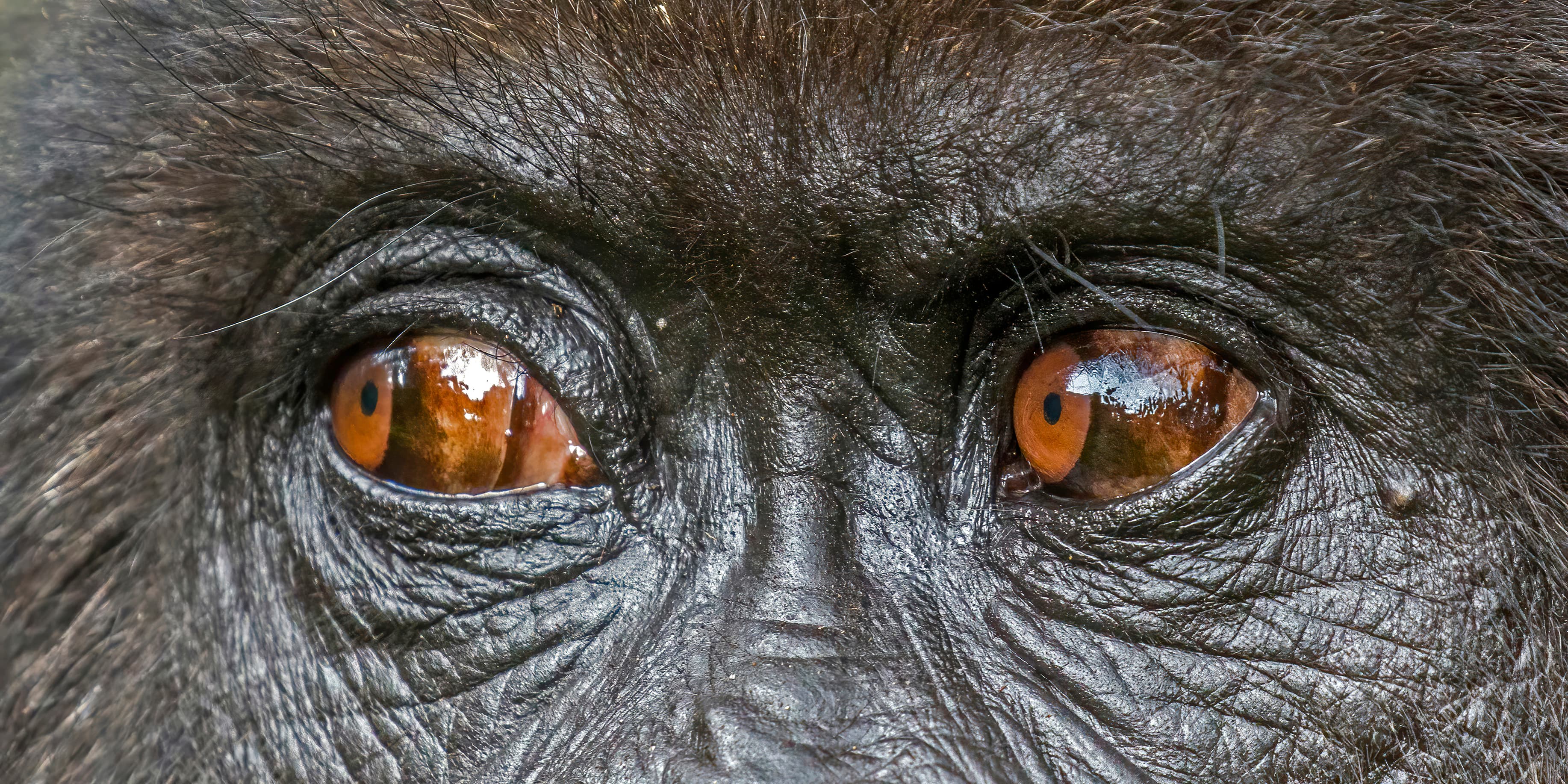
Photographed at Rwanda
Camera data: Canon EOS 70D400 mmf/5.61/640 sISO 2000Rwanda
Photographing mountain gorillas: the rules that protect them
Seven metres, eight people, one hour, no flash, and stay home if you are ill. The gorilla trekking rules of Uganda and Rwanda exist because the animals can catch what we carry.
By WLIFE EditorialPhotographs Charles J. Sharp7 min read
An hour with a family of mountain gorillas is one of the most affecting experiences available to a wildlife photographer, and one of the most tightly regulated. The regulation is not bureaucracy. Mountain gorillas share enough of our biology to catch human respiratory infections, their entire population lives in a few forests across three countries, and tourism brings thousands of people a year into their immediate vicinity. The rules that govern a trek are a public-health system for an endangered species, and the photographer who understands them will work better within them. This article sets out the rules as published by the Uganda Wildlife Authority and by Rwanda's official tourism body, and then considers what they mean for making pictures.
The rules in Uganda
The Uganda Wildlife Authority, which manages Bwindi Impenetrable and Mgahinga Gorilla national parks, publishes its gorilla tracking rules in its conservation tariff document. They are short enough to quote in full, and every photographer should read them before the briefing rather than during it.
- Do not visit the gorillas if you have a cold or other infectious illness.
- Minimum age for tracking is 15 years.
- Maximum number of visitors is eight persons per gorilla group.
- Maintain a 7 m (21 ft) distance from the gorilla.
- Smoking, eating and drinking are not permitted on the tour.
- If you must sneeze or cough, cover your face and turn away from the gorillas, as they can catch coughs and colds from humans.
- Visits are limited to one hour per gorilla group per day.
- Do not use flash photography.
- Human waste should be buried 30 cm deep.
“Maintain a 7m (21ft) distance from the gorilla”
Uganda Wildlife Authority, Gorilla Tracking Rules, Conservation Tariff 2022–2024
The rules in Rwanda
In Rwanda, gorilla trekking takes place in Volcanoes National Park, and the official Visit Rwanda site sets out the same principles. The minimum age is 15. Eight tracking permits are issued per gorilla troop per day, and each group's contact with visitors is held to a strict maximum of one hour. The site lists twelve fully habituated gorilla families in the park, with a few others habituated only for research, and describes the trek as reaching altitudes between 2,500 and 4,000 metres, with visitors assembling at the park headquarters at Kinigi in the early morning. Permits are booked through the national Irembo platform or a licensed operator.
The Rwandan page does not state a numeric viewing distance; that rule is delivered in the ranger briefing on the day. The seven-metre standard is the one documented by the Ugandan authority and is the figure used in the scientific literature on gorilla tourism in the region.
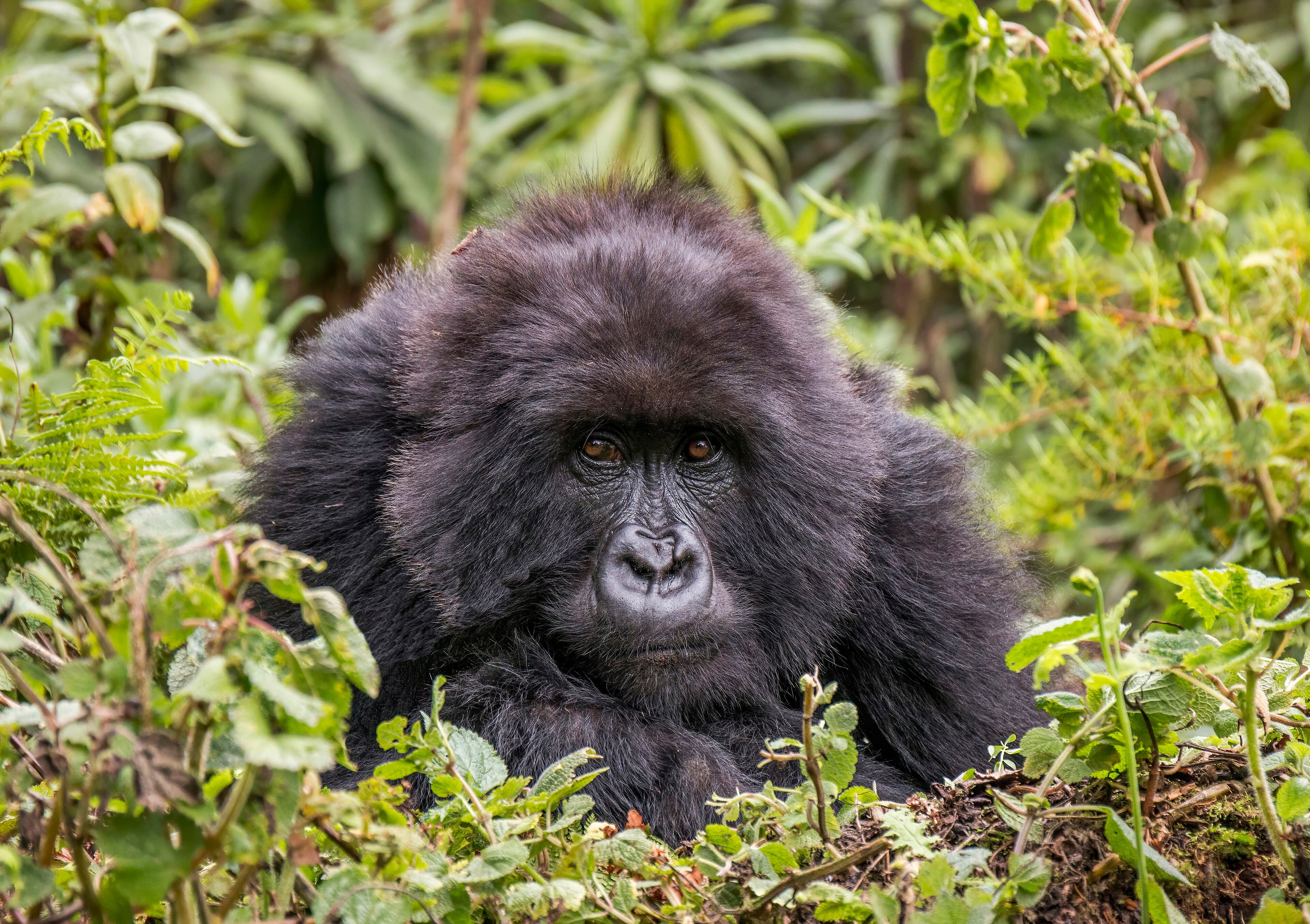
Why seven metres, and why it is so hard to keep
Seven metres is a distance over which respiratory droplets are unlikely to travel in still air, and it is the figure the rules are built around. The difficulty is that gorillas have not read them. A 2020 study published in Frontiers in Public Health by researchers from Ohio University working with Ugandan colleagues observed gorilla treks in Bwindi and found the seven-metre rule was breached on 52 of 53 tours observed, usually because the animals approached the visitors, not the other way round. Nearly all ranger briefings stressed the distance; it was simply not achievable in practice much of the time. The study's authors concluded that the best strategy remains encouraging tourists to keep their distance, while noting that most of the tourists surveyed said they would be willing to wear a mask.
For the photographer the lesson is clear. The rule is a minimum, not a target. If a gorilla approaches, the correct response is to back away slowly, as the rangers instruct, not to hold position for a closer frame. The best images of mountain gorillas are made at seven metres and more, and a photographer who has planned for that distance will not be tempted to compromise it.
What the rules mean for making pictures
No flash in a montane forest means working in low, green-filtered light. Expect to use a high ISO and the widest aperture you have, and to accept shutter speeds that would be marginal for a moving animal. Gorillas are often still, which helps; image stabilisation helps more. Seven metres with a subject the size of an adult gorilla suits focal lengths from around 70 to 300 mm for portraits and whole-body frames, with something longer for faces and hands; a 100–400 mm or 70–200 mm class lens is more useful than a 600 mm, which will be too long for much of the encounter. One hour means there is no time to change lenses or experiment; decide your approach before you set off.
- Carry everything in a rain-covered bag and keep the camera inside it until the rangers signal that the group is near; the trek itself can take hours through wet, steep forest.
- Set the camera before the final approach: manual mode, aperture wide, a shutter floor around 1/250 s, auto ISO with a high ceiling, continuous autofocus with eye detection if your camera has it.
- Work quietly and slowly. Sudden movement and loud voices are discouraged in every briefing, and they also produce worse photographs.
- Give priority to faces, hands and interactions between individuals; these are what make a gorilla image more than a record.
- If you feel unwell on the morning of the trek, say so. Permits are expensive; a gorilla's life is not for sale.
The bigger picture
The rules are also the funding mechanism. Permit revenue in both countries supports park management, ranger salaries and community programmes, and the strict limits on group size and contact time are what make it possible to run tourism at all without overwhelming the animals. The photographer who follows the rules precisely is contributing to the system that keeps the gorillas alive and the forest standing. The one who crowds in for a closer frame is spending the species' health on a photograph. Looked at that way, seven metres is not a restriction on the picture; it is the reason there is still a picture to make.
Sources
- Uganda Wildlife Authority — Conservation Tariff 2022 to 2024 (Gorilla Tracking Rules, PDF)
- Visit Rwanda — Gorilla tracking (minimum age, permits per troop, one-hour limit, habituated families)
- Weber, Kalema-Zikusoka and Stevens (2020), Frontiers in Public Health — tourist compliance with the 7 m rule in Bwindi
- ScienceDaily — Tourists pose continued risks for disease transmission to endangered mountain gorillas (summary of the 2020 study)
About the author
WLIFE Editorial
The WLIFE editorial desk researches, writes and fact-checks stories about wildlife photography, photographers, equipment and expeditions.
Credits
- Words
- WLIFE Editorial
- Photographer
- Charles J. Sharp
- Photograph
- Charles J. Sharp · Rwanda · CC BY-SA 4.0
- Photograph
- Charles J. Sharp · Volcanoes National Park, Rwanda · CC BY-SA 4.0
- Fact-check
- In progress
Fact-check notes · Sample article — verify all facts before editorial publication. Uganda rules quoted verbatim from the UWA Conservation Tariff 2022–2024 PDF (gorilla tracking rules section), read 2026-10-23. Rwanda facts (minimum age 15, eight permits per troop per day, one-hour maximum, twelve habituated families, 2,500–4,000 m, Kinigi, Irembo) read from visitrwanda.com/interests/gorilla-tracking. Study findings (52 of 53 tours breached 7 m; mask willingness) from the ScienceDaily summary of Weber et al. 2020; the Frontiers page itself timed out during checking. Statements about permit revenue supporting parks and communities are general and should be sourced to the authorities before publication. Lens-length guidance is the editor's.
Read next
Gear & Fieldcraft
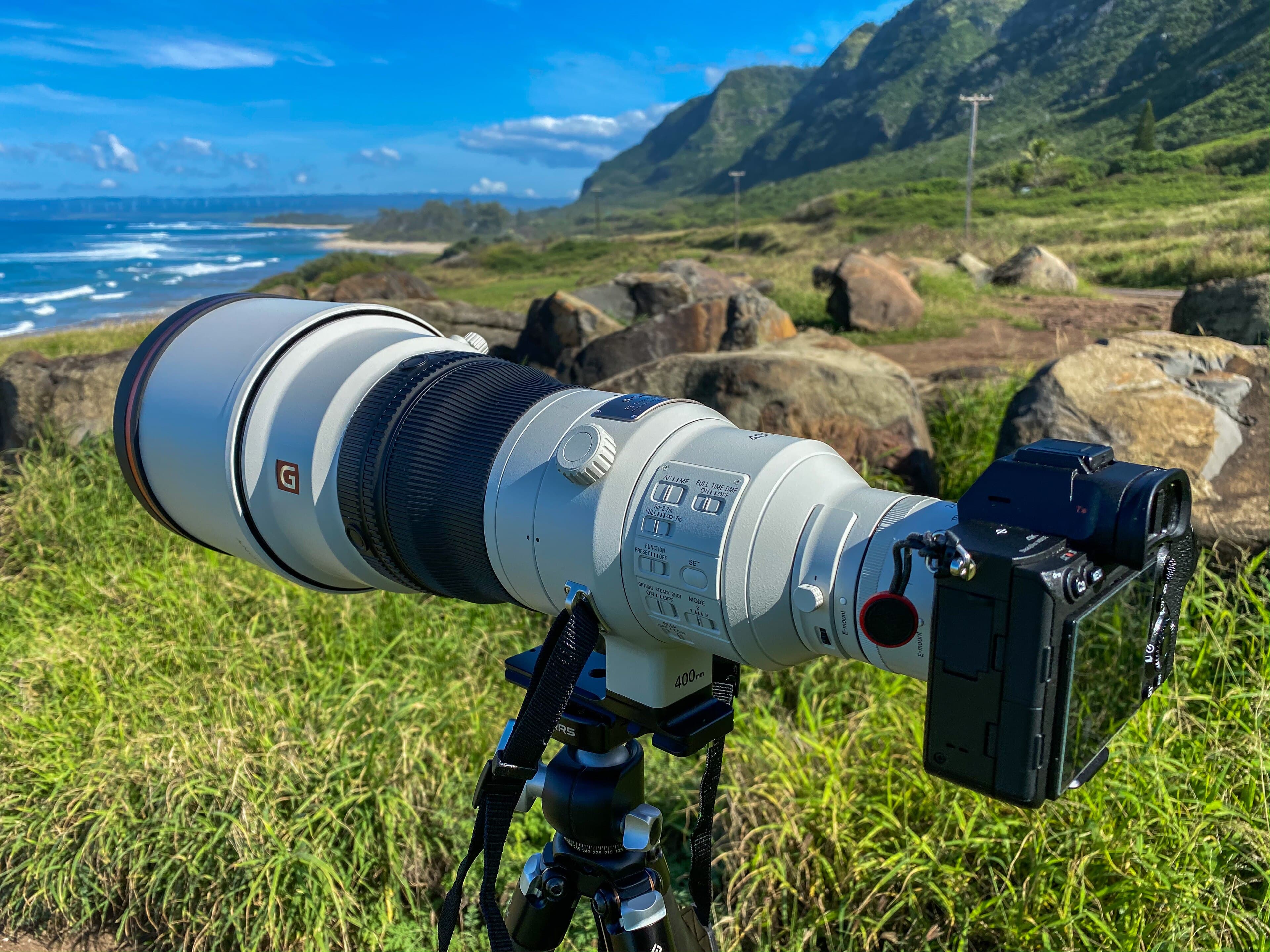
Sample contentBest telephoto lenses for wildlife photography: how to choose
There is no single best lens, but there is a right way to decide. A framework built on focal length, aperture, weight, teleconverters and the used market.
· 8 min
News
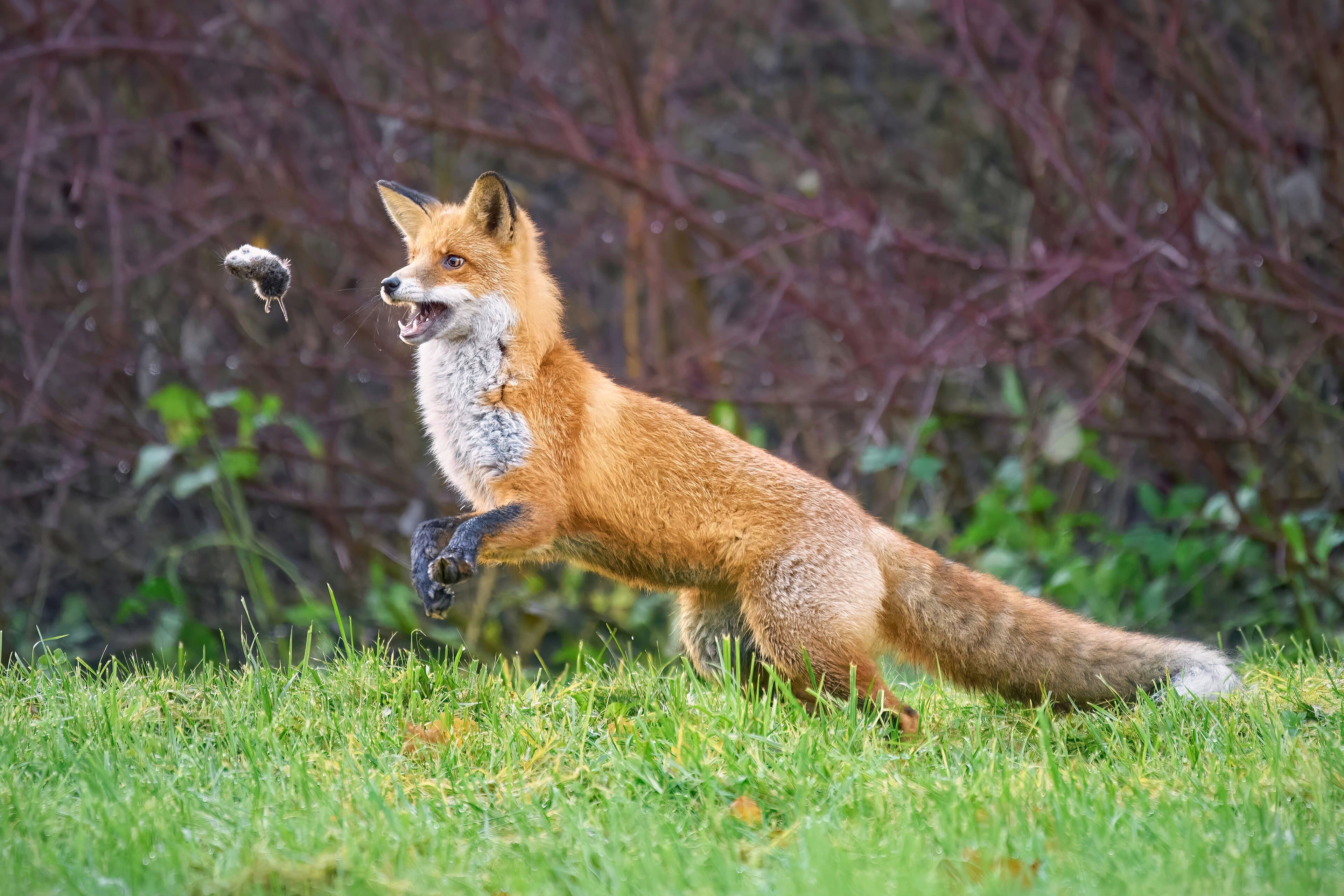
Sample contentWildlife Photographer of the Year: how the competition works and what the winning images teach
The Natural History Museum's annual competition is the closest thing wildlife photography has to a world championship. Here is how it is judged, what it rewards and what every entrant can learn from it.
· 6 min
Photo of the Week
Sample contentPhoto of the week: a snowy owl, wings open, against the dark
Diego Delso's portrait of a female snowy owl in flight is a study in white on black, and an honest example of how to caption a captive bird.
· 2 min
The WLIFE Dispatch · weekly
The week’s best wildlife photography, in one email.
New images, photographer stories, gear tested in the field and expedition openings. Free, unsubscribe any time.