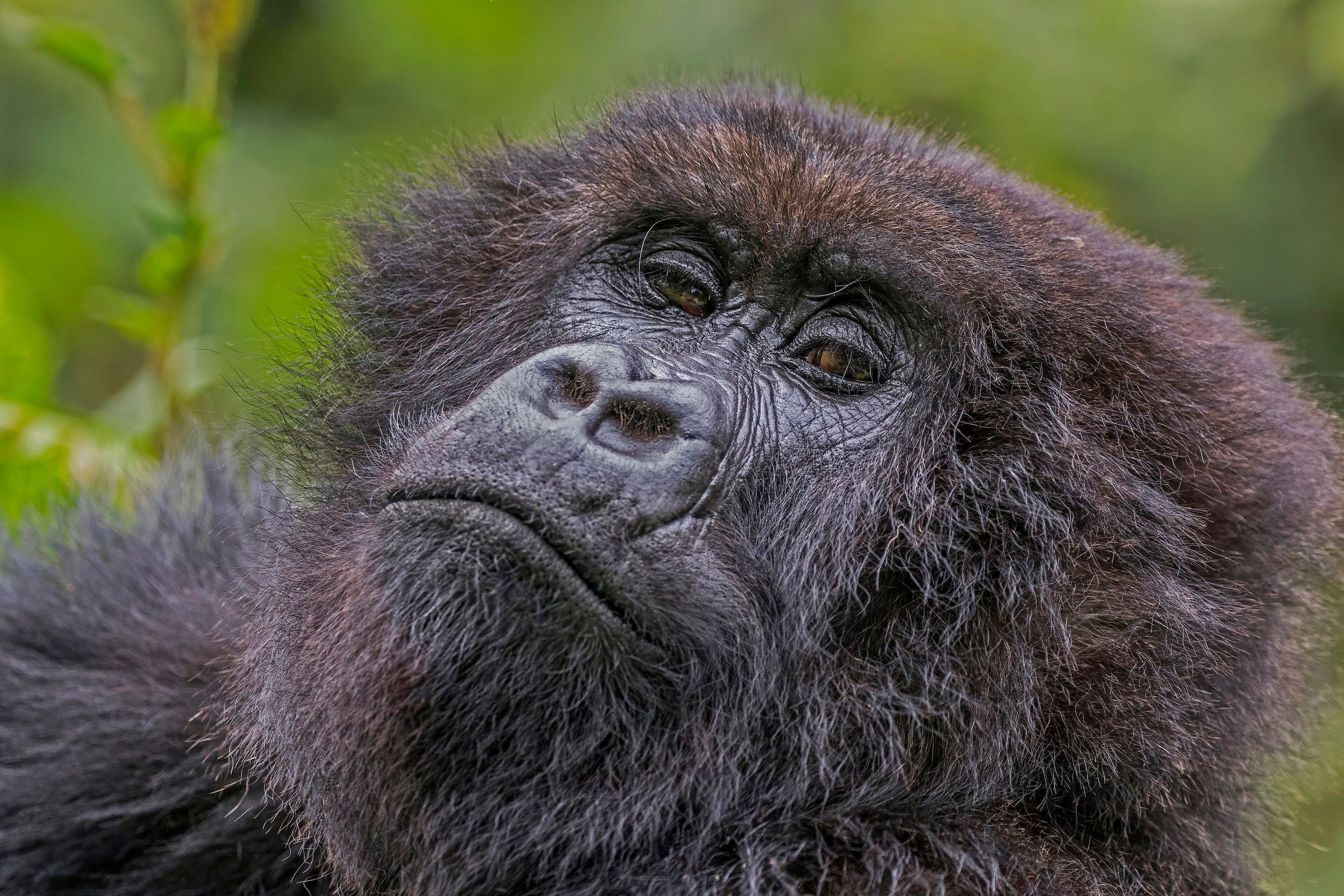
Photographed at Volcanoes National Park, Rwanda
Camera data: Canon EOS 70D248 mmf/51/640 sISO 2000Volcanoes National Park, Rwanda
Rwanda · Hard
Sample contentVolcanoes National Park
Volcanoes National Park protects Rwanda's share of the Virunga Massif, where habituated mountain gorilla families can be photographed at close range in bamboo and montane forest.
- Best season
- June–September · December–February · March–May and October–November
- Difficulty
- Hard (4/5)
- Key species
- Mountain gorilla, Golden monkey, Forest elephant, Buffalo
- Budget
- USD 500–1,500 per person per day (estimate)
Rwanda
The place
Volcanoes National Park lies in north-western Rwanda along the borders with Uganda and the Democratic Republic of the Congo. It covers the Rwandan slopes of five volcanoes of the Virunga chain — Karisimbi, Bisoke, Muhabura, Gahinga and Sabyinyo — and continues across the frontier as Uganda's Mgahinga Gorilla National Park and the DRC's Virunga National Park. The park is also where Dian Fossey established the Karisoke Research Center in 1967, and her grave lies within its forest.
The park's altitude runs from about 2,400 metres to over 4,500 metres on Karisimbi, which produces distinct vegetation bands: bamboo at the lower levels, then Hagenia and Hypericum montane forest, giant lobelia and senecio moorland, and bare alpine ground on the summits. Mountain gorillas range mostly through the bamboo and lower forest, and golden monkeys, a Virunga endemic, live in the bamboo zone. Rain can fall in any month and trails are steep and muddy.
Gorilla visits are strictly regulated. Permits are issued by the Rwanda Development Board, and each habituated gorilla family receives one group of at most eight visitors for one hour per day. Trekkers assemble early at the park headquarters at Kinigi, are briefed and allocated to a family, then drive to a trailhead and walk with guides and trackers for anything from under an hour to several hours. Porters can be hired at the trailhead and are strongly recommended for camera bags. Children under 15 are not permitted, and anyone with a cold or infectious illness is asked not to trek, because gorillas are susceptible to human disease.
This is low-light, close-range photography. Encounters happen under a dense canopy, often in rain or mist, with dark subjects against bright foliage, so high ISO performance and a fast 70–200 mm or a 100–400 mm zoom matter more than extreme reach. The hour passes quickly: experienced photographers spend the first minutes simply watching, then work faces, hands and family interactions, keeping the required distance and avoiding flash entirely.
Species and photographic opportunities
The animals
- Mountain gorilla
- Habituated families visited for one hour per permit
- Golden monkey
- Bamboo zone; separate permit and trek
- Forest elephant
- Present but rarely seen
- Buffalo
- Occasionally encountered on trails; the reason trackers go first
- Black-fronted duiker
- Small forest antelope
- Rwenzori turaco
- One of several Albertine Rift endemic birds
- Handsome francolin
- Montane forest floor
- Gorilla portraits in soft, diffused forest light
- Silverbacks and family interactions at the regulated distance
- Infants and juveniles playing in bamboo
- Golden monkeys in the bamboo canopy
- Volcano landscapes and terraced farmland from the park boundary at dawn
In pictures · 1 frames
01
Volcanoes National Park in pictures
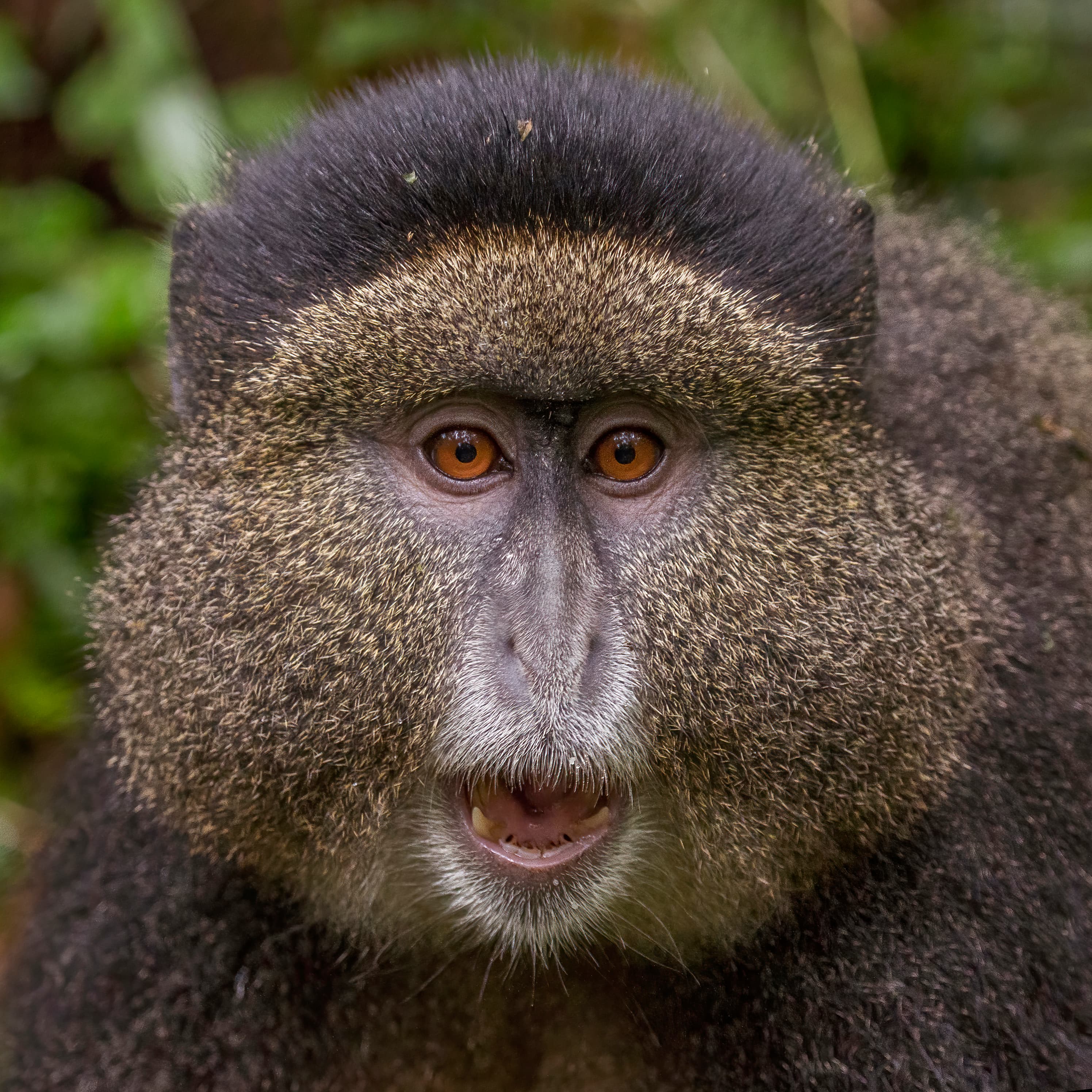
- 01Golden monkey (Cercopithecus kandti), Volcanoes National Park, RwandaVolcanoes National Park, Rwanda · Charles J. Sharp · CC BY-SA 4.0
When to go
The season
| Months | Why |
|---|---|
| June–September | The long dry season: firmer trails and less rain, though the forest is never completely dry; the most popular months, so permits go early. |
| December–February | The short dry season; good conditions and slightly lower demand. |
| March–May and October–November | Rainy seasons with muddier trails but lush vegetation and atmospheric mist; permits are easier to obtain. |
Light, access and conditions
The ground
- Altitude above 2,400 m with steep, slippery, muddy trails; treks can last several hours each way
- Rain and mist in any month; waterproof clothing, gaiters and camera rain covers are essential
- Low light under dense canopy: expect ISO 3200 and above with no flash permitted
- Strict one-hour limit with each family and a minimum distance from the gorillas enforced by guides
- Permits are limited and often sell out months ahead in the dry seasons
- Visitors with colds or other infectious illness are not allowed to trek
Trip difficulty: Hard. Physically demanding: high altitude, steep muddy terrain and unpredictable trek length. A porter for camera gear makes a real difference. Reasonable fitness is required.
Editorial estimate
The cost
USD 500–1,500 per person per day (USD)
Basis: Mid-range to premium lodge near Kinigi with transfers and guiding; gorilla permit cost not included and not stated here
Editorial estimate only, not a quote. Ranges are broad and exclude international flights. Verify current rates, park fees and seasonal surcharges with operators before planning. Last reviewed 2026-10-20.
Questions
How many gorilla treks should a photographer plan?
At least two, and ideally three. A single hour may fall in heavy rain or with a family resting deep in vegetation; multiple permits across different families give a realistic chance of open, well-lit encounters.
What lens works best?
A 70–200 mm f/2.8 or a 100–400 mm zoom on a full-frame body handles most encounters, which happen at close range. A 24–70 mm is useful for habitat and group scenes. Long telephotos over 500 mm are rarely needed.
Can I use flash?
No. Flash is not permitted with gorillas. Rely on high ISO, wide apertures and stabilisation, and accept slower shutter speeds for resting animals.
Credits
- Photograph
- Charles J. Sharp · Volcanoes National Park, Rwanda · CC BY-SA 4.0
- Photograph
- Charles J. Sharp · Volcanoes National Park, Rwanda · CC BY-SA 4.0
Expeditions in Volcanoes National Park
All expeditions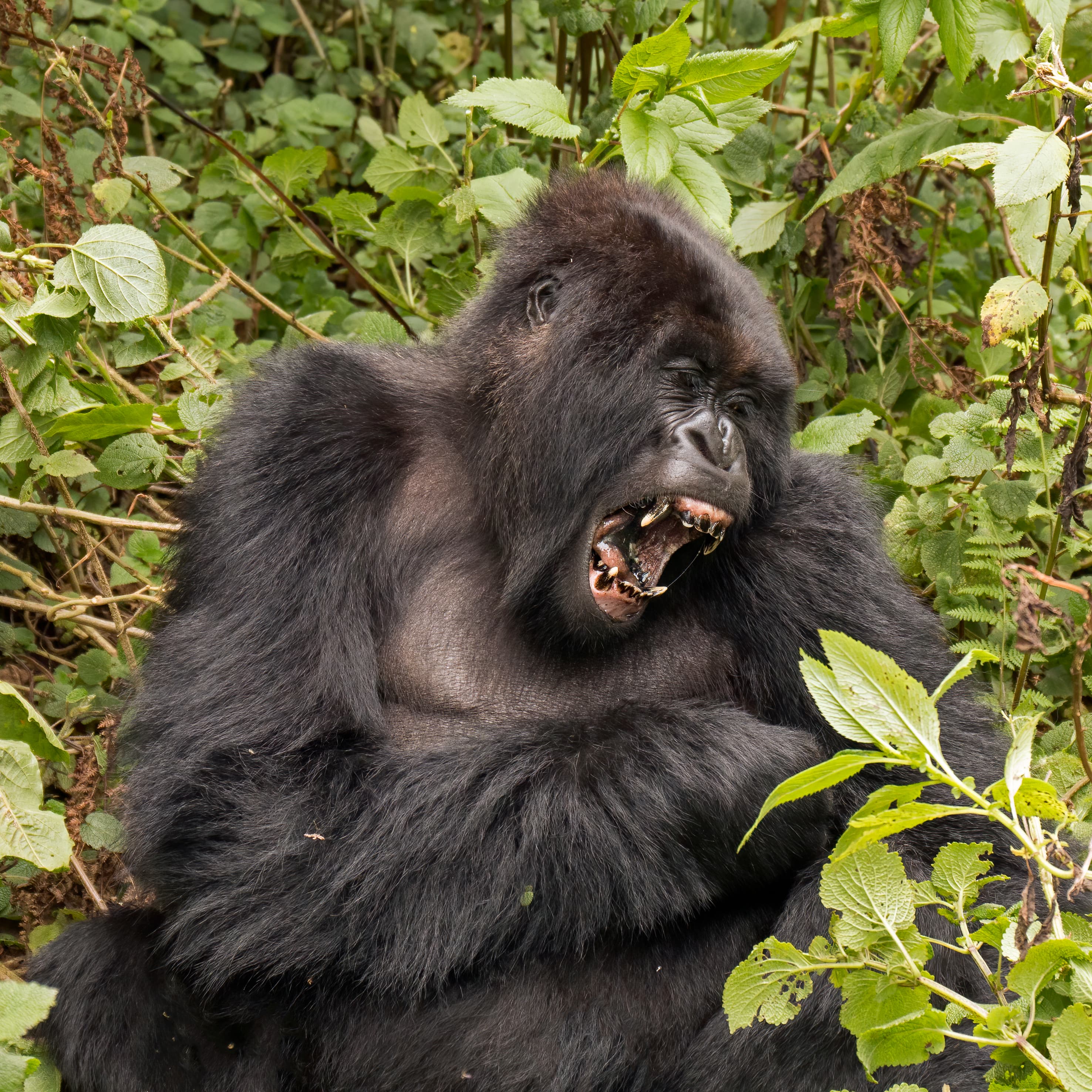 ConceptVolcanoes gorilla photography trek6 days · max 6 photographers (gorilla groups are limited to 8 visitors)
June to September or December to February, the drier months with firmer trailsSample content