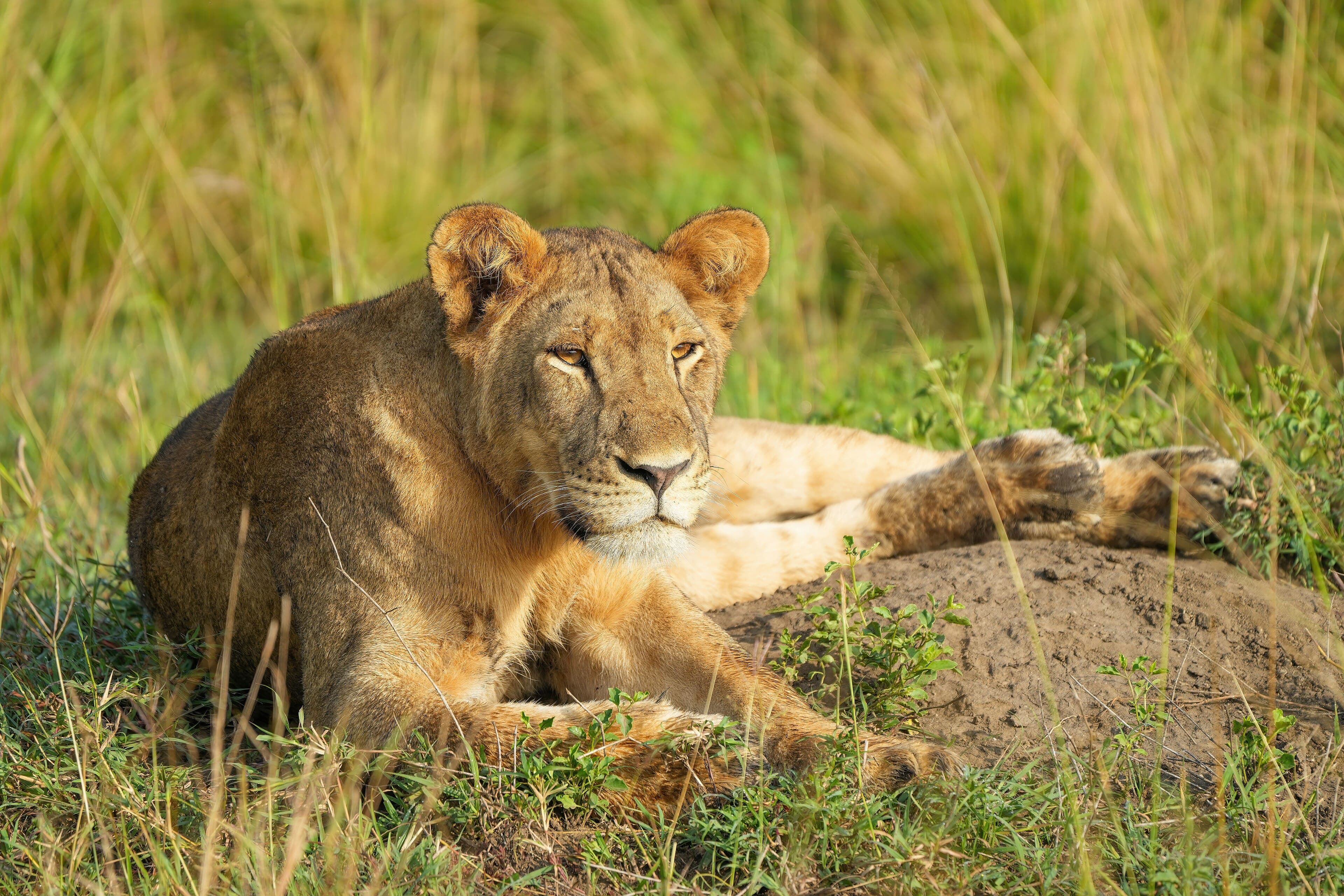
Photographed at Queen Elizabeth National Park, Uganda
Camera data: Sony α1600 mmf/6.31/800 sISO 400Queen Elizabeth National Park, Uganda
Portfolio: eight frames by Giles Laurent
From a Serengeti lion to a breaching humpback, eight open-licensed photographs that show how one photographer works with light, timing and long lenses.
By WLIFE EditorialPhotographs Giles Laurent7 min read
Giles Laurent publishes a substantial body of wildlife work on Wikimedia Commons under Creative Commons licences, and a striking number of those files have been selected by the Commons community as Featured Pictures. That makes his portfolio unusually easy to study: every frame carries its own file description, its own camera data and, often, a short note on the animal's behaviour. In this portfolio we present eight of those frames. Everything stated below about each image is drawn from what is visible in it and from the photographer's own file page, which we link so that you can read the originals. We have not interviewed Mr Laurent and attribute no opinions to him.
1. The lion Snyggve, Serengeti
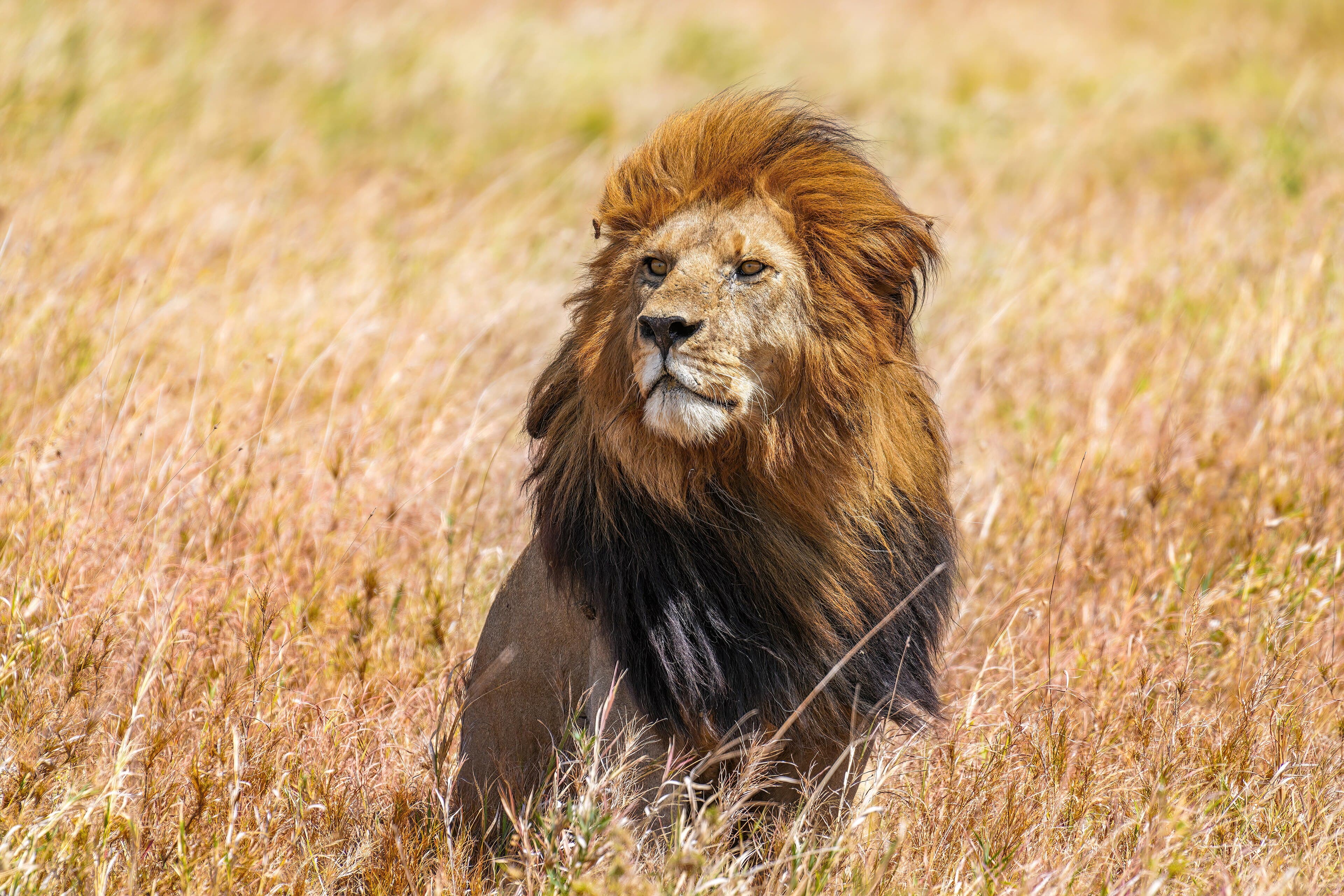
“Wild lion (Panthera leo) Snyggve (also known as Bob Junior), son of C-Boy, scanning the horizon in the Serengeti National Park.”
Giles Laurent, file description on Wikimedia Commons
The frame is a straight, eye-level portrait: the lion's head and mane fill the centre, the background is reduced to soft tones, and the direct gaze does all the work. According to its Commons page the image is a Featured Picture, a Quality Image and a Valued Image, was Picture of the Day in August 2024, and took second prize in the Tanzania national contest of Wiki Loves Earth 2022. We look at the craft of this frame in detail in our Behind the Shot feature.
2. Lioness at golden hour, Queen Elizabeth National Park
The file description reads simply "Lioness during golden hour of the morning at Queen Elizabeth National Park", and the picture needs no more explanation than that. Low, warm sidelight rakes across the animal's coat, separating it from a background that falls into shadow. The photograph is listed as a Featured Picture and a Quality Image on Commons. Compared with the Serengeti lion, the lens is longer and the aperture smaller, which is typical of the 200–600 mm zoom that appears throughout this portfolio.
3. Cheetah close-up, Serengeti
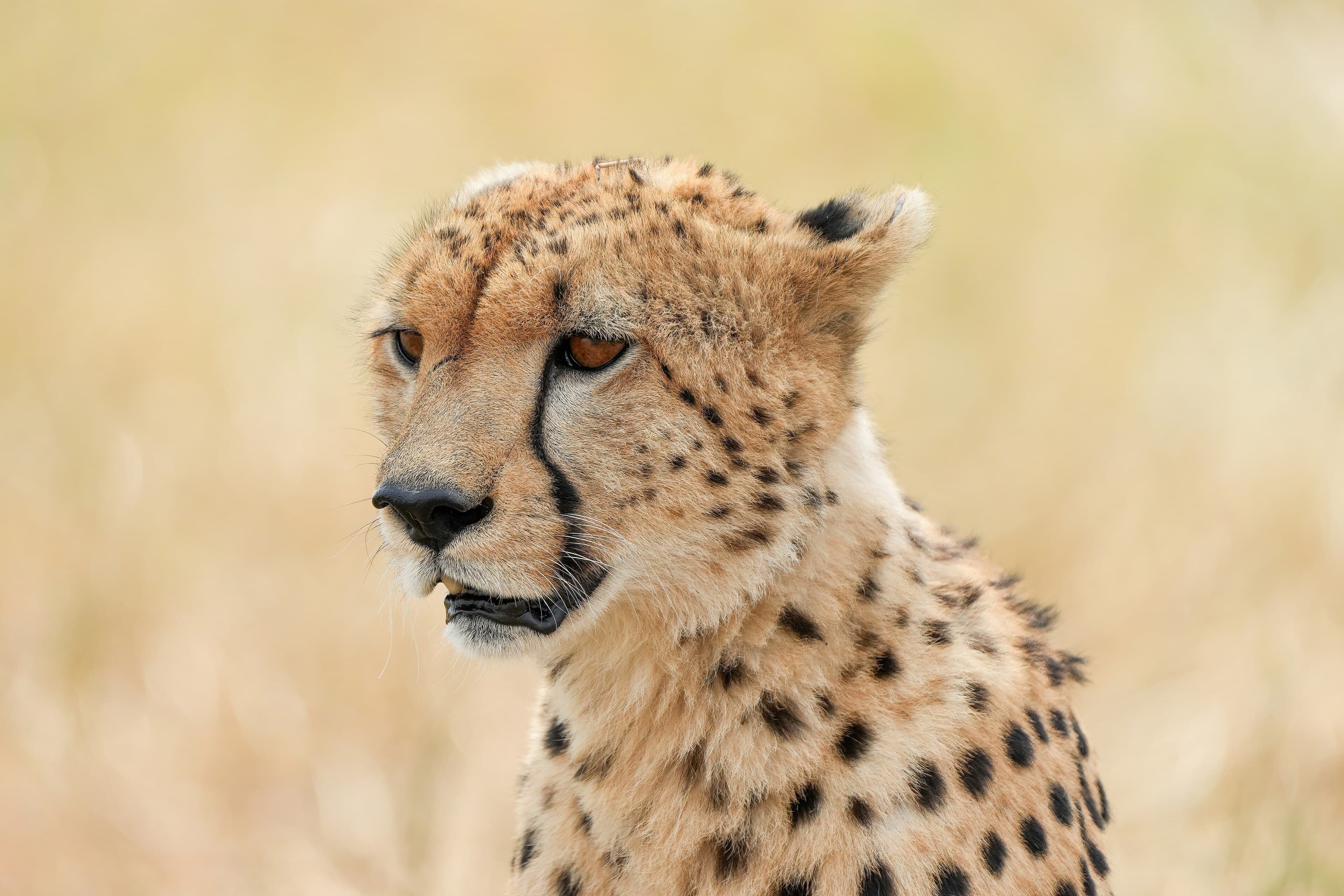
This is the most tightly cropped frame in the set: the cheetah's face, the black tear-marks and the eyes, with almost nothing else. The description on Commons is the one-line "Cheetah close-up in the Serengeti National Park", and the page records that the image won fifth prize in the Tanzania national contest of Wiki Loves Earth 2024, in addition to Featured and Quality status. At 600 mm the working distance is long enough that the animal shows no sign of attention to the photographer.
4. European bee-eater in flight, a stacked sequence
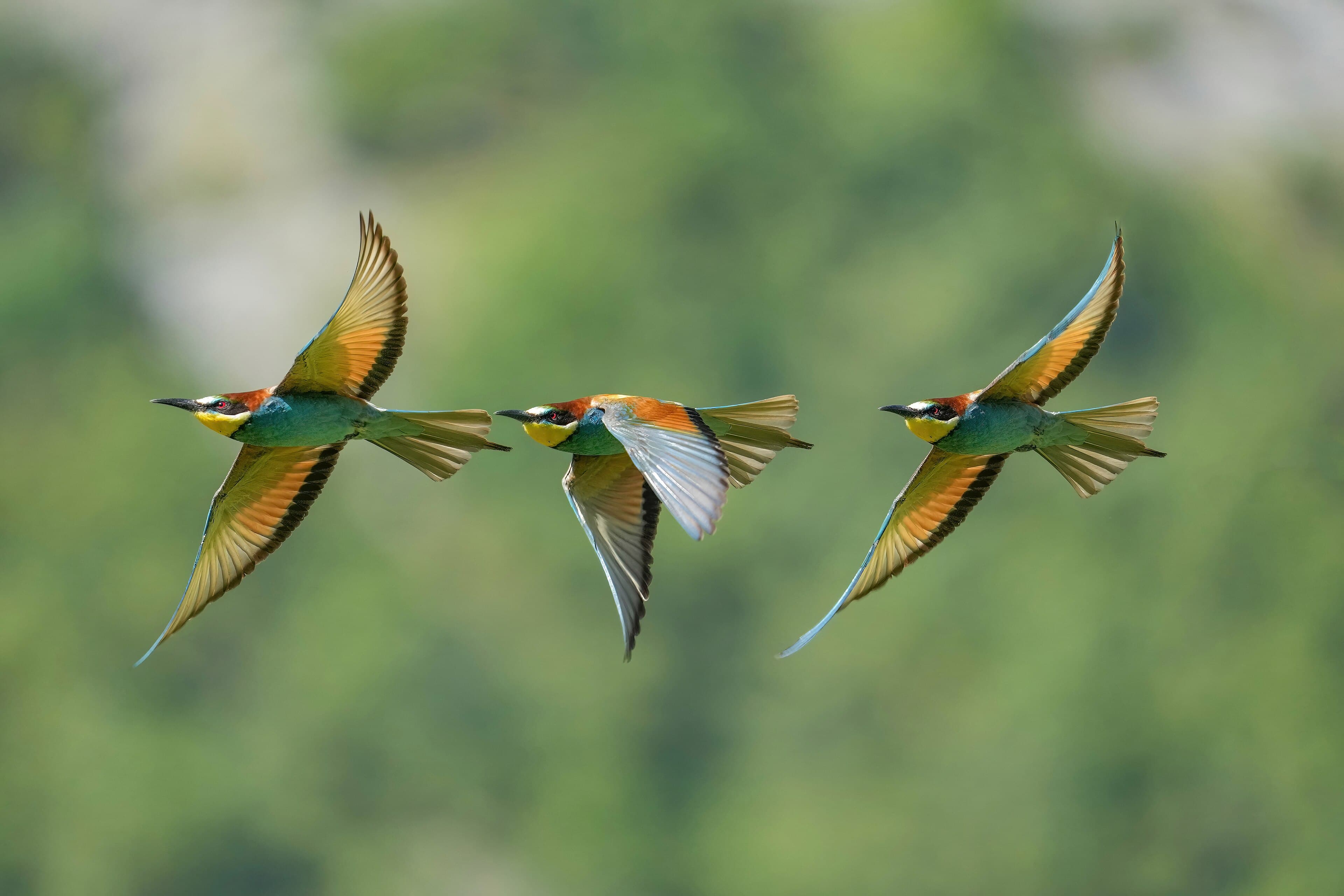
“Image created by stacking three photographs of an European bee-eater (Merops apiaster) in flight at Pfyn-Finges, Switzerland.”
Giles Laurent, file description on Wikimedia Commons
This frame is a composite, and the photographer says so in the first line of the description, which is exactly how it should be done. The Commons page lists it as a Featured Picture, a Quality Image and the most valued image in its scope, described there as chronophotography of the species in flight. We explain the technique and its ethics in a separate Behind the Shot piece.
5. Desert-adapted elephant, Damaraland
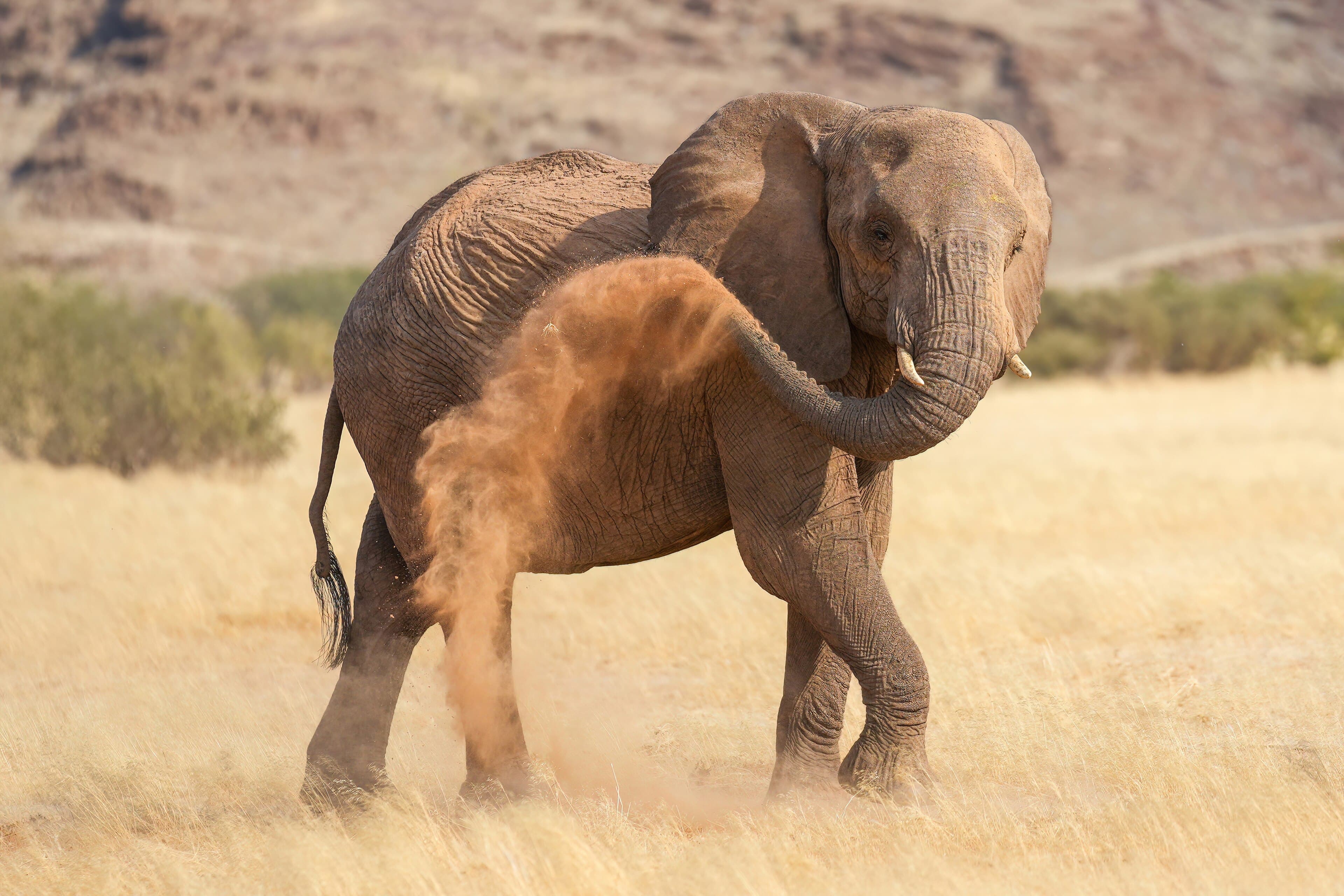
“Desert-adapted elephants often dust-bathe by spraying sand or dust over their bodies with their trunks.”
Giles Laurent, file description on Wikimedia Commons
Here the long zoom is set aside for a 70–200 mm at its widest aperture, and the shutter speed of 1/2500 s freezes the cloud of dust mid-air. The photographer's description goes on to explain that dust bathing protects the skin from sun and heat and helps repel insects. The image is a Featured Picture, a Quality Image and a Valued Image, and was entered in the Wiki Science Competition 2025.
6. Atlantic puffin with a beak full of fish, Iceland
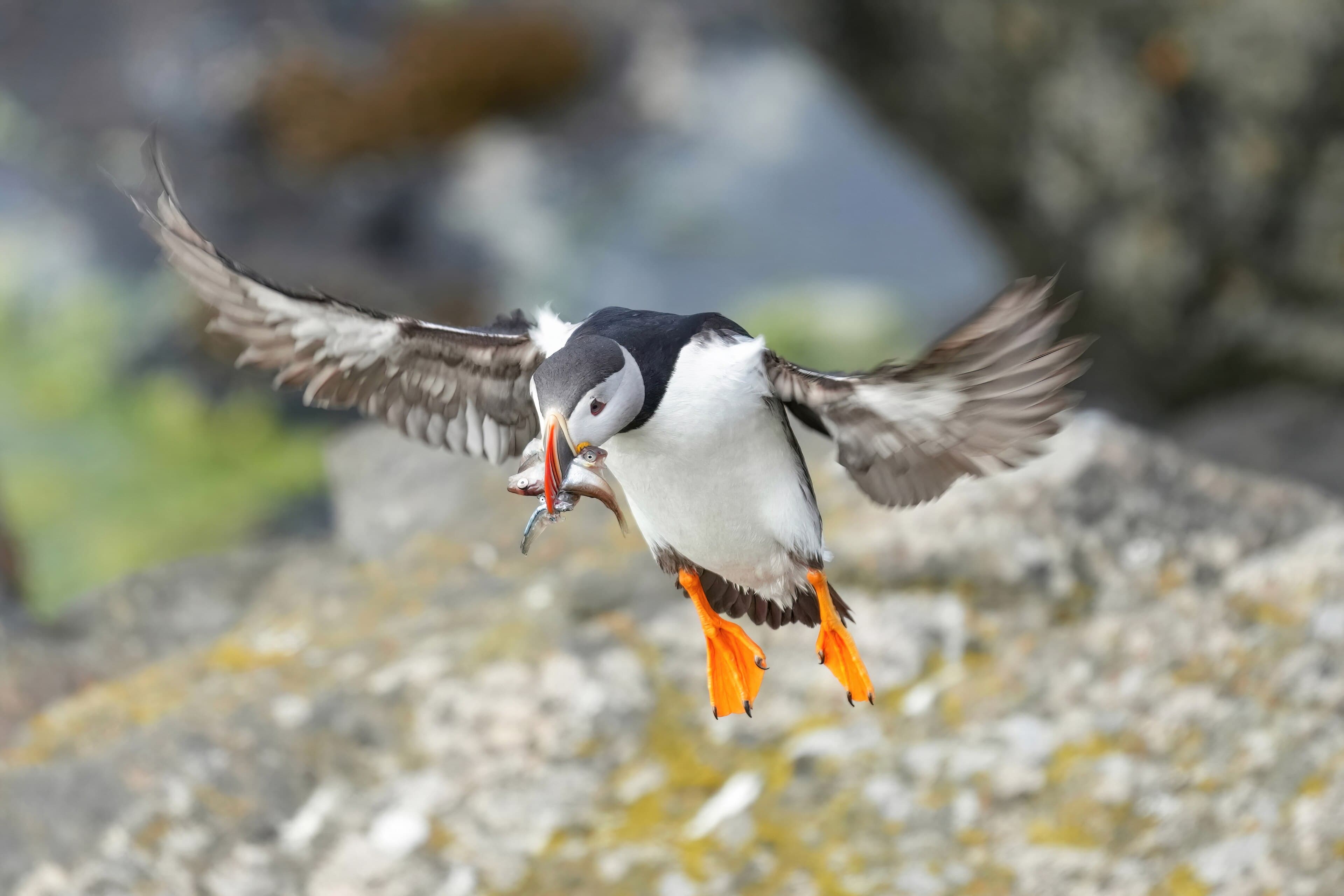
“Atlantic puffin (Fratercula arctica) in flight with mouth full of fishes at Friðland í Flatey (Iceland). The Atlantic puffin can catch several small fish at once.”
Giles Laurent, file description on Wikimedia Commons
A classic seabird-colony subject, caught with the wings open and the row of fish clearly visible across the bill. The description notes that the bird's grooved tongue and the serrations in its beak let it hold its catch in rows. The file is a Featured Picture, Quality Image and Valued Image on Commons.
7. Humpback whale breaching, Costa Rica
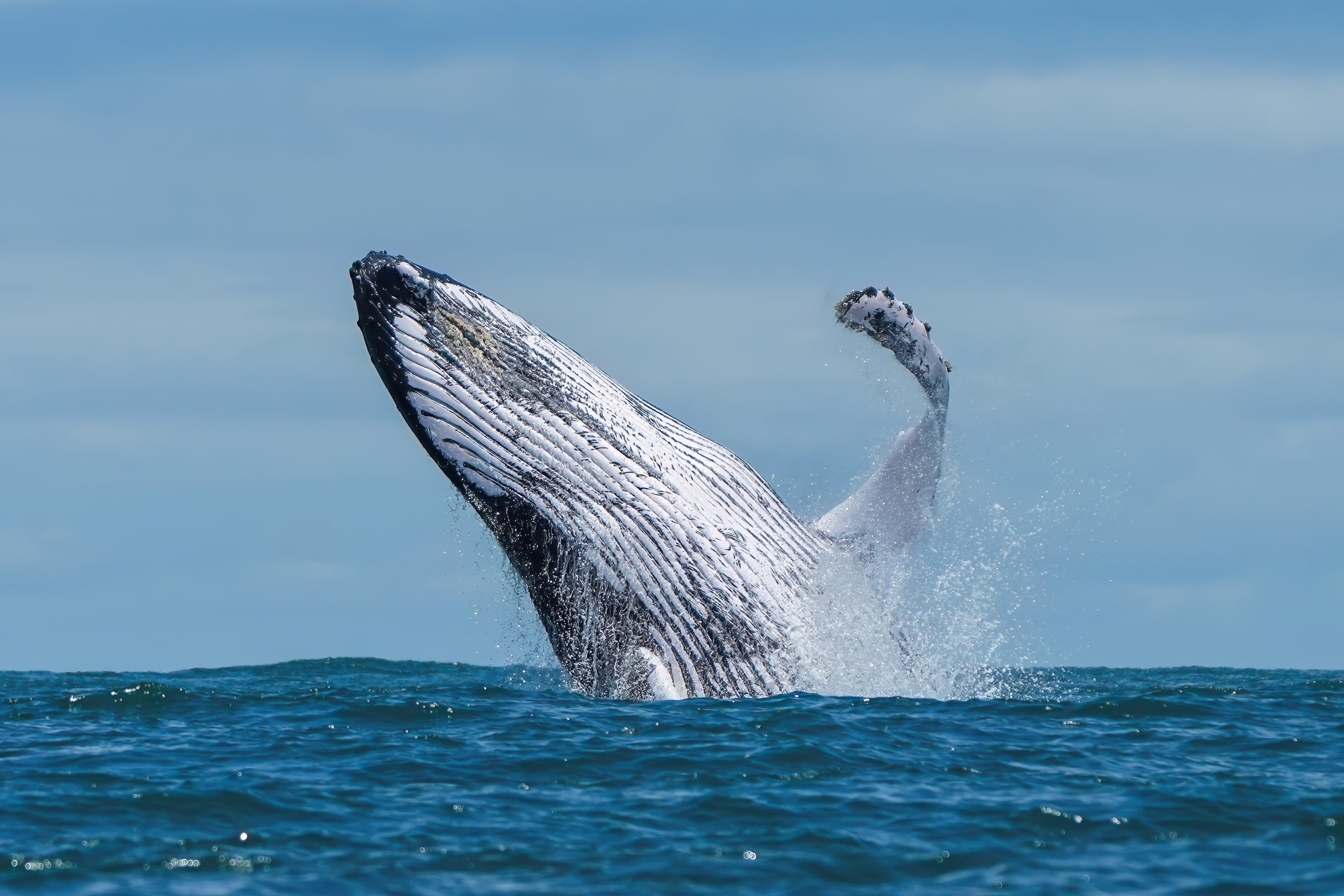
The one marine frame in this set, and the one where the zoom's flexibility shows most clearly: the focal length is pulled back to 234 mm to keep the whole animal and the splash inside the frame. The photographer's description observes that the reasons whales breach are still not settled, listing communication, courtship, dominance, warning, parasite removal and play among the hypotheses. The image is recorded as a Featured Picture and a Quality Image.
8. Western cattle egret, Camargue
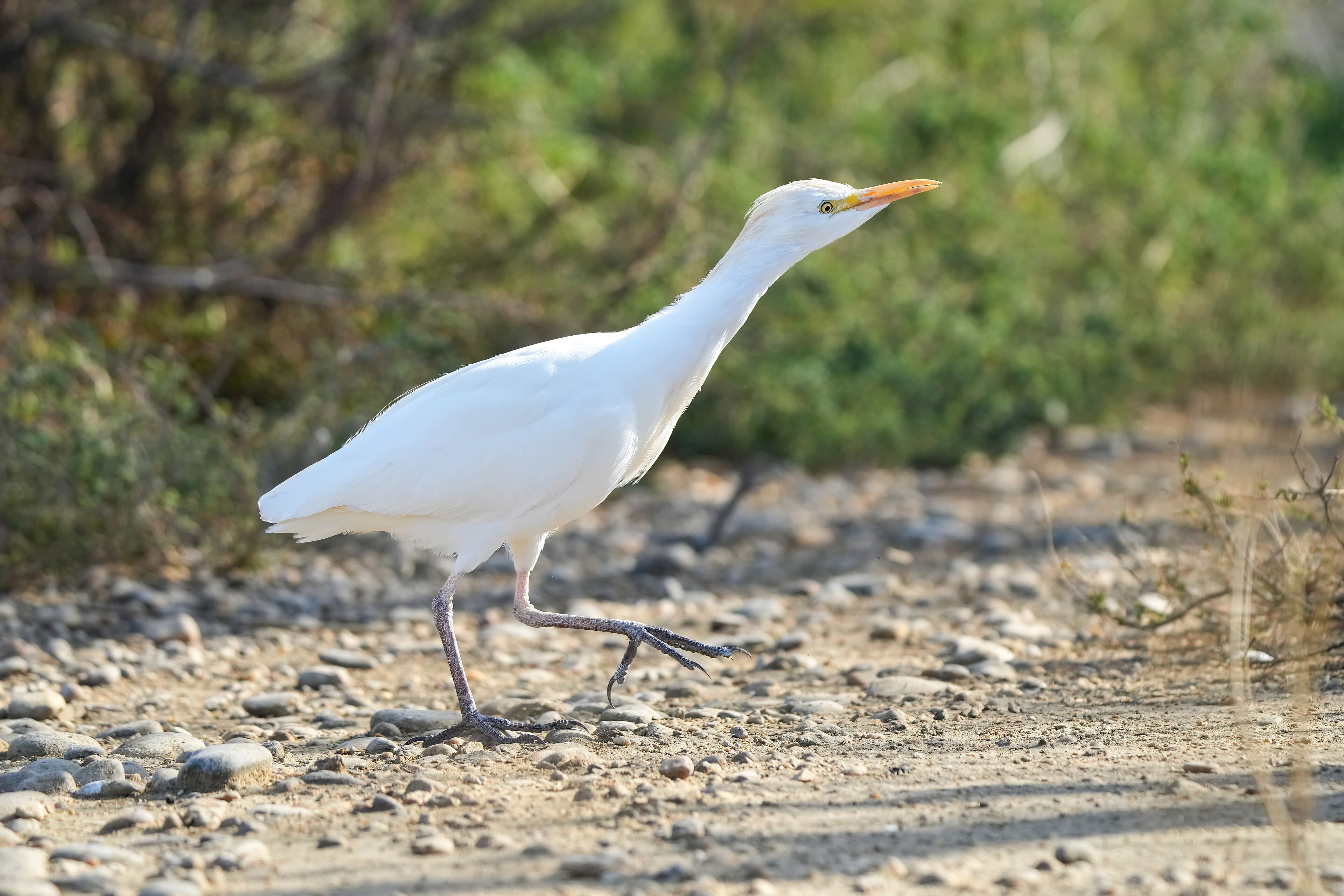
The final frame is the quietest: a single egret in the wetlands of southern France, described on Commons simply as "Western cattle egret in the Camargue". It is listed as a Featured Picture and a Quality Image. Taken together, the eight photographs show a working method rather than a single style: long lenses, fast shutter speeds, a preference for clean backgrounds and an interest in what the animal is doing rather than only how it looks.
About the author
WLIFE Editorial
The WLIFE editorial desk researches, writes and fact-checks stories about wildlife photography, photographers, equipment and expeditions.
Credits
- Words
- WLIFE Editorial
- Photographer
- Giles Laurent
- Photograph
- Giles Laurent · Queen Elizabeth National Park, Uganda · CC BY-SA 4.0
- Photograph
- Giles Laurent · Serengeti National Park, Tanzania · CC BY-SA 4.0
- Photograph
- Giles Laurent · Serengeti National Park, Tanzania · CC BY-SA 4.0
- Photograph
- Giles Laurent · Pfyn-Finges, Switzerland · Three frames stacked · CC BY-SA 4.0
- Photograph
- Giles Laurent · Damaraland, Namibia · CC BY-SA 4.0
- Photograph
- Giles Laurent · Flatey, Iceland · CC BY-SA 4.0
- Photograph
- Giles Laurent · Ballena Marine National Park, Costa Rica · CC BY-SA 4.0
- Photograph
- Giles Laurent · Camargue, France · CC BY-SA 4.0
- Fact-check
- In progress
Fact-check notes · Sample article — verify all facts before editorial publication. All descriptions, quotes, EXIF data and award statuses were read on 2026-10-23 from the eight Wikimedia Commons file pages linked in the quote blocks and in images.ts. No biography or interview material is included.
Read next
Behind the Shot
Sample contentBehind the shot: Snyggve, the Serengeti lion who looked back
A direct gaze, soft light and a background that disappears: what the file data and the frame itself tell us about one of the most-viewed lion portraits on Wikimedia Commons.
· 6 min
Behind the Shot
Sample contentBehind the shot: three bee-eaters that are one bird
Giles Laurent's stacked sequence of a European bee-eater shows the whole arc of a wingbeat in a single frame. Here is what a stacked image is, how this one was built, and why saying so matters.
· 6 min
Fieldcraft & Technique
Sample contentHow to photograph birds in flight
Flight photography is the hardest discipline in wildlife work and the most learnable. Approach, light, tracking, backgrounds and ethics, in the order that matters.
· 8 min
The WLIFE Dispatch · weekly
The week’s best wildlife photography, in one email.
New images, photographer stories, gear tested in the field and expedition openings. Free, unsubscribe any time.