
Photographed at Phippsøya, Sjuøyane, Svalbard
Camera data: Canon EOS 5DS400 mmf/41/640 sISO 500Phippsøya, Sjuøyane, Svalbard
Norway · Demanding
Sample contentSvalbard
Svalbard is the most accessible place on Earth to photograph polar bears in their sea-ice habitat, from small expedition ships that follow the retreating pack ice under 24-hour daylight.
- Best season
- May–June · July–August · Early September
- Difficulty
- Demanding (3/5)
- Key species
- Polar bear, Walrus, Svalbard reindeer, Arctic fox
- Budget
- USD 700–1,500 per person per day (estimate)
Norway
The place
Svalbard is a Norwegian archipelago in the Arctic Ocean, roughly between 74° and 81° north, about halfway between mainland Norway and the North Pole. Longyearbyen, the main settlement on the island of Spitsbergen, has scheduled flights from Oslo and Tromsø and is the departure point for almost all wildlife voyages. Glaciers cover a large part of the land, fjords cut deep into the west coast, and the north and east of the archipelago are locked in sea ice for much of the year.
Wildlife photography here is ship-based. Expedition vessels carrying a few dozen passengers leave Longyearbyen and route according to ice and weather, using inflatable Zodiacs for cruising along the ice edge, glacier fronts and bird cliffs, and for landings where these are allowed. Polar bears are found along the drift ice and on the eastern islands, walrus haul out on specific beaches, and reindeer and Arctic foxes occur on the tundra. Seabirds such as little auks, Brünnich's guillemots and kittiwakes nest on the cliffs in enormous numbers.
The season runs from late spring to early autumn. In May and June the ice is still extensive, which means bears are often closer to the west coast but routes are limited; by July and August more of the archipelago opens up and circumnavigations become possible. The midnight sun lasts from late April until late August in Longyearbyen, giving soft, low light at any hour. Regulations introduced in 2025 govern how close vessels may approach wildlife: at the time of writing, ships and boats must keep at least 500 metres from polar bears between 1 March and 30 June and at least 300 metres for the rest of the year, landings in protected areas are restricted to designated sites, and ships with more than 200 passengers may not enter the national parks and nature reserves.
The photographic consequence of those rules is that long lenses and patience matter more than ever. Bears are photographed at distance in a landscape of ice and water, so 600 mm with a teleconverter is the standard tool, and the ship's rail or a Zodiac is the platform. Cold, spray and condensation are the main technical hazards; batteries drain quickly and gear must be kept sealed when moving between deck and cabin.
Species and photographic opportunities
The animals
- Polar bear
- Along the drift ice and on the eastern islands; photographed at legal distances from the ship or Zodiac
- Walrus
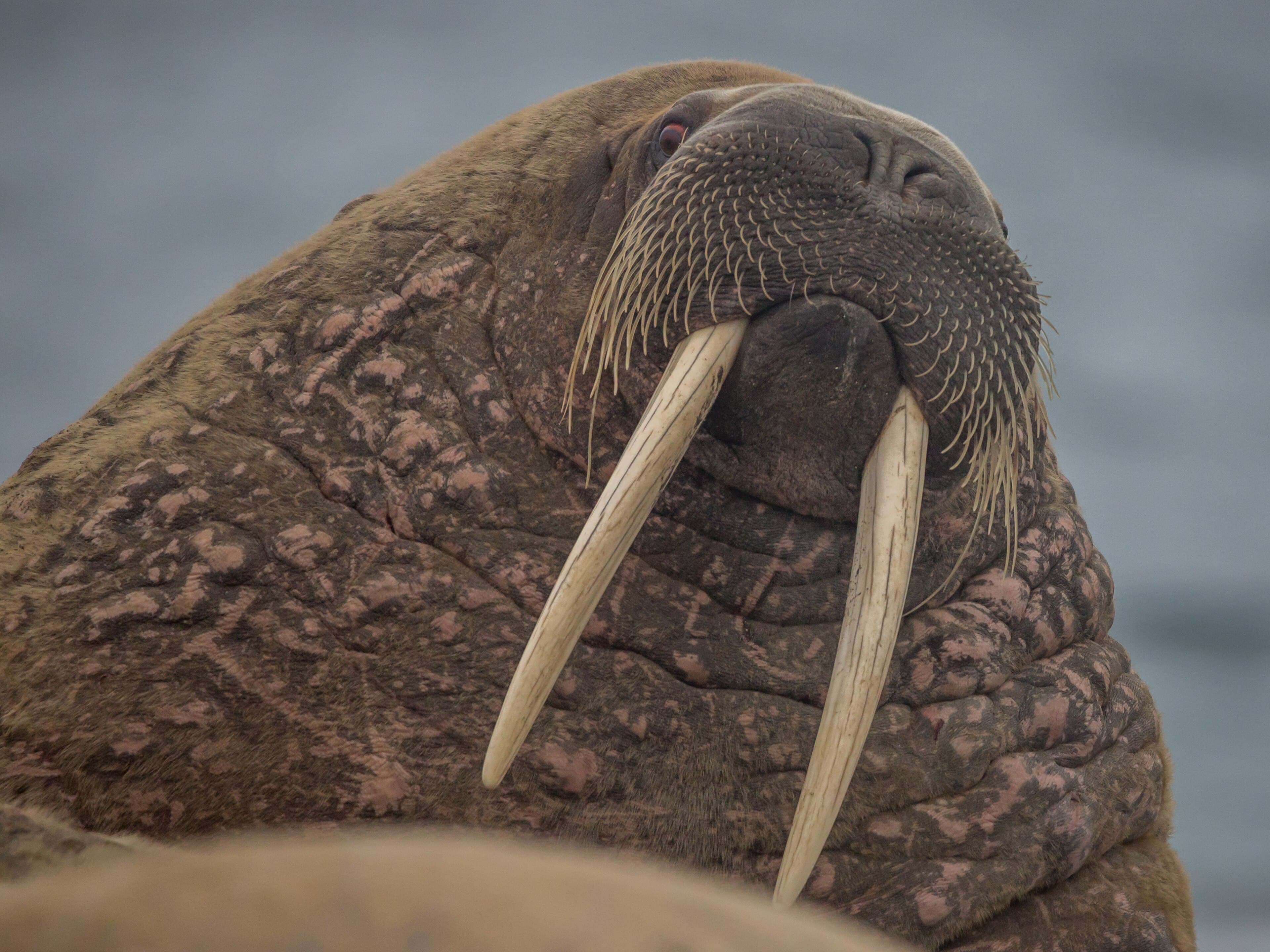
- Haul-outs on beaches; approached only to the permitted distance
- Svalbard reindeer
- Short-legged endemic subspecies on the tundra
- Arctic fox
- Below bird cliffs in summer, in blue or white morphs
- Bearded seal and ringed seal
- On ice floes; principal polar bear prey
- Little auk
- Colonies on scree slopes; vast numbers in flight
- Brünnich's guillemot and kittiwake
- Bird cliffs such as those at Alkefjellet
- Ivory gull
- Scarce high-Arctic gull sometimes seen near bear kills
- Beluga and other whales
- Occasional sightings from the ship
- Polar bears on drift ice in flat, soft Arctic light
- Walrus haul-outs from Zodiacs at the permitted distance
- Bird cliffs with thousands of guillemots and kittiwakes in flight
- Glacier fronts and icebergs as landscape and habitat context
- Arctic foxes and reindeer on summer tundra during landings
In pictures · 1 frames
01
Svalbard in pictures
- 01This Walrus Odobenus rosmarus rests together in a pack with others on the beach of the Wahlberg island, Svalbard. A walrus usually feeds on scallops at an amounWahlbergøya, Svalbard · AWeith · CC BY-SA 4.0
When to go
The season
| Months | Why |
|---|---|
| May–June | Extensive ice and bears often near the west coast; routes constrained; the strictest 500 m bear distance applies until 30 June. |
| July–August | More of the archipelago accessible as ice retreats; walrus and seabird colonies at their best; 24-hour daylight. |
| Early September | Returning darkness gives colour at the ends of the day; weather becomes less settled. |
Light, access and conditions
The ground
- Temperatures around or below freezing even in summer, with wind chill on deck and in Zodiacs
- Sea spray and condensation when moving between cold decks and warm cabins; use sealed bags and let gear acclimatise
- Routes change daily with ice and weather; no sighting can be planned in advance
- Legal minimum distances to polar bears and walrus limit how close any vessel may approach (500 m / 300 m for bears depending on season at the time of writing)
- Landings are restricted to designated sites and are led by armed guides because of bear risk
- Small ships move constantly; seasickness can affect the Barents Sea crossings on longer routes
Trip difficulty: Demanding. Moderate: photography is from the ship and Zodiacs rather than on foot, but cold, motion, long hours and distance to subjects make it demanding technically.
Editorial estimate
The cost
USD 700–1,500 per person per day (USD)
Basis: Small expedition ship, shared cabin, all meals and Zodiac excursions; excludes flights to Longyearbyen
Editorial estimate only, not a quote. Ranges are broad and exclude international flights. Verify current rates, park fees and seasonal surcharges with operators before planning. Last reviewed 2026-10-20.
Questions
How close can a ship get to a polar bear?
Norwegian regulations in force since 2025 set minimum distances: at the time of writing 500 metres from 1 March to 30 June and 300 metres for the rest of the year. Expedition leaders enforce these limits, so plan on 600 mm or more with a teleconverter.
Which month is best for polar bears?
There is no single answer. Early season has more ice and bears nearer the west coast but fewer navigable routes; mid-summer allows wider exploration. Choose a small ship with an experienced expedition leader and accept that routing is decided day by day.
Can I go ashore to photograph wildlife?
Landings happen at designated sites and are led by guides, but bears are never approached on foot. Most bear and walrus photography is done from the ship or Zodiacs.
Credits
- Photograph
- Godot13 · Phippsøya, Sjuøyane, Svalbard · CC BY-SA 4.0
- Photograph
- AWeith · Wahlbergøya, Svalbard · CC BY-SA 4.0
Expeditions in Svalbard
All expeditions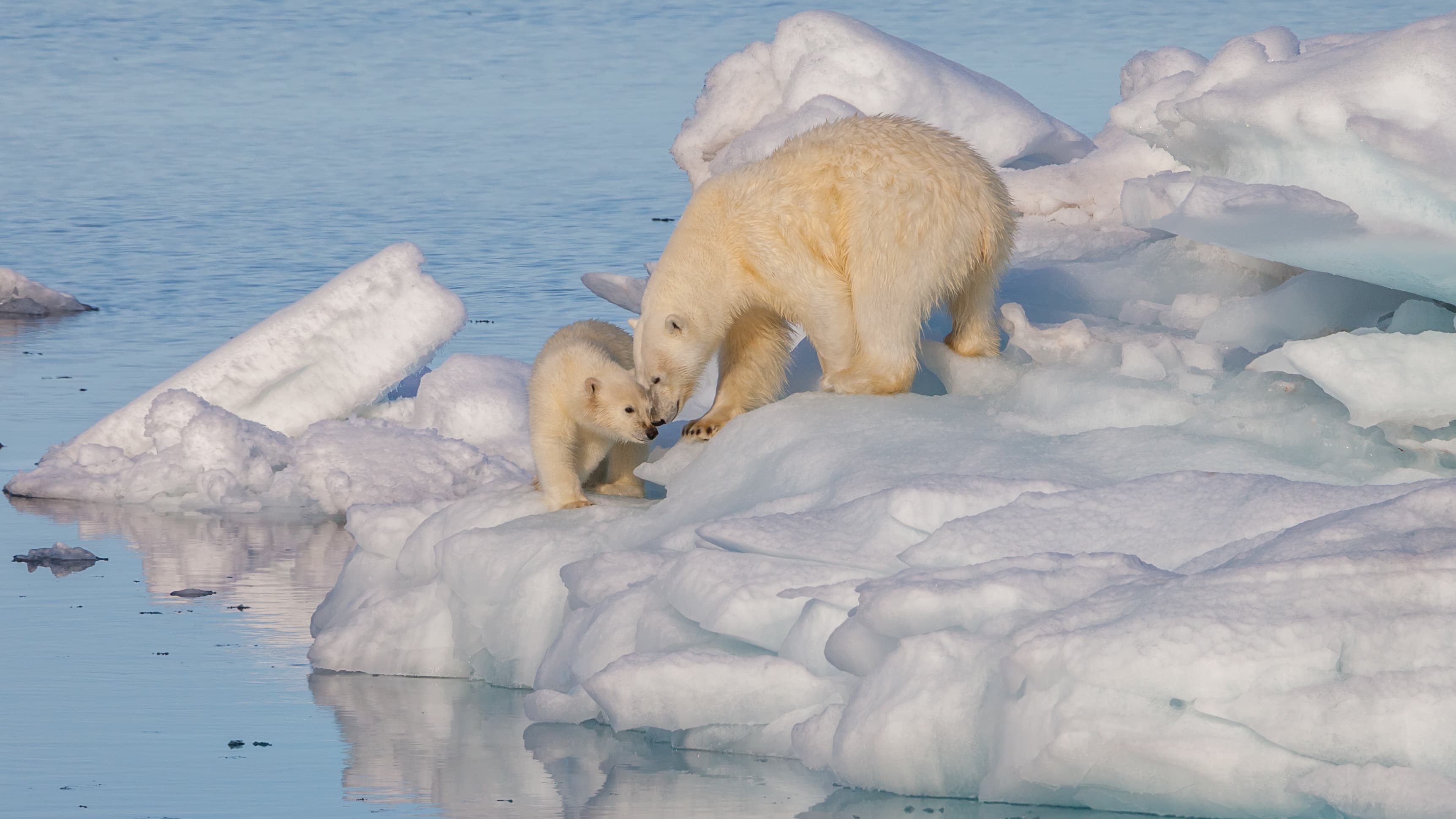 ConceptSvalbard polar bear expedition by ship10 days · max 12 photographers on a small expedition vessel
June to early August, with 24-hour daylight and retreating pack iceSample content