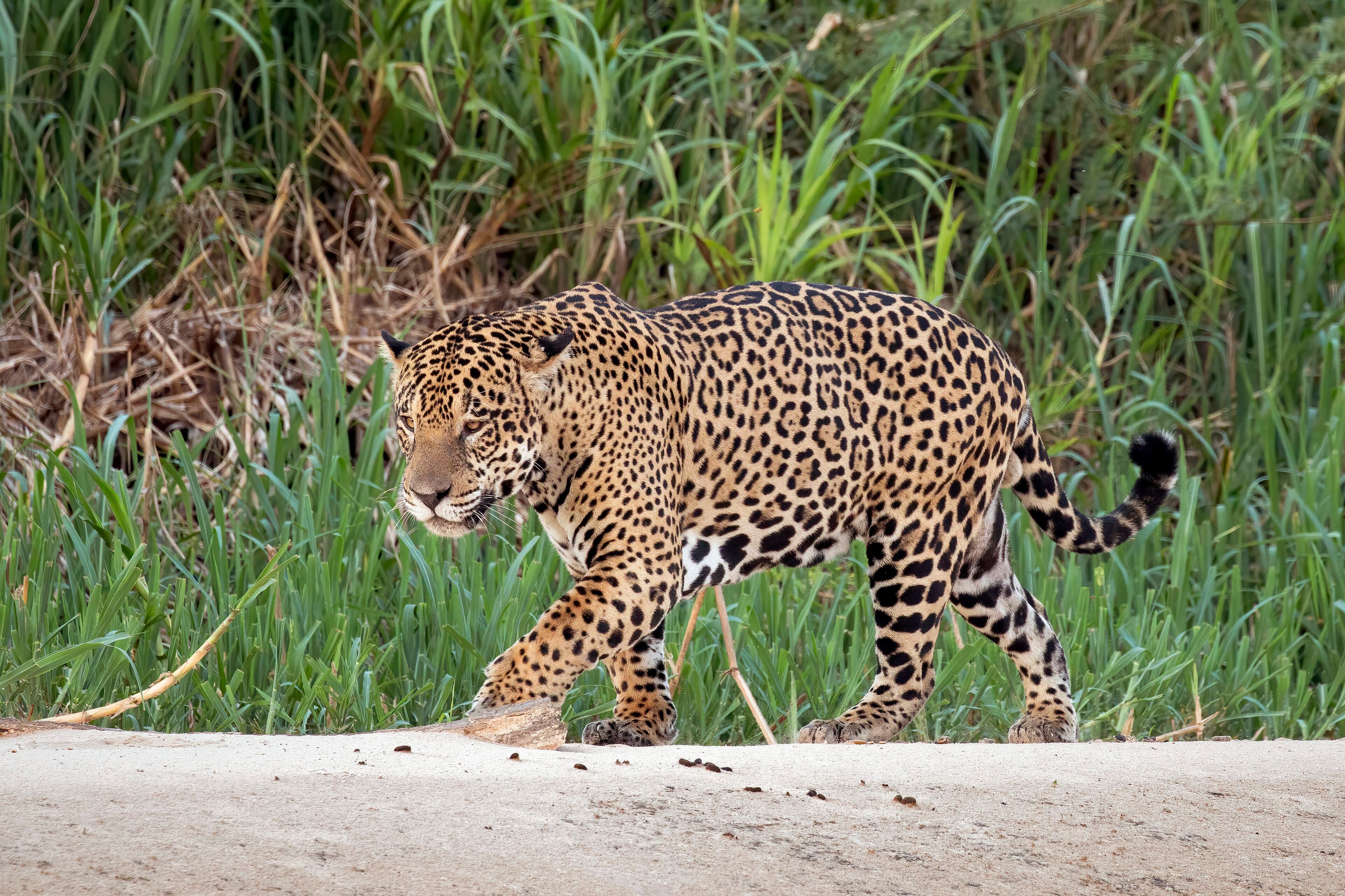
Photographed at Three Brothers River, Pantanal, Brazil
Camera data: Canon EOS 70D400 mmf/5.61/500 sISO 1600Three Brothers River, Pantanal, Brazil
Brazil · Moderate
Sample contentNorthern Pantanal
The rivers around Porto Jofre in Brazil's northern Pantanal are the most reliable place in the world to photograph wild jaguars, from boats, at eye level, in the dry season.
- Best season
- July–September · June and October
- Difficulty
- Moderate (2/5)
- Key species
- Jaguar, Giant otter, Yacaré caiman, Capybara
- Budget
- USD 350–800 per person per day (estimate)
Brazil
The place
The Pantanal is one of the largest wetlands on Earth, a vast seasonally flooded plain in the upper Paraguay River basin that spans parts of Brazil, Bolivia and Paraguay. The Brazilian portion lies in the states of Mato Grosso and Mato Grosso do Sul. For jaguar photography the focus is the northern Pantanal in Mato Grosso, reached from Cuiabá by road to the town of Poconé and then along the Transpantaneira, an unpaved raised road that crosses well over a hundred wooden bridges on its way south to Porto Jofre on the Cuiabá River.
Porto Jofre is the base for boat trips on the Cuiabá, Três Irmãos (Three Brothers) and Piquiri rivers and their side channels, an area partly protected within the Encontro das Águas State Park. Jaguars here have become accustomed to boats and are found hunting caiman and capybara along the banks, resting on sandbanks or swimming between channels. Giant otters, yacaré caiman, capybara, hyacinth macaws, jabiru storks and a long list of kingfishers and herons share the same waterways.
Photography is almost entirely from small open boats with a driver and spotter, typically running from first light through the morning and again in the late afternoon. The dry season, roughly June to October, concentrates animals along the shrinking rivers and makes the Transpantaneira passable; July to September is usually regarded as the peak for jaguar sightings. During the wet season, from about November to March, much of the plain floods, roads can be cut and jaguar viewing is impractical. Accommodation ranges from lodges along the Transpantaneira to floating hotels moored near Porto Jofre.
The great appeal is the angle: a boat puts the camera at water level, with a jaguar on the bank or swimming towards the lens and the far bank as a clean background. Light is strong and often from the side early and late; heat, humidity and spray are constant. A 100–500 or 200–600 zoom on a stabilised body is the standard combination, with a second body and a 70–200 for close passes and otters.
Species and photographic opportunities
The animals
- Jaguar
- Riverbanks and sandbars around Porto Jofre; the largest jaguars of the species' range
- Giant otter
- Family groups fishing in the rivers and channels
- Yacaré caiman
- Abundant on every bank; principal jaguar prey here
- Capybara
- Large herds along the rivers
- Hyacinth macaw
- World's largest parrot, in palms along the Transpantaneira
- Jabiru
- Huge stork, nesting near lodges
- Ringed, Amazon and green kingfishers
- Constant companions on the water
- Marsh deer
- Wetland edges
- Tapir
- Occasionally at dusk along the Transpantaneira
- Toco toucan
- Gallery forest and lodge gardens
- Jaguars on riverbanks and sandbars photographed at water level from a boat
- Jaguars swimming or hunting caiman along the channels
- Giant otter families fishing and interacting
- Hyacinth macaws and jabiru along the Transpantaneira
- Caiman and capybara in warm low light on the banks
- Kingfishers and herons from the boat during quiet spells
In pictures · 1 frames
01Chosen frame
Northern Pantanal in pictures
- 01A male jaguar on the riverbank of the Three Brothers River, Pantanal, BrazilThree Brothers River, Pantanal, Brazil · Charles J. Sharp · CC BY-SA 4.0
When to go
The season
| Months | Why |
|---|---|
| July–September | Peak dry season: lowest water, animals concentrated on the rivers and the most consistent jaguar sightings; book early. |
| June and October | Shoulder months with fewer boats; October can be very hot and the first rains may arrive late in the month. |
Light, access and conditions
The ground
- Heat and humidity in open boats for long hours; strong sun and glare off the water
- Spray and the occasional rain shower: keep rain covers to hand and dry bags for spare bodies
- Long boat days with early starts; the Transpantaneira transfer is slow and dusty
- Mosquitoes and biting insects, particularly early and late
- Multiple boats can gather at a sighting in peak season; guides coordinate positions
- Wet-season flooding (about November–March) makes most jaguar photography impossible
Trip difficulty: Moderate. Physically easy boat-based photography, but long hot days and the need to work quickly from a moving platform make it tiring.
Editorial estimate
The cost
USD 350–800 per person per day (USD)
Basis: Lodge or floating hotel near Porto Jofre with daily boat excursions and meals; excludes flights to Cuiabá
Editorial estimate only, not a quote. Ranges are broad and exclude international flights. Verify current rates, park fees and seasonal surcharges with operators before planning. Last reviewed 2026-10-20.
Questions
How reliable are jaguar sightings?
In the dry season around Porto Jofre, sightings over several days are very likely, which is why photographers stay at least three or four nights. No single boat session is guaranteed, and water levels and heat shape behaviour from week to week.
Do I need a tripod?
No. Boats are too unstable for tripods; hand-held stabilised zooms and a bean bag on the gunwale are the practical choice.
Is the Pantanal the same as the Amazon?
No. The Pantanal is a seasonally flooded savanna wetland south of the Amazon basin, with open vistas and far higher wildlife visibility than rainforest.
Credits
- Photograph
- Charles J. Sharp · Three Brothers River, Pantanal, Brazil · CC BY-SA 4.0
Expeditions in Northern Pantanal
All expeditions- ConceptPantanal jaguar expedition8 days · max 6 photographers
July to September, at the heart of the dry seasonSample content