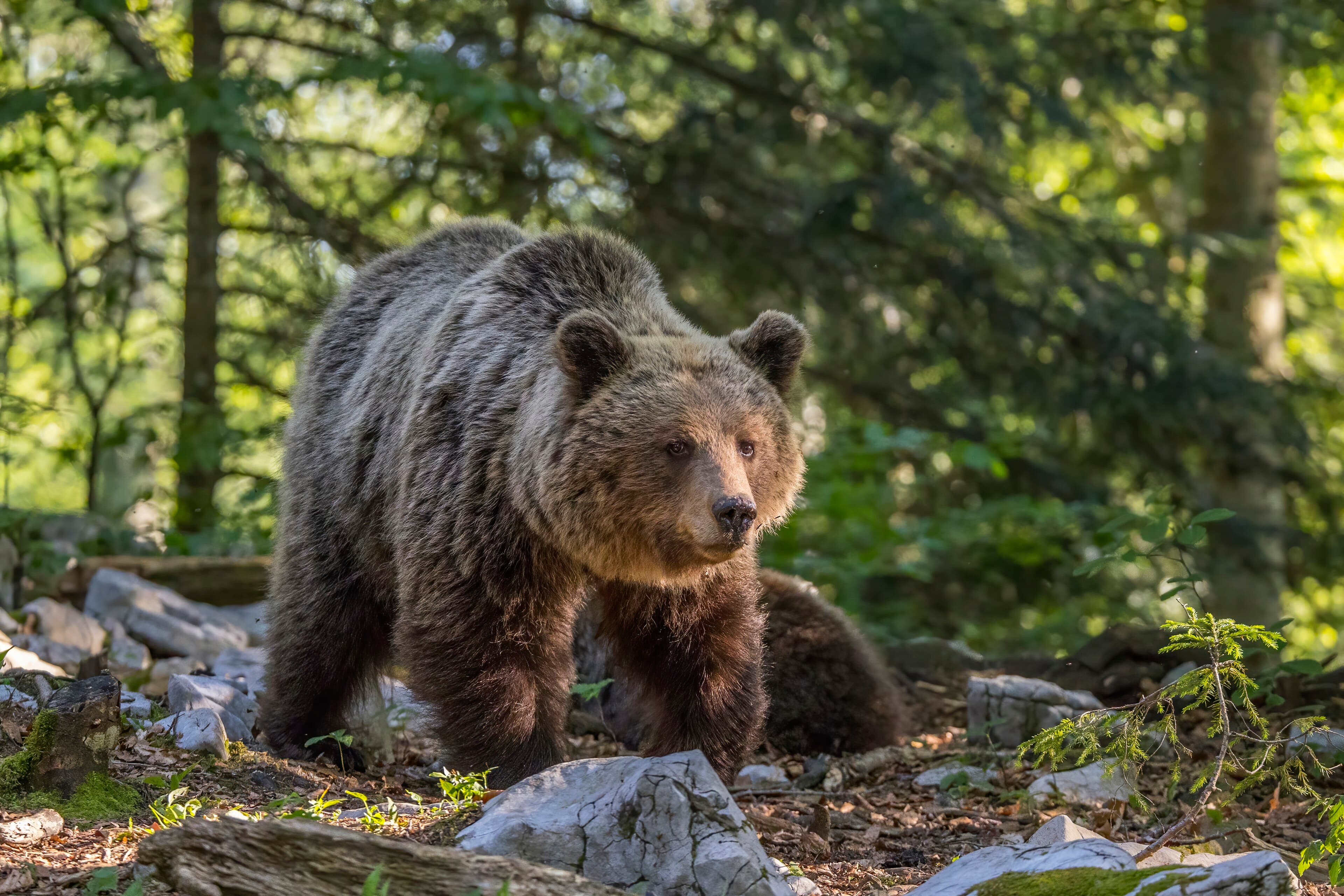
Photographed at Stari Kot, Slovenia
Camera data: Canon EOS R6200 mmf/51/1000 sISO 6400Stari Kot, Slovenia
Finland · Moderate
Sample contentEastern Finland bear hides
The boreal forests and bogs of eastern Finland near the Russian border offer Europe's most dependable brown bear photography, from purpose-built hides through the long light of the northern summer.
- Best season
- Late April–May · June–July · August–early September
- Difficulty
- Moderate (2/5)
- Key species
- Eurasian brown bear, Wolverine, Grey wolf, Common crane
- Budget
- EUR 150–400 per person per night (estimate)
Finland
The place
Finland's bear hides are concentrated in the Kainuu and Koillismaa regions of eastern Finland, around Kuhmo, Suomussalmi and Kuusamo, in a belt of taiga forest, bogs and small lakes that runs along the Russian border. Brown bears move freely across the frontier and are drawn to the forest edges and swamps where hide operators have worked for decades. Wolverine and, less often, wolves use the same areas, and the birdlife includes cranes, owls and boreal species such as the Siberian jay.
Photography is done from fixed hides: small insulated cabins or larger shared huts with camera ports at ground level, set a short walk from a base lodge. Sessions are typically overnight, from the afternoon until the following morning, because bears are most active in the evening and early hours; in June and July the sky never fully darkens, so there is usable light through much of the night. Bait is used to bring animals to the site, which is legal in Finland for wildlife watching, and the practice is part of what makes sightings so consistent.
The season begins when bears leave their dens, usually in mid-April, and runs into early autumn, with most operators running from about May to August. Spring offers snow patches and dramatic light, midsummer gives the white nights and females with cubs, and August brings darker nights, autumn colour and, with luck, the northern lights above the hide. The operators are mostly small, long-established family businesses, and places are limited.
For the photographer this is static, patient work: hours in a confined space with a lens resting on a bean bag or small gimbal at the port, silent shooting, and quick reactions when an animal steps into a lane of light. Fast lenses and good high-ISO performance matter more than extreme reach, and the ground-level viewpoint produces intimate, eye-level portraits that are hard to achieve anywhere else.
Species and photographic opportunities
The animals
- Eurasian brown bear
- Adults and, in summer, females with cubs at forest edges and swamps
- Wolverine
- Regular at some sites, especially in spring and autumn
- Grey wolf
- Occasional, mostly at the sites nearest the border
- Common crane
- Bogs and swamp edges
- White-tailed eagle
- Attracted by the same bait
- Raven
- Constant presence at bait sites
- Siberian jay
- Boreal forest around the hides
- Red fox
- Occasional visitor to the swamps
- Eye-level brown bear portraits from ground-level hides
- Females with cubs on bog edges in midsummer light
- Bears wading or swimming in small lakes and swamps
- Wolverines in spring and autumn
- Bears in snow patches and spring light in late April and May
- Night sessions with the aurora in August and September
In pictures · 1 frames
01Chosen frame
Eastern Finland bear hides in pictures
- 01A female Eurasian brown bear standing in a boreal forest clearingStari Kot, Slovenia · Charles J. Sharp · CC BY-SA 4.0
When to go
The season
| Months | Why |
|---|---|
| Late April–May | Bears freshly out of hibernation; remaining snow and strong low light; fewer insects. |
| June–July | White nights with light through the night; cubs out with their mothers; peak demand and mosquitoes. |
| August–early September | Darker nights return with autumn colour and the chance of northern lights; bears feeding heavily before winter. |
Light, access and conditions
The ground
- Overnight sessions of 12–15 hours in a small hide with no movement outside; bring warm layers even in summer
- Mosquitoes and biting insects at their worst in June and July
- Low light through the night: fast lenses and high ISO are essential
- Sightings are very likely but never guaranteed; behaviour varies with season and weather
- Silence and scent discipline are required; hides are entered and left at fixed times
- Cold, wet spring and autumn nights; condensation on lenses at the ports
Trip difficulty: Moderate. Physically undemanding apart from the short walk to the hide, but long, still, sleepless nights in a confined space require stamina and patience.
Editorial estimate
The cost
EUR 150–400 per person per night (EUR)
Basis: Hide place with base-lodge accommodation and meals; excludes flights to Helsinki or Kajaani/Kuusamo and transfers
Editorial estimate only, not a quote. Ranges are broad and exclude international flights. Verify current rates, park fees and seasonal surcharges with operators before planning. Last reviewed 2026-10-20.
Questions
Is baiting ethical?
Baiting for wildlife watching is legal and long established in Finland, and the sites are run under local rules. WLIFE's position is that it should be disclosed in captions, and photographers should decide for themselves whether such images fit their practice.
How many nights should I book?
Three to five nights gives a good spread of weather and behaviour. A single night can be quiet, and cubs or wolverines may appear only once in a week.
What focal length do I need?
Bears often come within 20–40 metres of the hide, so a 100–400 or 200–600 zoom covers most situations, with a 70–200 f/2.8 for close passes in low light.
Credits
- Photograph
- Charles J. Sharp · Stari Kot, Slovenia · CC BY-SA 4.0
Expeditions in Eastern Finland bear hides
All expeditions- ConceptFinland brown bear hide week7 days · max 6 photographers
Late May to July, when nights barely darken and cubs are out with their mothersSample content