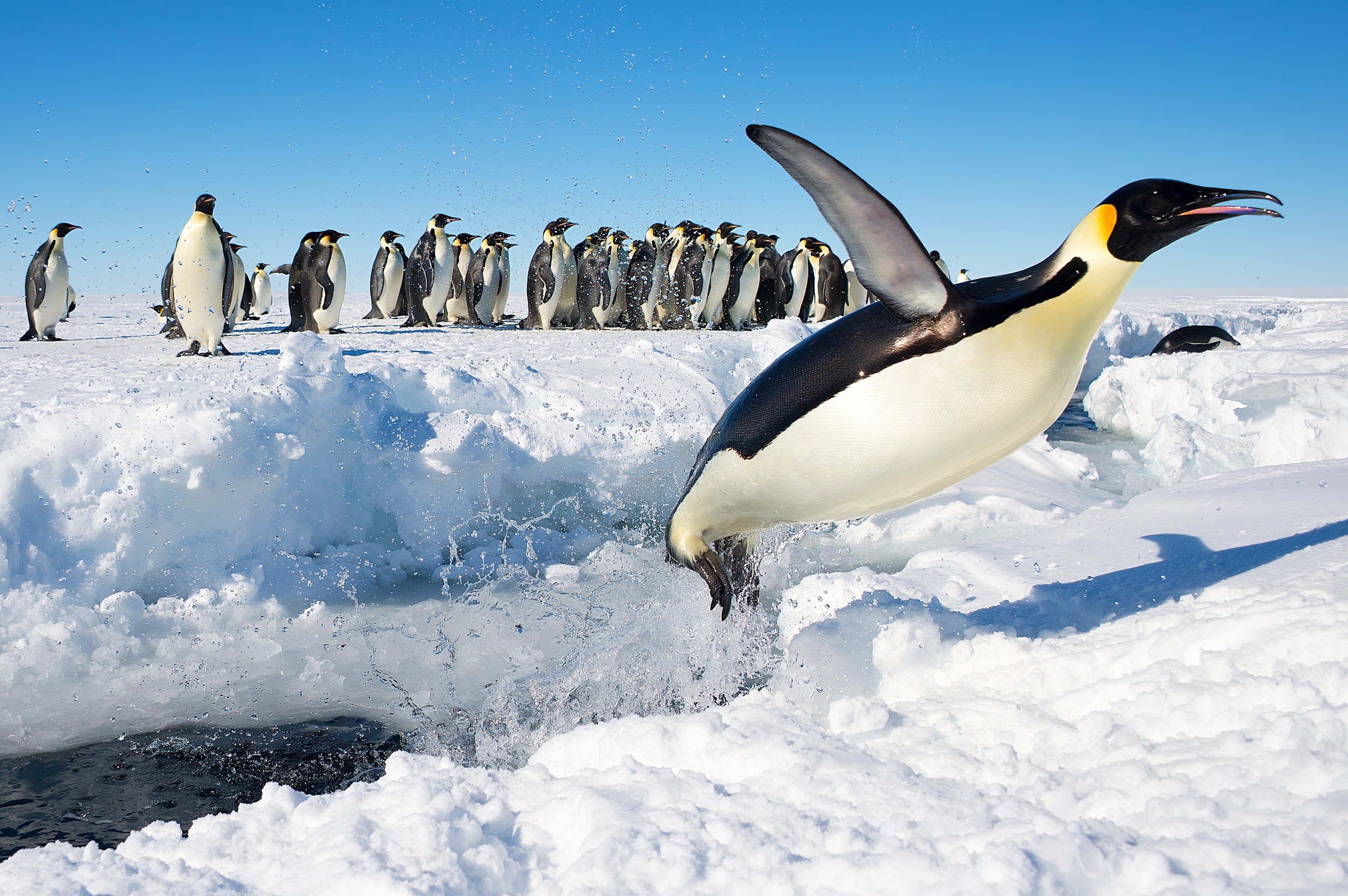
Photographed at Antarctica
Camera data: Nikon D428 mmf/91/3200 sISO 500Antarctica
Antarctica · Demanding
Sample contentAntarctic Peninsula
The Antarctic Peninsula is the most visited part of the continent and the most rewarding for photographers: penguin colonies, seals and whales among icebergs, reached by expedition ship across the Drake Passage.
- Best season
- November–early December · Mid-December–January · February–March
- Difficulty
- Demanding (3/5)
- Key species
- Gentoo penguin, Chinstrap penguin, Adélie penguin, Leopard seal
- Budget
- USD 800–1,800 per person per day (estimate)
Antarctica
The place
The Antarctic Peninsula is the long arm of the continent reaching north towards South America. Almost all visitors sail from Ushuaia in Argentina, crossing the Drake Passage in around two days each way before spending several days among the islands, channels and bays of the peninsula's west coast. There are no hotels or roads; the expedition ship is the base, and inflatable Zodiacs carry passengers to shore landings and on cruises among the ice. Some itineraries add South Georgia and the Falkland Islands for a longer and wildlife-richer voyage.
Tourism is self-regulated through the International Association of Antarctica Tour Operators (IAATO), under the Antarctic Treaty system. Ships carrying more than 500 passengers may not land anyone, no more than 100 visitors may be ashore at a site at one time, biosecurity checks of boots and clothing are required before landings, and visitors keep at least five metres from wildlife and give way to penguins on their paths. These rules shape the photography: landings are time-limited, groups are managed, and the best images come from working the margins of a colony rather than pushing closer.
The season runs from roughly November to March, while the sea ice allows. November brings pristine snow, courting penguins and heavy ice; December and January see eggs hatch and chicks grow in the long daylight; by February and March the chicks are fledging, colonies become muddy and whale numbers peak as humpbacks, minkes and orcas feed in the channels. Gentoo, chinstrap and Adélie penguins are the common species on the peninsula, with Weddell, crabeater and leopard seals hauled out on floes, and seabirds from snow petrels to wandering albatross on the crossing.
Photographically the peninsula is about light and scale: penguins against blue ice, Zodiac-level views of leopard seals on floes, whales surfacing beside the boat and vast glacial landscapes that dwarf everything. Conditions range from bright snow glare that fools meters to flat grey cloud and driving sleet. A stabilised 100–500 class zoom and a wide-angle cover most needs; waterproof bags for Zodiac transfers and spare batteries kept warm are essential.
Species and photographic opportunities
The animals
- Gentoo penguin
- The most widespread colonies on the peninsula
- Chinstrap penguin
- Rocky colonies, often on steep slopes
- Adélie penguin
- Colder sites further south along the peninsula
- Leopard seal
- On ice floes and hunting near colonies; photographed from Zodiacs
- Weddell seal and crabeater seal
- Hauled out on floes and beaches
- Humpback whale
- Feeding in the channels, increasingly from January onwards
- Orca and Antarctic minke whale
- Encountered from the ship and Zodiacs
- Snow petrel and cape petrel
- Around the ship among the ice
- Wandering and black-browed albatross
- Drake Passage crossings
- Antarctic fur seal
- More common later in the season and at South Georgia
- Penguins leaping from the water onto ice and rock
- Chicks and feeding adults in colonies from December to February
- Leopard seals on floes at Zodiac level
- Humpback whales surfacing beside the Zodiac in late season
- Icebergs and glacier fronts in low polar light
- Albatross and petrels in flight from the ship's stern on the Drake crossing
When to go
The season
| Months | Why |
|---|---|
| November–early December | Clean snow, courtship and nest-building, maximum ice; landings can be limited by fast ice. |
| Mid-December–January | Chicks hatch and grow; the longest daylight and most active colonies; busiest departures. |
| February–March | Fledging chicks, whale numbers at their highest and softer, lower light; colonies muddier and weather less settled. |
Light, access and conditions
The ground
- Two-day Drake Passage crossings each way with potentially rough seas and seasickness
- Temperatures around freezing with wind, sleet and spray; waterproof outer layers and dry bags for all camera gear
- Landings are weather- and ice-dependent and can be cancelled at short notice
- Biosecurity rules: boots and gear inspected and cleaned before every landing
- Minimum five-metre distance from wildlife and limited time ashore under IAATO guidelines
- Snow glare and rapidly changing light call for careful exposure and frequent lens cleaning
Trip difficulty: Demanding. Moderate: ship-based with short shore walks on snow and rock, but cold, wet Zodiac transfers, rough seas and strict landing rules make it physically and logistically demanding.
Editorial estimate
The cost
USD 800–1,800 per person per day (USD)
Basis: Expedition ship from Ushuaia, shared cabin, meals, Zodiac excursions and landings; excludes flights to Ushuaia and optional activities
Editorial estimate only, not a quote. Ranges are broad and exclude international flights. Verify current rates, park fees and seasonal surcharges with operators before planning. Last reviewed 2026-10-20.
Questions
Which month is best for penguin chicks?
Chicks hatch from around late December and are most photogenic in January and early February. By late February and March many are fledging and colonies are muddy, but whales are then at their peak.
How close can I get to penguins?
IAATO guidelines ask visitors to keep at least five metres from wildlife and never to block penguin paths. Penguins frequently approach on their own, and a patient photographer sitting still at the colony edge is often rewarded.
Do I need a 600 mm lens?
Not usually. Subjects are often close, so a 100–400 or 100–500 zoom plus a wide-angle is the typical kit; a longer lens helps for seals on distant floes and whales from the ship.
Credits
- Photograph
- Christopher Michel · Antarctica · CC BY 2.0