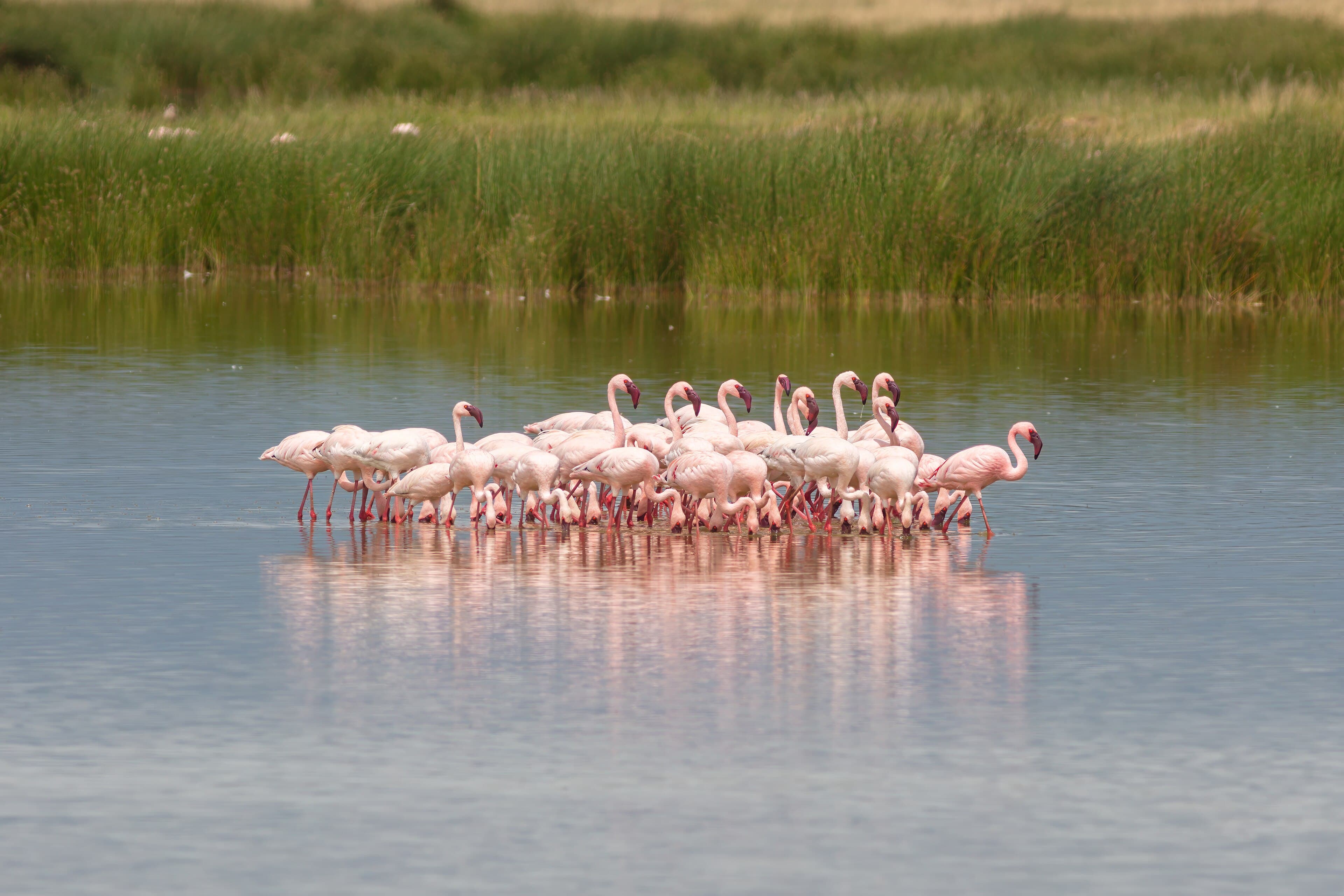
Photographed at Amboseli National Park, Kenya
Camera data: Canon EOS 5DS R600 mmf/101/320 sISO 100Amboseli National Park, Kenya
Kenya · Easy
Sample contentAmboseli National Park
Amboseli is the park for elephants beneath Kilimanjaro: big-tusked herds crossing dusty flats and green swamps with Africa's highest mountain filling the background.
- Best season
- June–October · January–February · November–December and March–May
- Difficulty
- Easy (1/5)
- Key species
- African elephant, Lesser flamingo, Lion, Cheetah
- Budget
- USD 300–900 per person per day (estimate)
Kenya
The place
Amboseli National Park lies in southern Kenya on the Tanzanian border, directly north of Mount Kilimanjaro, whose summit rises to 5,895 metres just across the frontier. The park is relatively small, at roughly 390 square kilometres, and sits at the core of a wider ecosystem of community land and conservancies through which wildlife moves. It was declared a UNESCO Biosphere Reserve in 1991. The landscape is a dry, dusty former lake bed with scattered acacia, a seasonal lake that floods only after good rains, and a series of permanent swamps fed by underground water from Kilimanjaro's snow and rain.
Those swamps, including Enkongo Narok and Ol Okenya, are the reason Amboseli is so productive in the dry season. Elephants, buffalo, hippos and a wealth of waterbirds concentrate on them when the surrounding plains are parched, and the contrast of bright green marsh, grey dust and the mountain behind defines the park's images. Amboseli's elephants are among the most studied in the world: a continuous research project has followed the population since 1972, and the park is known for its large-tusked bulls and relaxed family herds.
Safaris are conducted from lodges and camps inside and around the park in 4x4 vehicles on a network of tracks; the flat, open terrain means long sightlines and few obstructions. Kilimanjaro is usually clearest at dawn and again towards dusk, with cloud building over the summit during the day, so photographers plan drives to be in position with the mountain behind the subject at first light. Flamingos, pelicans and other waterbirds use the seasonal lake and swamp margins, particularly after rains.
For photography the park is as much about environment as about the animal. Wide and medium focal lengths that place an elephant family under the mountain are used as often as the long zoom, and dust kicked up by walking herds gives strong backlit images in the late afternoon. The dry season brings heat haze by mid-morning, so the working hours are short and early.
Species and photographic opportunities
The animals
- African elephant
- Family herds and large-tusked bulls; the park's signature subject
- Lesser flamingo
- Seasonal lake and swamp margins, numbers varying with water levels
- Lion
- Present in modest numbers on the plains
- Cheetah
- Open flats and the surrounding conservancies
- Spotted hyena
- Common around the swamps at dawn
- Hippopotamus
- Permanent swamps
- African buffalo
- Grazing in the marshes
- Masai giraffe
- Acacia woodland on the park edges
- Grey crowned crane and other waterbirds
- Swamp edges and the seasonal lake
- Plains zebra and wildebeest
- Dusty flats with the mountain behind
- Elephant herds beneath Kilimanjaro at first light
- Backlit dust as elephants and zebra cross the dry lake bed in late afternoon
- Elephants feeding chest-deep in the green swamps
- Flamingos and pelicans on the seasonal lake after rains
- Big-tusked bulls in environmental portraits
- Hyenas and jackals at dawn on the open flats
When to go
The season
| Months | Why |
|---|---|
| June–October | Long dry season: wildlife concentrated on the swamps, dusty skies and the most reliable big-game viewing. |
| January–February | Short dry season between the rains; often the clearest mountain views and lush green after the short rains. |
| November–December and March–May | Rainy periods with dramatic skies and flamingos on the seasonal lake, but dispersed wildlife and some impassable tracks. |
Light, access and conditions
The ground
- Extremely fine alkaline dust in the dry season: protect bodies and avoid lens changes in the vehicle
- Heat haze from mid-morning limits long-lens work to early and late hours
- Kilimanjaro is often hidden by cloud from mid-morning; views are never guaranteed
- Wet-season rains can flood the lake bed and close tracks
- A small, popular park: expect other vehicles at major sightings in peak months
- Malaria risk is present; seek medical advice before travel
Trip difficulty: Easy. Easy, vehicle-based photography on flat terrain close to lodges. Early starts and dust management are the only real demands.
Editorial estimate
The cost
USD 300–900 per person per day (USD)
Basis: Mid-range lodge or camp, shared or private vehicle, park fees included; excludes flights
Editorial estimate only, not a quote. Ranges are broad and exclude international flights. Verify current rates, park fees and seasonal surcharges with operators before planning. Last reviewed 2026-10-20.
Questions
When is Kilimanjaro most likely to be visible?
At dawn and again around sunset, when cloud over the summit is thinnest. Clear mornings are more frequent in the dry months and just after rains have washed the dust from the air, but no day is guaranteed.
Which lenses matter most in Amboseli?
A 100–400 or 100–500 zoom covers most elephant work, and a 24–70 or 70–200 is used constantly for herds under the mountain. Extreme reach is less important here than in most parks.
Are there flamingos all year?
Numbers depend on water levels in the seasonal lake and swamps, so they are most numerous after good rains and may be scarce in a long dry spell.
Credits
- Photograph
- Diego Delso · Amboseli National Park, Kenya · CC BY-SA 4.0