
Fotografiert in Parque Estadual Encontro das Águas, Pantanal, Brazil
Kameradaten: Sony α1600 mmf/6.31/400 sISO 1250Parque Estadual Encontro das Águas, Pantanal, Brazil
Dieser Artikel ist auf Englisch.Menüs und Schaltflächen sind in Ihrer Sprache.Englische Seite öffnen
Portfolio: eight frames by Giles Laurent
From a Serengeti lion to a breaching humpback, eight open-licensed photographs that show how one photographer works with light, timing and long lenses.
Von WLIFE EditorialFotos Giles Laurent7 Min. Lesezeit
Giles Laurent publishes a substantial body of wildlife work on Wikimedia Commons under Creative Commons licences, and a striking number of those files have been selected by the Commons community as Featured Pictures. That makes his portfolio unusually easy to study: every frame carries its own file description, its own camera data and, often, a short note on the animal's behaviour. In this portfolio we present eight of those frames. Everything stated below about each image is drawn from what is visible in it and from the photographer's own file page, which we link so that you can read the originals. We have not interviewed Mr Laurent and attribute no opinions to him.
1. Male lion prowling, Serengeti
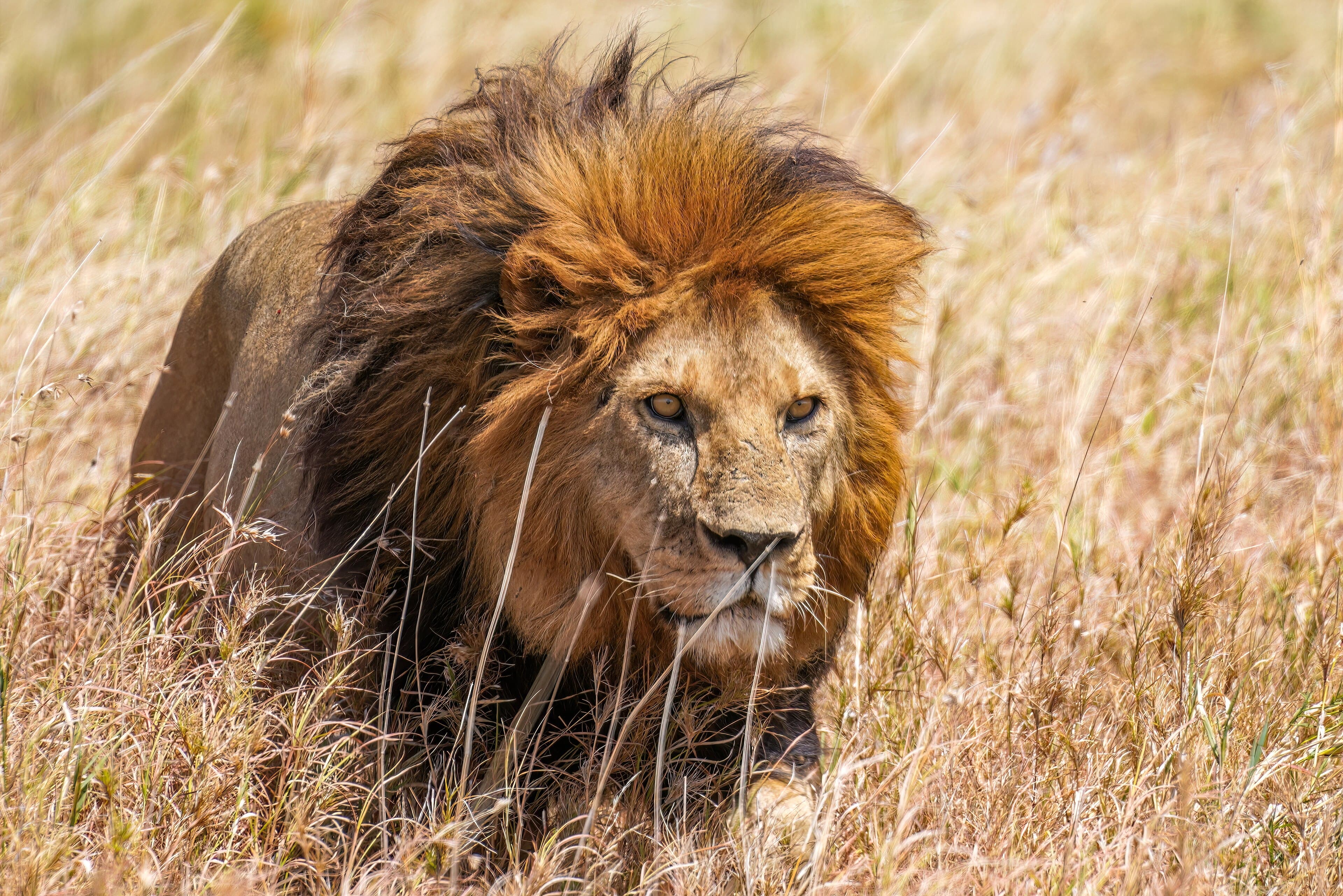
“This action is a behavior commonly expressed by large carnivores to assess their surroundings, stalk preys, or approach with reduced detectability.”
Giles Laurent, file description on Wikimedia Commons
Most lion portraits are made while the animal rests; this one catches it working, low to the ground, head down, eyes fixed on a target. The file description explains that the lion was pursuing a cheetah mother and her three cubs near a recent kill, and that lions often take kills from smaller predators. The image is listed as a Featured Picture on Commons. The same morning, the photographer made the eye-contact portrait we look at in our Behind the Shot feature.
2. Lioness at golden hour, Queen Elizabeth National Park
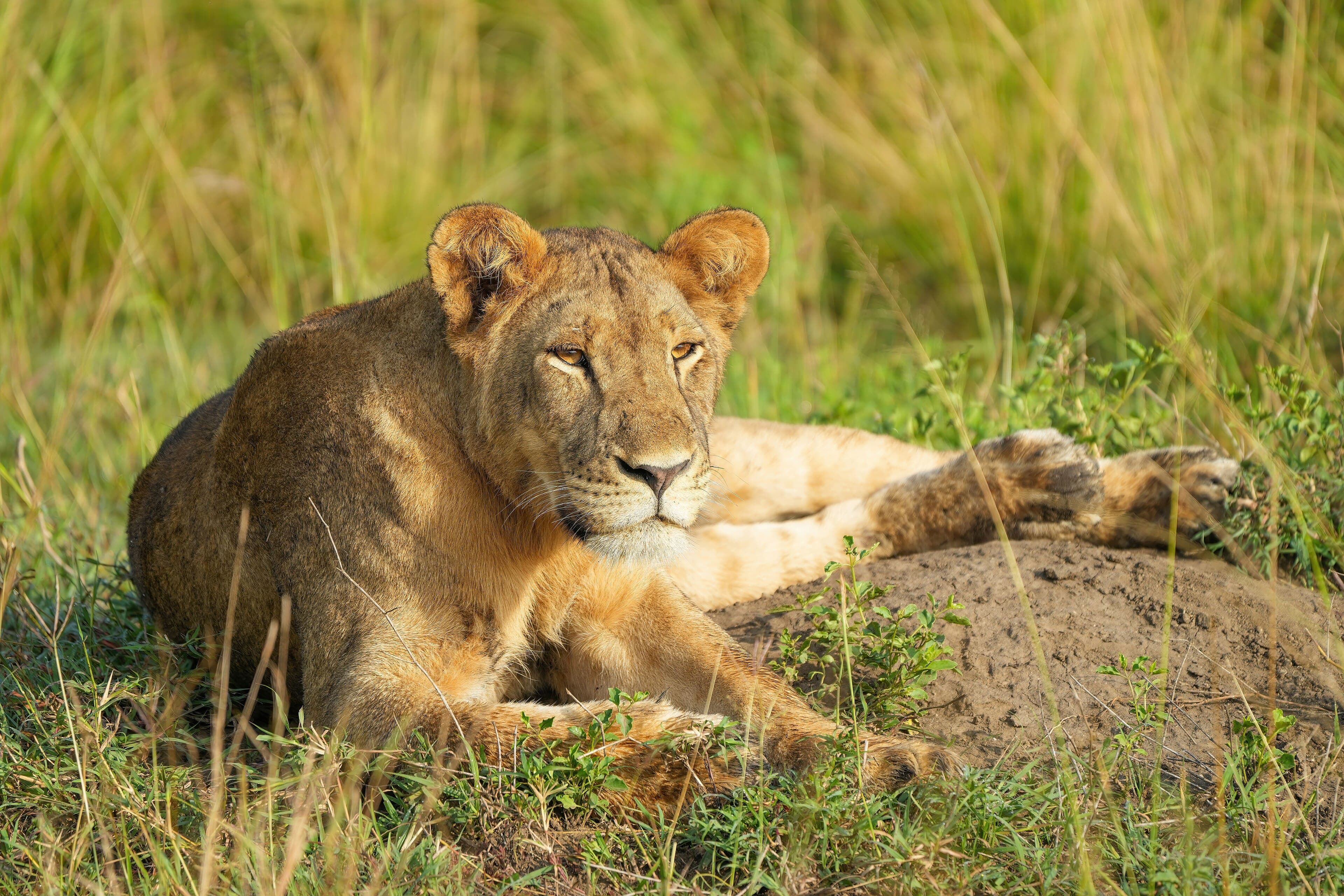
The file description reads simply "Lioness during golden hour of the morning at Queen Elizabeth National Park", and the picture needs no more explanation than that. Low, warm sidelight rakes across the animal's coat, separating it from a background that falls into shadow. The photograph is listed as a Featured Picture and a Quality Image on Commons. Compared with the Serengeti lion, the lens is longer and the aperture smaller, which is typical of the 200–600 mm zoom that appears throughout this portfolio.
3. Cheetah close-up, Serengeti
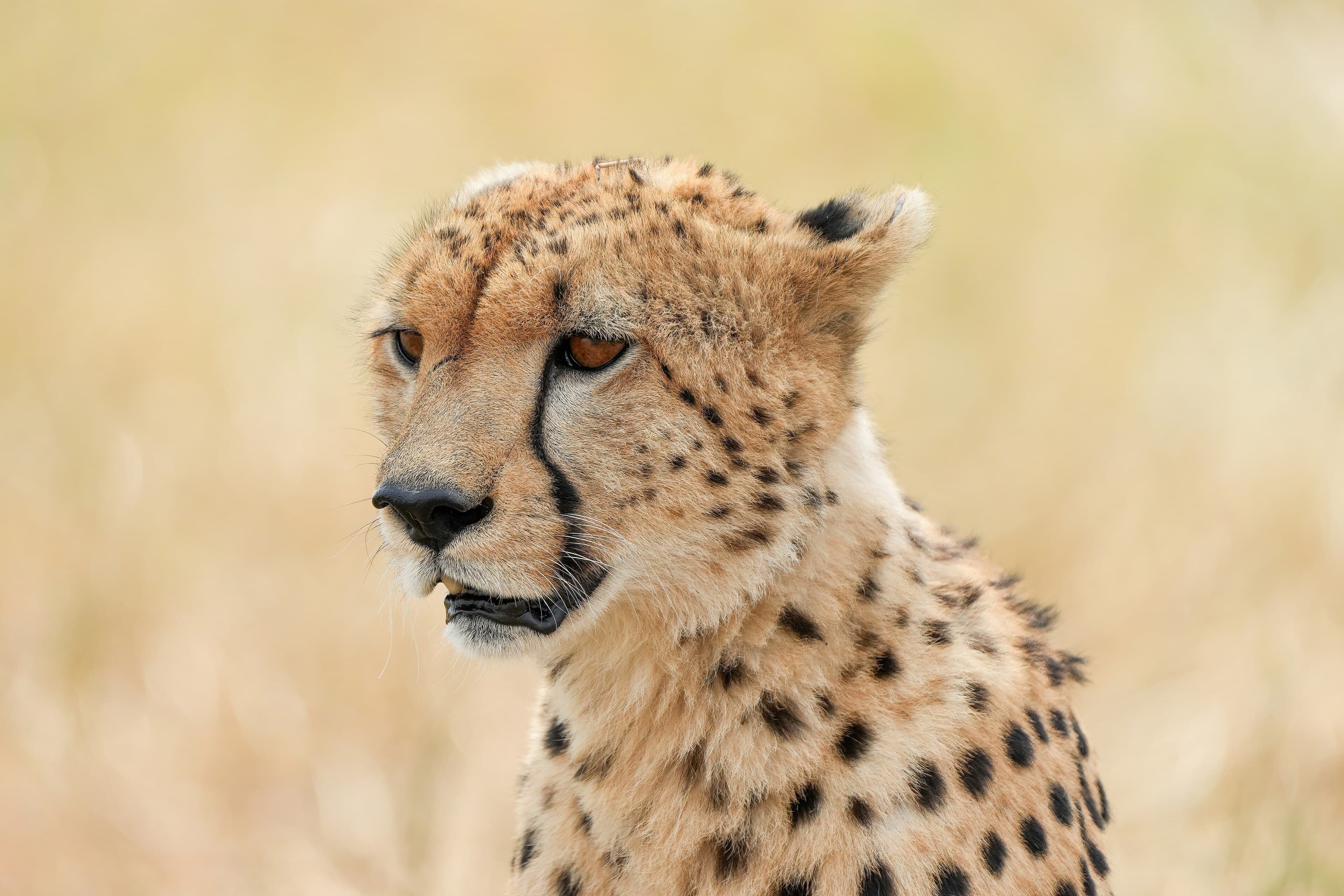
This is the most tightly cropped frame in the set: the cheetah's face, the black tear-marks and the eyes, with almost nothing else. The description on Commons is the one-line "Cheetah close-up in the Serengeti National Park", and the page records that the image won fifth prize in the Tanzania national contest of Wiki Loves Earth 2024, in addition to Featured and Quality status. At 600 mm the working distance is long enough that the animal shows no sign of attention to the photographer.
4. European bee-eater chasing a butterfly, Pfyn-Finges
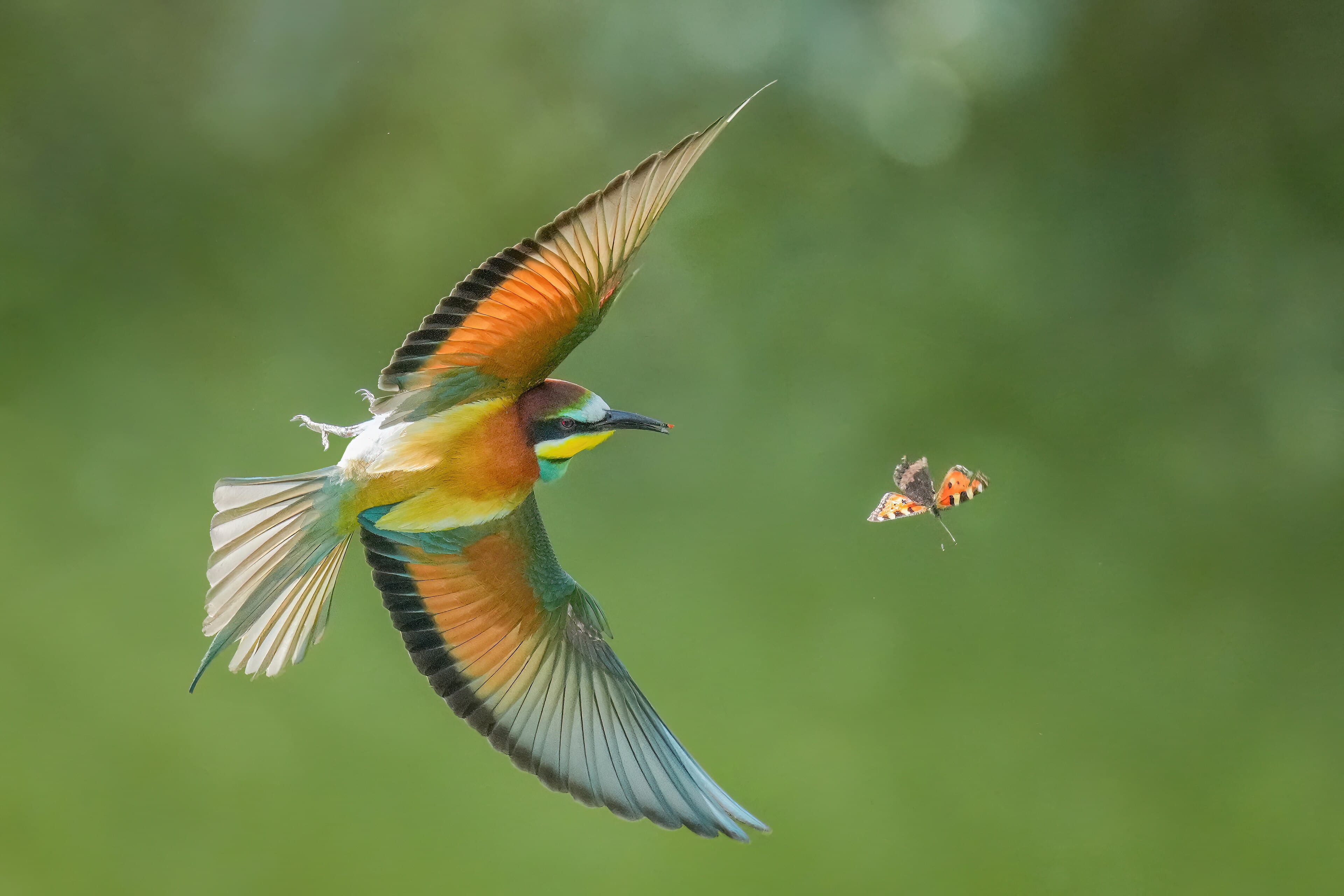
“The bird had already caught the butterfly a first time but when he threw it in the air to swallow it a big gust of wind gave a second chance to the butterfly to live another day but the bird came directly chasing it again and this is when this extremely lucky photo was taken.”
Giles Laurent, file description on Wikimedia Commons
A single exposure, and the photographer is candid about the part luck played. The Commons page lists the frame as a Featured Picture, a Quality Image and a Valued Image, and it was entered in the Wiki Science Competition 2025. His stacked sequence of the same species, made at the same site, is the subject of a separate Behind the Shot piece.
5. Desert-adapted elephant, Damaraland
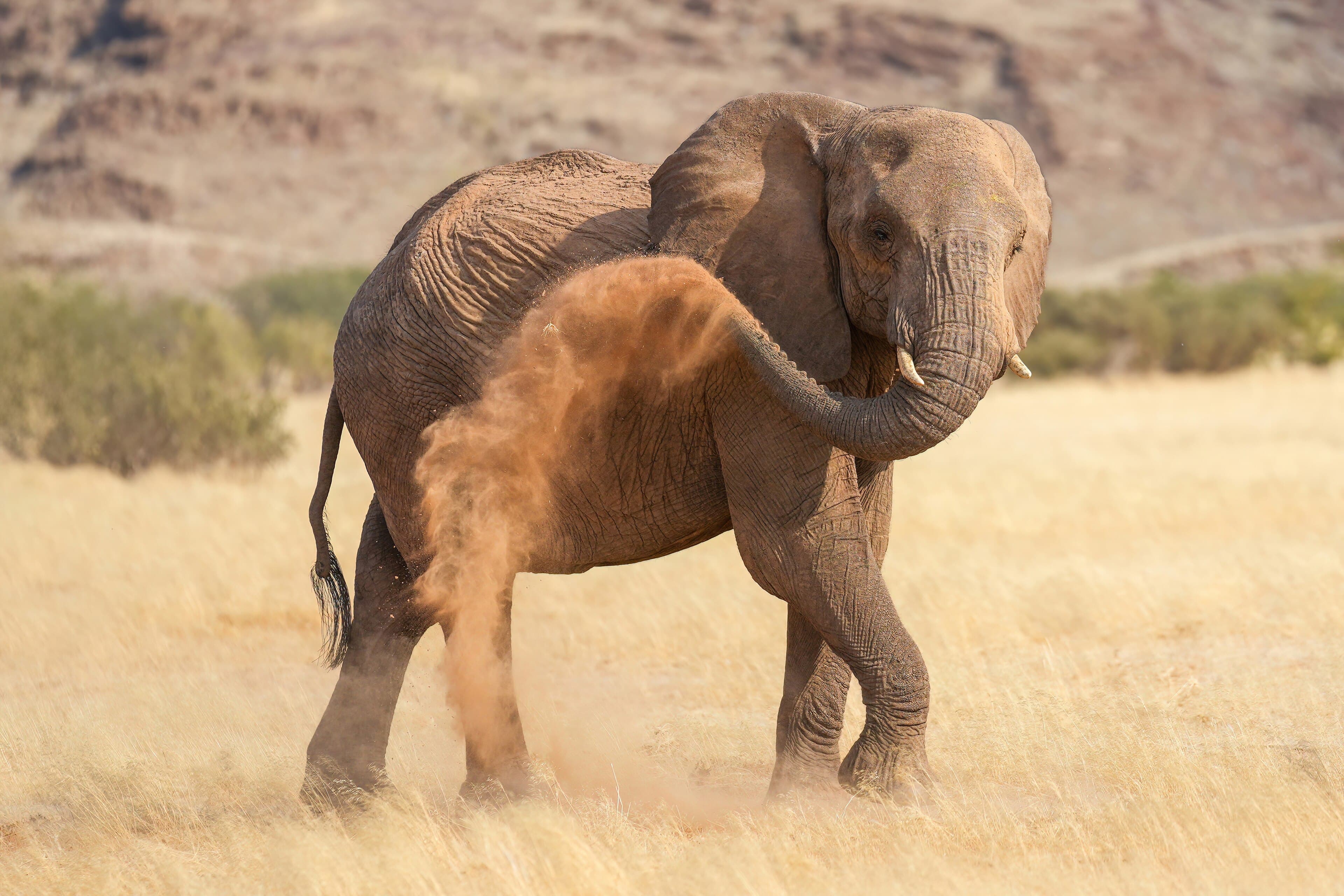
“Desert-adapted elephants often dust-bathe by spraying sand or dust over their bodies with their trunks.”
Giles Laurent, file description on Wikimedia Commons
Here the long zoom is set aside for a 70–200 mm at its widest aperture, and the shutter speed of 1/2500 s freezes the cloud of dust mid-air. The photographer's description goes on to explain that dust bathing protects the skin from sun and heat and helps repel insects. The image is a Featured Picture, a Quality Image and a Valued Image, and was entered in the Wiki Science Competition 2025.
6. Atlantic puffin with a beak full of fish, Iceland
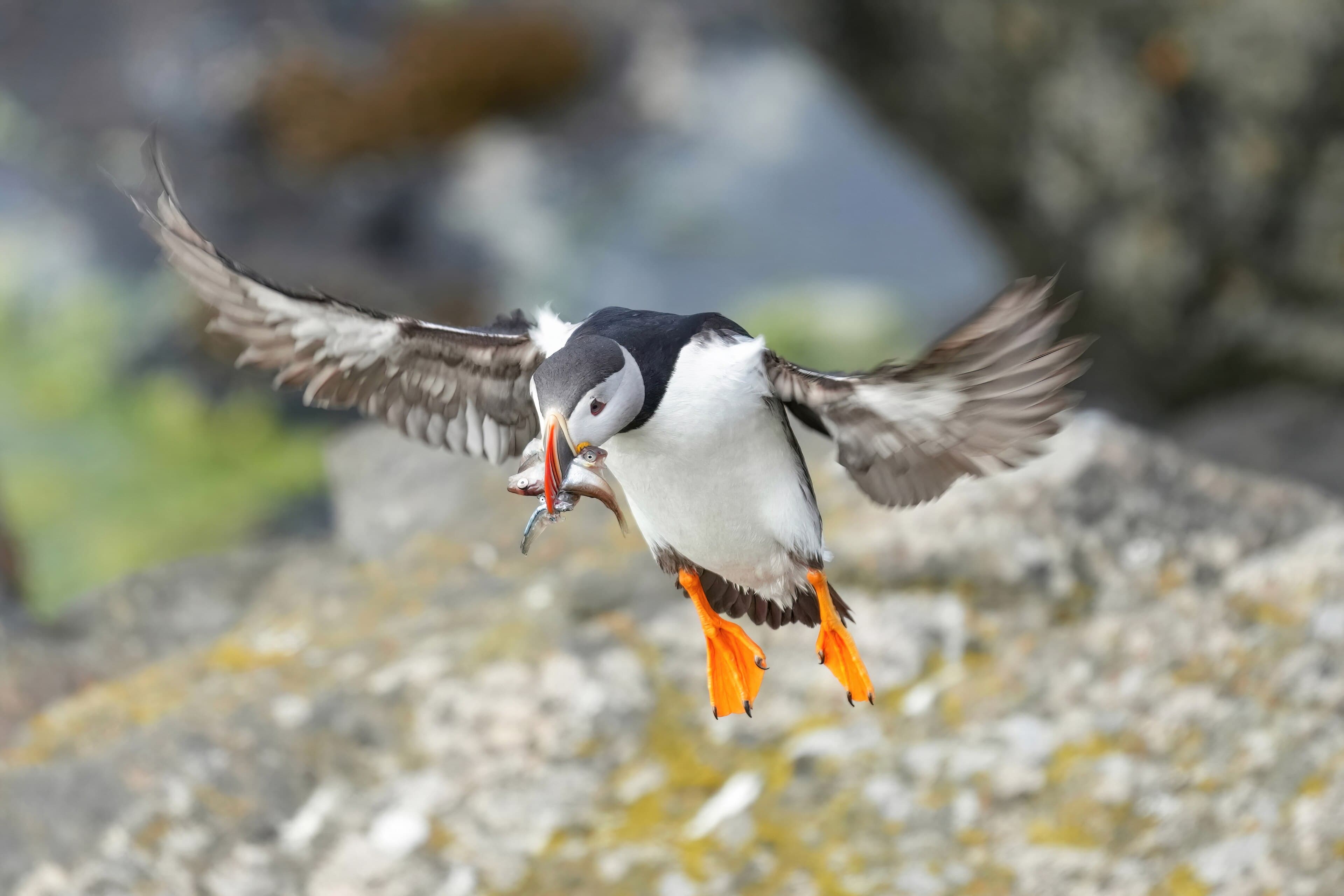
“Atlantic puffin (Fratercula arctica) in flight with mouth full of fishes at Friðland í Flatey (Iceland). The Atlantic puffin can catch several small fish at once.”
Giles Laurent, file description on Wikimedia Commons
A classic seabird-colony subject, caught with the wings open and the row of fish clearly visible across the bill. The description notes that the bird's grooved tongue and the serrations in its beak let it hold its catch in rows. The file is a Featured Picture, Quality Image and Valued Image on Commons.
7. Humpback whale breaching, Costa Rica
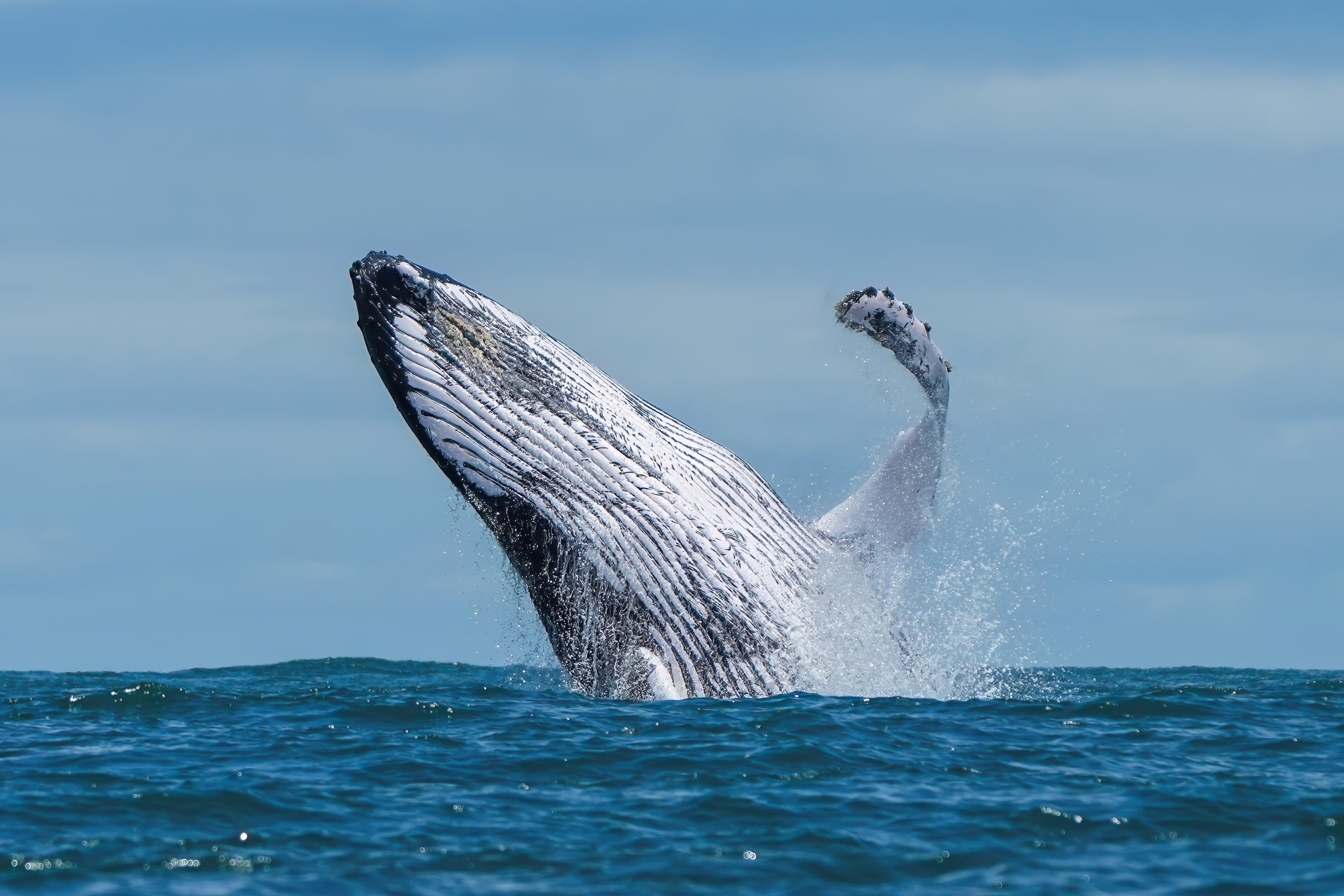
The one marine frame in this set, and the one where the zoom's flexibility shows most clearly: the focal length is pulled back to 234 mm to keep the whole animal and the splash inside the frame. The photographer's description observes that the reasons whales breach are still not settled, listing communication, courtship, dominance, warning, parasite removal and play among the hypotheses. The image is recorded as a Featured Picture and a Quality Image.
8. Western cattle egret, Camargue
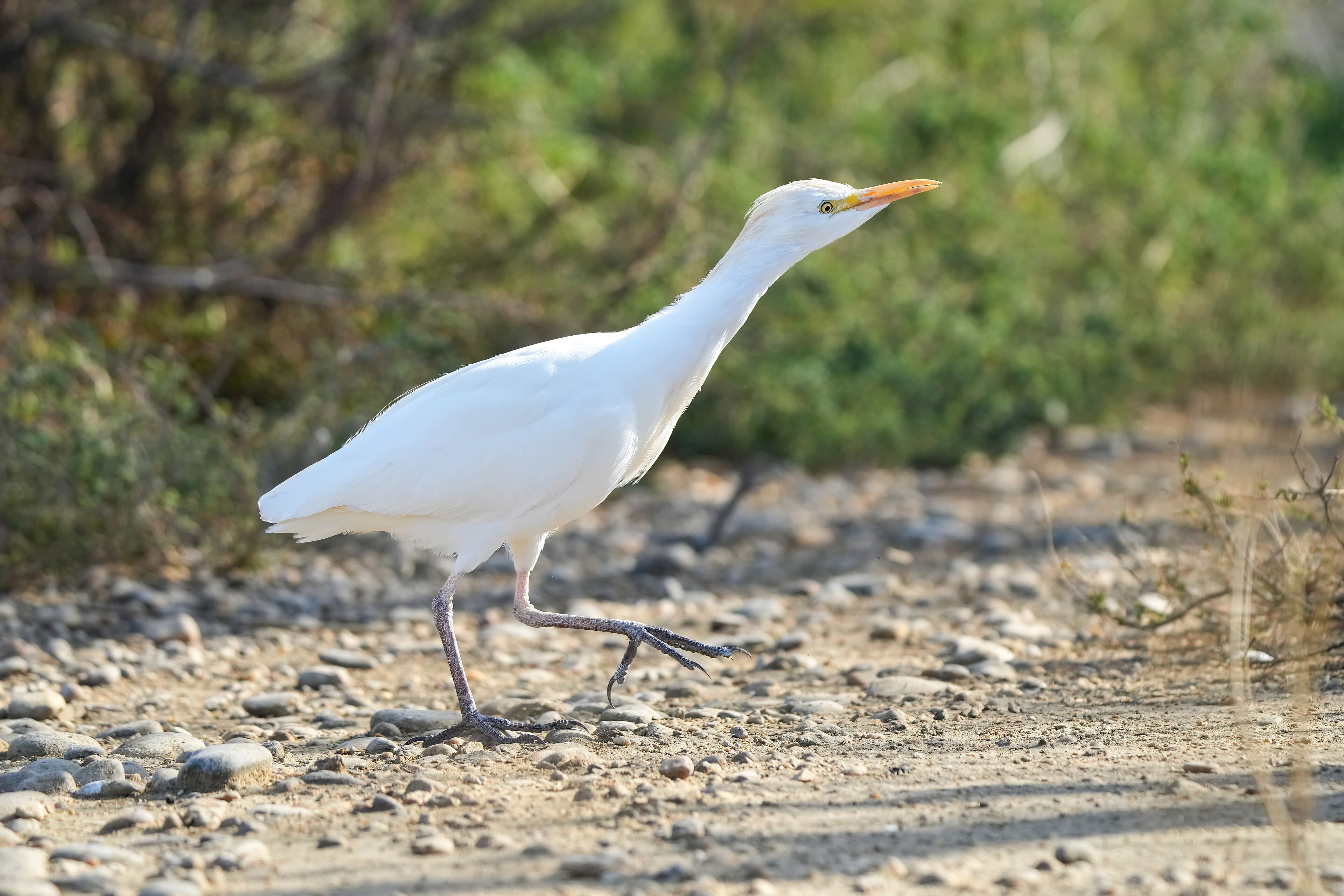
The final frame is the quietest: a single egret in the wetlands of southern France, described on Commons simply as "Western cattle egret in the Camargue". It is listed as a Featured Picture and a Quality Image. Taken together, the eight photographs show a working method rather than a single style: long lenses, fast shutter speeds, a preference for clean backgrounds and an interest in what the animal is doing rather than only how it looks.
Über den Autor
WLIFE Editorial
The WLIFE editorial desk researches, writes and fact-checks stories about wildlife photography, photographers, equipment and expeditions.
Mitwirkende
- Text
- WLIFE Editorial
- Fotograf
- Giles Laurent
- Foto
- Giles Laurent · Parque Estadual Encontro das Águas, Pantanal, Brazil · CC BY-SA 4.0
- Foto
- Giles Laurent · Serengeti National Park, Tanzania · CC BY-SA 4.0
- Foto
- Giles Laurent · Queen Elizabeth National Park, Uganda · CC BY-SA 4.0
- Foto
- Giles Laurent · Serengeti National Park, Tanzania · CC BY-SA 4.0
- Foto
- Giles Laurent · Pfyn-Finges, Switzerland · CC BY-SA 4.0
- Foto
- Giles Laurent · Damaraland, Namibia · CC BY-SA 4.0
- Foto
- Giles Laurent · Flatey, Iceland · CC BY-SA 4.0
- Foto
- Giles Laurent · Ballena Marine National Park, Costa Rica · CC BY-SA 4.0
- Foto
- Giles Laurent · Camargue, France · CC BY-SA 4.0
- Faktencheck
- In Prüfung
Hinweise zum Faktencheck · Sample article — verify all facts before editorial publication. All descriptions, quotes, EXIF data and award statuses were read on 2026-10-23 from the eight Wikimedia Commons file pages linked in the quote blocks and in images.ts; frames 1 and 4 were replaced on 2026-11-03 (so that no photograph on the site is shared with another story) and read from their file pages that day. The lead image is a ninth frame by the same photographer. No biography or interview material is included.
Weiterlesen
Hinter dem Bild
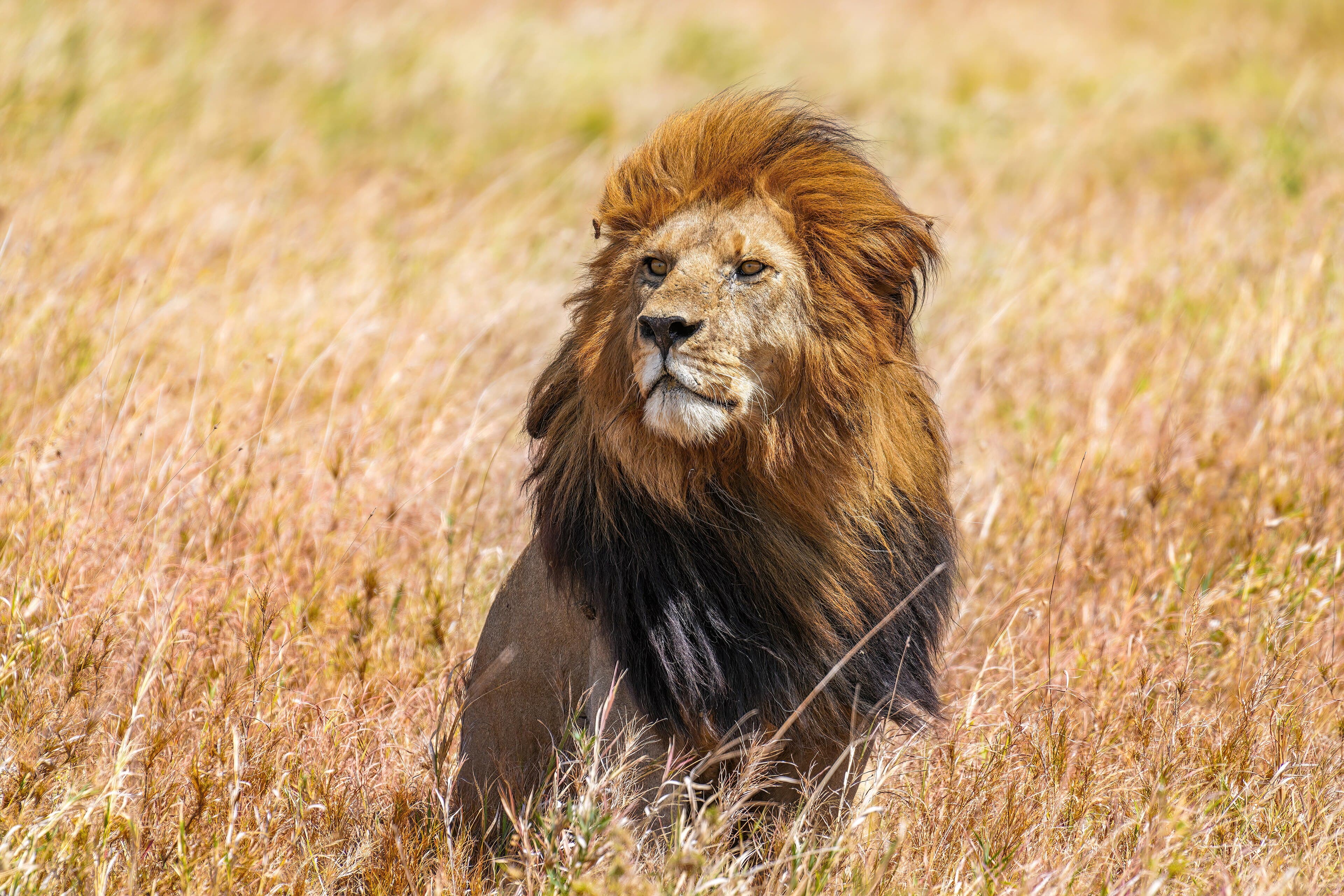
BeispielinhaltBehind the shot: Snyggve, the Serengeti lion who looked back
A direct gaze, soft light and a background that disappears: what the file data and the frame itself tell us about one of the most-viewed lion portraits on Wikimedia Commons.
· 6 Min.
Hinter dem Bild
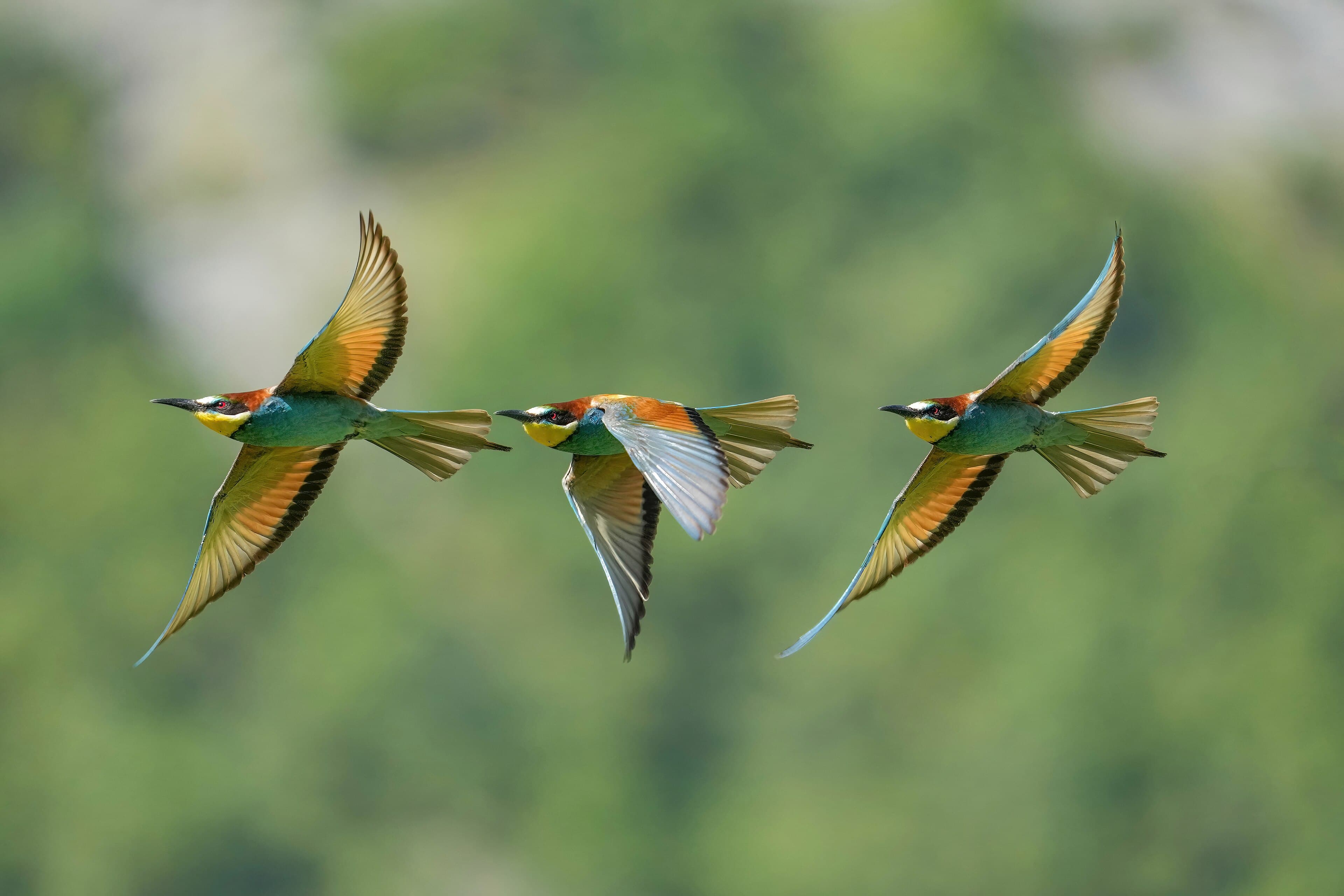
BeispielinhaltBehind the shot: three bee-eaters that are one bird
Giles Laurent's stacked sequence of a European bee-eater shows the whole arc of a wingbeat in a single frame. Here is what a stacked image is, how this one was built, and why saying so matters.
· 6 Min.
Praxis & Technik
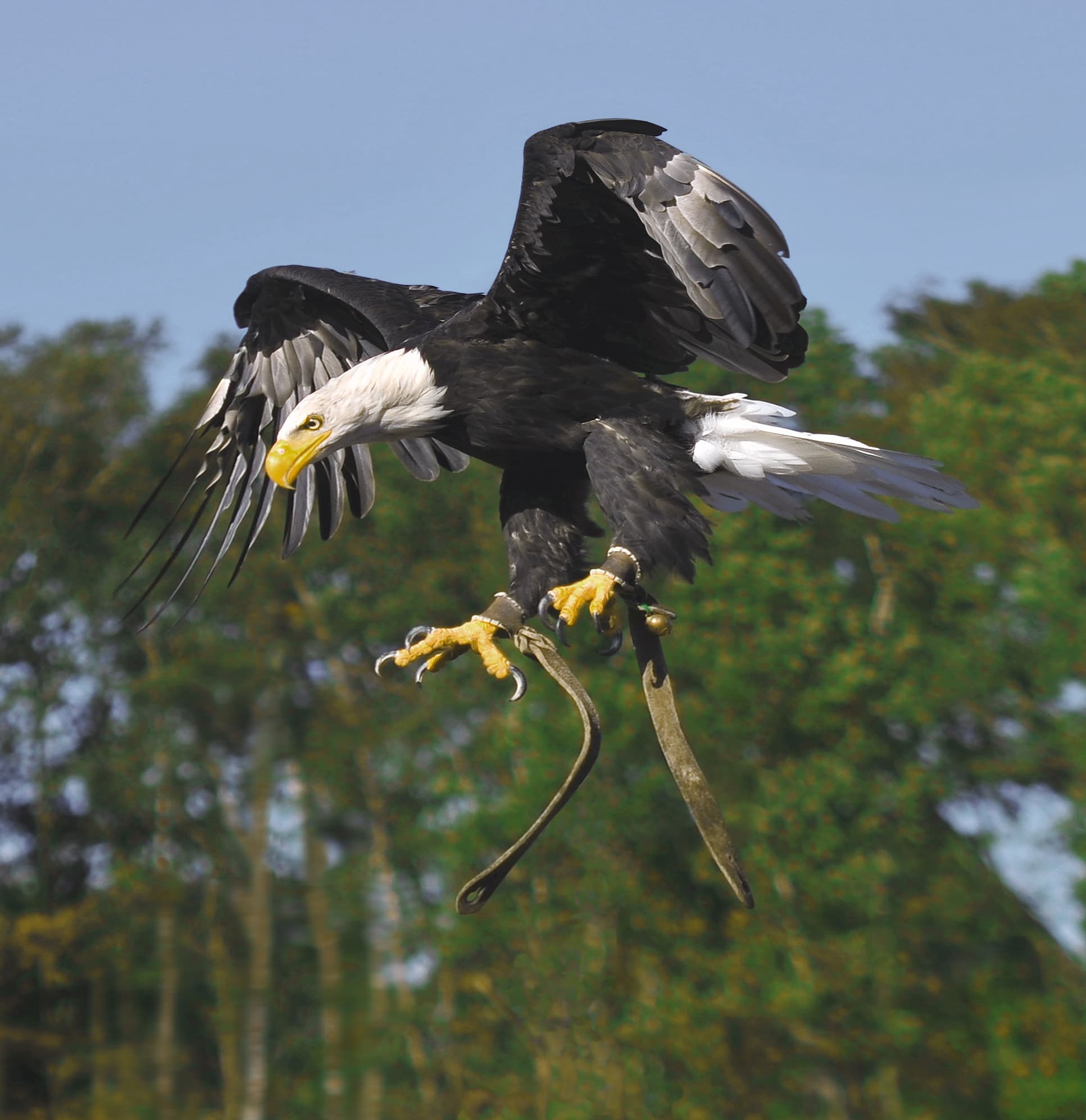
BeispielinhaltHow to photograph birds in flight
Flight photography is the hardest discipline in wildlife work and the most learnable. Approach, light, tracking, backgrounds and ethics, in the order that matters.
· 8 Min.
The WLIFE Dispatch · wöchentlich
Die beste Wildlife-Fotografie der Woche in einer E-Mail.
Neue Bilder, Fotografengeschichten, im Feld getestete Ausrüstung und neue Expeditionstermine. Kostenlos, jederzeit abbestellbar.